Blond or Blonde: Correct Spelling, Meaning, Hair Color Usage, and Examples for Writers
Blond and blonde are both correct spellings. They usually refer to pale yellow or light-colored hair. In modern English, blond is often the more general spelling, especially as an adjective. Blonde is still common when referring to a woman or girl with blond hair, and it is also widely used in beauty, fashion, and hair-color language.
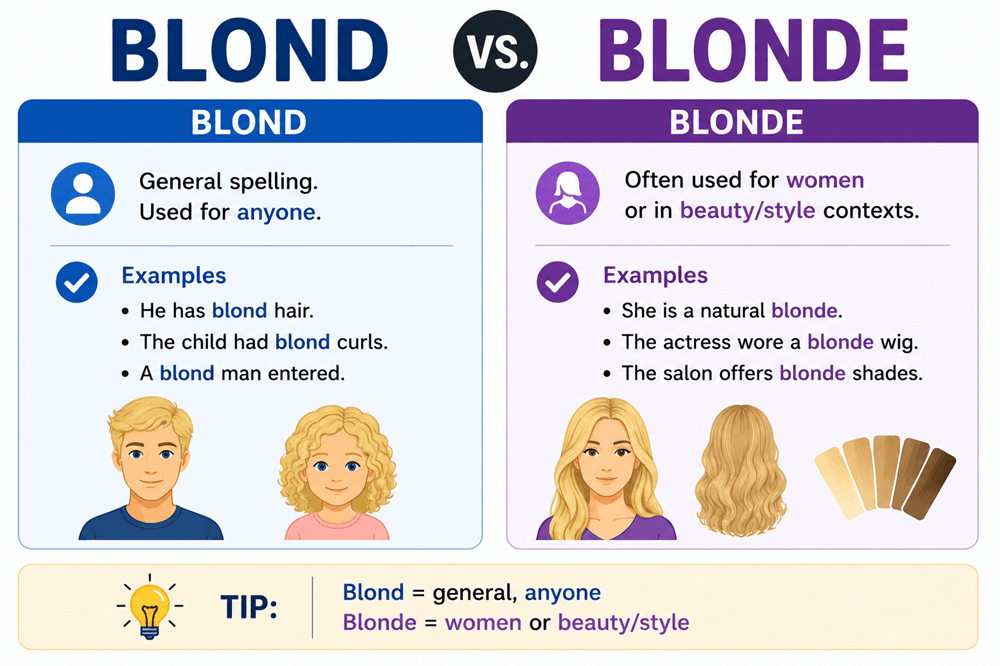
Quick Answer
Use blond as the general spelling, especially when describing hair color.
- He has blond hair.
- The child had bright blond curls.
- She dyed her hair blond.
Use blonde when referring to a woman or girl with blond hair, or when a beauty/style context uses that spelling.
- She is a natural blonde.
- The actress wore a blonde wig.
- The salon offers several blonde shades.
The simple rule is: blond is the safer general spelling. Blonde is common for women, girls, and hair-color style language.
Blond or Blonde: What Is the Difference?
The difference between blond and blonde comes from French. In French, many adjectives change form depending on gender. Blond is the masculine form, while blonde is the feminine form. English borrowed both spellings, but English does not use grammatical gender in the same way French does.
Because of that history, traditional English often used blond for a man or boy and blonde for a woman or girl. Modern English is more flexible. Many writers now use blond as a gender-neutral adjective, especially in straightforward descriptions like blond hair.
| Word | Common Use | Example |
|---|---|---|
| Blond | General adjective; often gender-neutral | He has blond hair. |
| Blonde | Often used for a woman/girl or hair-color style | She is a natural blonde. |
If you are unsure which spelling to use, blond is usually the safer choice for the adjective. If you are writing about a woman as “a blonde,” the -e spelling is still common.
What Does Blond Mean?
Blond usually means light yellow, golden, pale, or fair in color, especially when describing hair. It can also describe wood, beer, or other pale-colored things, though hair is the most common use.
Examples:
- The boy had blond hair.
- Her blond curls caught the sunlight.
- The child’s hair turned blond in summer.
- The table was made of pale blond wood.
- He ordered a blond ale.
As an adjective, blond is useful because it works clearly for people of any gender. Many modern writers prefer it for neutral descriptions.
What Does Blonde Mean?
Blonde has the same basic meaning: light-colored, fair, golden, or pale yellow hair. The spelling blonde is especially common when the word is used as a noun for a woman or girl with blond hair.
Examples:
- She is a blonde.
- The little girl was a cheerful blonde.
- The model wore a short blonde wig.
- The salon specializes in blonde highlights.
- She wanted a softer blonde shade.
In beauty and fashion writing, blonde is very common. You will often see phrases like blonde hair, blonde highlights, blonde balayage, and dark blonde.
Blond as an Adjective
Blond is often preferred as an adjective in general writing. An adjective describes a noun, such as hair, child, man, woman, or wood.
Examples:
- She has blond hair.
- The actor wore a blond wig.
- The baby had fine blond hair.
- A blond man stood near the door.
- The room had pale blond wooden floors.
Using blond as the adjective keeps the spelling simple and avoids unnecessary gendered wording.
Blonde as a Noun
Blonde is common as a noun when referring to a woman or girl with blond hair.
Examples:
- She is a natural blonde.
- The movie cast a tall blonde in the role.
- My sister is the only blonde in the family.
For a man or boy, the traditional noun spelling is usually blond.
- He is a natural blond.
- The boy was a blue-eyed blond.
That said, many writers avoid using a blond or a blonde as a noun unless the hair color is truly relevant. A sentence like the woman with blond hair often sounds more natural and respectful than reducing someone to hair color alone.
Blond Hair or Blonde Hair?
Both blond hair and blonde hair are commonly seen. However, blond hair is often the cleaner general choice, especially in neutral or formal writing.
General style:
- She has blond hair.
- He has blond hair.
- The child has blond hair.
Beauty or fashion style:
- She chose a warm blonde hair color.
- The stylist added blonde highlights.
- The brand sells blonde hair extensions.
If you are writing a simple description, blond hair is usually safe. If you are writing about salon shades, cosmetics, wigs, hair dye, or fashion, blonde may feel more natural because that spelling is common in the beauty industry.
Blond for Men and Boys
Traditional English uses blond for men and boys.
Examples:
- The blond boy waved from the porch.
- He was tall, blond, and cheerful.
- The actor played a blond prince.
- My brother was blond as a child.
In modern writing, blond works well because it is also accepted as a general adjective. You do not need to use blonde for a man unless it appears in a brand name, quote, or specific style choice.
Blonde for Women and Girls
Blonde is traditionally used for women and girls, especially as a noun.
Examples:
- She is a blonde.
- The blonde woman smiled at the camera.
- The girl with the blonde braid sat near the window.
As an adjective before woman or girl, both blond and blonde can appear. Some writers prefer blond woman for consistency and gender neutrality. Others use blonde woman because it matches the traditional feminine form.
Blond vs Blonde in American English
In American English, blond is often preferred as the adjective, while blonde is common as a noun for a woman with blond hair.
Examples:
- She has blond hair.
- He has blond hair.
- She is a natural blonde.
This pattern is a useful guide, especially if you want your writing to look polished and consistent. Still, everyday usage varies, and many American readers will not be surprised by blonde hair.
Blond vs Blonde in British English
British English also uses both forms, and the traditional gender distinction may appear more often in some edited writing. Blond can describe a man, while blonde can describe a woman.
Examples:
- a blond man
- a blonde woman
- blond hair
- blonde highlights
As with American English, modern usage is flexible. The best choice depends on whether you want a neutral spelling, a traditional gendered spelling, or a beauty-style spelling.
Examples of Blond in Sentences
Here are natural examples of blond used correctly:
- The child had soft blond hair.
- He was a blond teenager with a quiet smile.
- She dyed her hair blond for the summer.
- The old chair was made from blond wood.
- The puppy had pale blond fur near its ears.
- A blond man entered the room.
- The sunlight made his hair look almost white-blond.
- The photo showed a child with blond curls.
These examples use blond as a general adjective or noun.
Examples of Blonde in Sentences
Here are natural examples of blonde used correctly:
- She is a natural blonde.
- The actress wore a platinum blonde wig.
- The salon offers warm blonde and ash blonde shades.
- Her blonde highlights looked soft in the sun.
- The little girl had long blonde braids.
- She chose a darker blonde for winter.
- The character was described as a stylish blonde.
- The box said “light blonde hair color.”
These examples show common uses of blonde, especially for women, girls, and hair-color products.
Common Phrases With Blond and Blonde
Here are common phrases with both spellings:
- blond hair
- blonde hair
- natural blonde
- platinum blonde
- ash blonde
- dirty blond
- strawberry blond
- blond wood
- blond ale
- blonde highlights
Some phrases are more flexible than others. Blond wood and blond ale usually use blond. Hair-color products and salon language often use blonde.
Common Mistakes to Avoid
The biggest mistake is assuming one spelling is always wrong. Blond and blonde can both be correct.
Another mistake is using both spellings randomly in the same article.
Inconsistent:
- She had blond hair, then chose blonde highlights, then became a blond.
Better:
- She had blond hair, then chose blonde highlights at the salon.
That version works because blond hair is a general description, while blonde highlights fits beauty-industry language.
Also avoid using a blonde or a blond when it feels reductive or unnecessary. Sometimes a fuller phrase sounds better.
- Better: The woman with blond hair entered the room.
- Less personal: The blonde entered the room.
How to Remember Blond or Blonde
Here is an easy way to remember the difference:
Blond is the shorter, more general spelling.
Blonde has an extra e, and it is often used for women, girls, and beauty-style hair color.
- Blond = general spelling, often adjective
- Blonde = often feminine noun or salon-style spelling
You can also remember this sentence:
Use blond for a general description, and blonde when the feminine or beauty-style spelling fits.
Final Answer
Blond and blonde are both correct. Use blond as the safer general spelling, especially as an adjective in phrases like blond hair, blond child, or blond wood. Use blonde when referring to a woman or girl with blond hair, or when writing in beauty and hair-color contexts such as blonde highlights or platinum blonde. The meaning is similar, but the spelling depends on style, context, and tradition.