Ageing or Aging: Correct Spelling, Meaning, American and British English Usage Explained
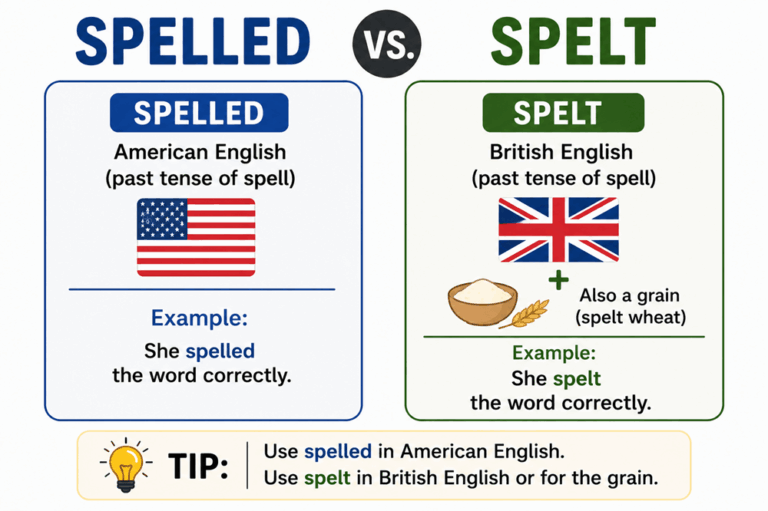
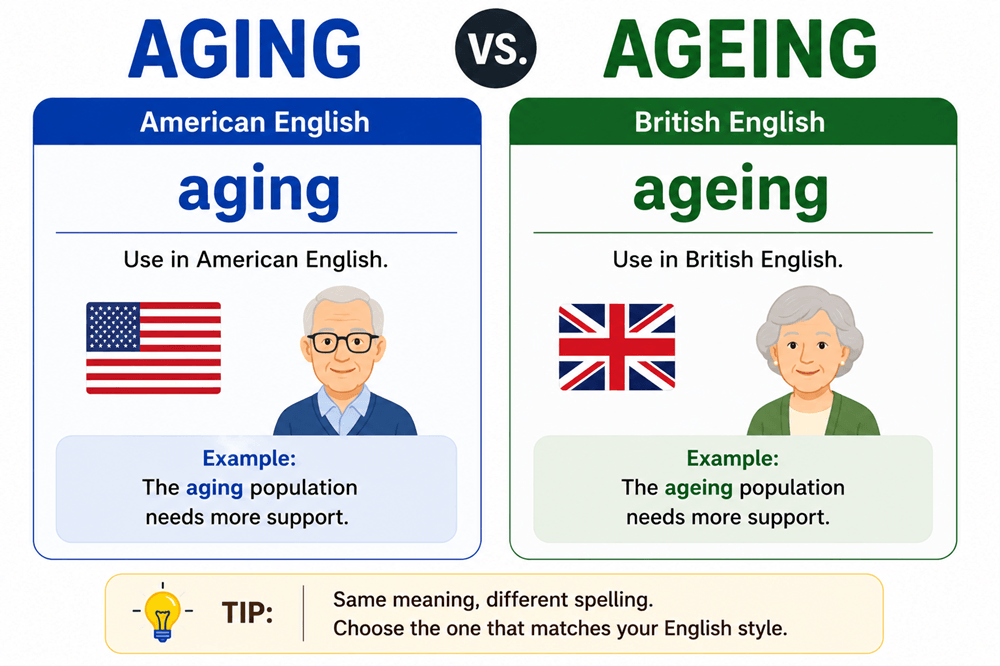
Aging and ageing are both correct spellings. The difference is regional. Aging is the standard spelling in American English, while ageing is common in British English. Both words refer to growing older, becoming older, or the process of change that happens over time.
Quick Answer
Use aging if you are writing in American English.
- The aging building needs repairs.
- Scientists study the aging process.
- She works with aging adults.
Use ageing if you are writing in British English.
- The ageing building needs repairs.
- Scientists study the ageing process.
- She works with ageing adults.
The simple rule is: aging is American English, and ageing is British English. The meaning is the same.
Ageing or Aging: What Is the Difference?
The difference between ageing and aging is spelling, not meaning. Both words come from the verb age. They can describe people, animals, objects, buildings, wine, cheese, technology, skin, populations, or anything that changes as time passes.
Aging is the spelling most often used in American English. It drops the final e from age before adding -ing.
Ageing is the spelling often used in British English. It keeps the e before -ing.
| Spelling | Where It Is Common | Example |
|---|---|---|
| Aging | American English | The study focused on aging adults. |
| Ageing | British English | The study focused on ageing adults. |
If your article uses American spellings such as color, center, labeled, and traveled, use aging. If your article uses British spellings such as colour, centre, labelled, and travelled, use ageing.
What Does Aging Mean?
Aging is the American English spelling. It means becoming older or showing the effects of time. It can refer to a person growing older, an object wearing down, or a material changing slowly over time.
Examples:
- The doctor studies healthy aging.
- The aging bridge needs inspection.
- Her parents are aging gracefully.
- The company replaced its aging computers.
- The cheese improves during the aging process.
In American writing, aging is the normal spelling in healthcare, science, beauty, architecture, food, technology, and everyday writing.
What Does Ageing Mean?
Ageing is the British English spelling. It has the same meaning as aging. It can describe the process of getting older, the visible effect of time, or the slow development of flavor, texture, condition, or quality.
Examples:
- The doctor studies healthy ageing.
- The ageing bridge needs inspection.
- Her parents are ageing gracefully.
- The company replaced its ageing computers.
- The cheese improves during the ageing process.
If your audience is in the United Kingdom, Australia, New Zealand, or another region that commonly follows British spelling, ageing may look more natural.
Is Aging Wrong?
No, aging is not wrong. It is the standard American English spelling.
Use aging in American-style sentences like these:
- The aging roof started to leak.
- The article discussed aging skin.
- Exercise can support healthy aging.
- The museum restored an aging painting.
For American readers, ageing may look unusual or distinctly British. If your website, article, or school assignment follows American spelling, aging is usually the best choice.
Is Ageing Wrong?
No, ageing is not wrong either. It is a common British English spelling.
Use ageing in British-style sentences like these:
- The ageing roof started to leak.
- The article discussed ageing skin.
- Exercise can support healthy ageing.
- The museum restored an ageing painting.
For British readers, aging will usually be understood, but ageing may better match the spelling style they expect.
Why Aging Drops the E
In American English, aging follows a common spelling pattern. Many words ending in silent e drop that e before adding -ing.
- make → making
- write → writing
- come → coming
- age → aging
This is why aging looks natural to American readers. The word keeps the base meaning of age, but the spelling changes before -ing.
Why Ageing Keeps the E
Ageing keeps the e from age. This spelling is common in British English and makes the connection to the base word more visible.
- age → ageing
This spelling can also help avoid a visual pronunciation problem. Without the e, some readers might briefly see ag before recognizing the word. Still, both forms are familiar enough that context usually makes the meaning clear.
Aging as a Verb Form
Aging can be the present participle of the verb age. In this use, it describes the action or process of growing older or changing with time.
American English examples:
- The population is aging.
- The wood is aging in the sun.
- The wine is aging in barrels.
- She is aging with confidence.
In British English, the same sentences may use ageing:
- The population is ageing.
- The wood is ageing in the sun.
- The wine is ageing in barrels.
- She is ageing with confidence.
Aging as an Adjective
Aging can also work as an adjective. It describes a noun that is becoming older, worn, outdated, mature, or affected by time.
American English examples:
- an aging parent
- an aging building
- an aging car
- an aging population
- an aging computer system
British English examples:
- an ageing parent
- an ageing building
- an ageing car
- an ageing population
- an ageing computer system
The grammar is the same. Only the spelling changes.
Aging Process or Ageing Process?
Both aging process and ageing process are correct. The choice depends on your English style.
American English:
- The study explains the aging process.
- Sleep can affect the aging process.
British English:
- The study explains the ageing process.
- Sleep can affect the ageing process.
This phrase is common in health, skincare, biology, psychology, and general lifestyle writing.
Aging Population or Ageing Population?
Both phrases are correct, but they belong to different spelling systems.
American English:
- The country has an aging population.
- Healthcare systems must adapt to an aging population.
British English:
- The country has an ageing population.
- Healthcare systems must adapt to an ageing population.
The phrase refers to a population with a growing share of older people.
Anti-Aging or Anti-Ageing?
The same regional pattern appears in beauty and skincare language.
Use anti-aging in American English.
- The cream is marketed as an anti-aging product.
- She read an article about anti-aging skincare.
Use anti-ageing in British English.
- The cream is marketed as an anti-ageing product.
- She read an article about anti-ageing skincare.
Some writers avoid the phrase entirely because it can sound negative about growing older. In gentler writing, phrases like healthy aging, healthy ageing, or skin support may feel more natural.
Examples of Aging in Sentences
Here are natural examples of aging used in American English:
- The aging car needed a new engine.
- Researchers studied the effects of aging on memory.
- The city repaired its aging roads and bridges.
- The wine is aging in oak barrels.
- She writes about healthy aging.
- The company updated its aging software.
- The aging dog moved more slowly than before.
- The cheese develops flavor while aging.
Examples of Ageing in Sentences
Here are natural examples of ageing used in British English:
- The ageing car needed a new engine.
- Researchers studied the effects of ageing on memory.
- The city repaired its ageing roads and bridges.
- The wine is ageing in oak barrels.
- She writes about healthy ageing.
- The company updated its ageing software.
- The ageing dog moved more slowly than before.
- The cheese develops flavor while ageing.
Common Phrases With Aging or Ageing
These phrases can use either spelling depending on region:
| American English | British English |
|---|---|
| aging process | ageing process |
| aging population | ageing population |
| healthy aging | healthy ageing |
| aging skin | ageing skin |
| aging parents | ageing parents |
| anti-aging | anti-ageing |
Both columns are correct. The best choice depends on your audience.
Common Mistakes to Avoid
The biggest mistake is assuming one spelling is always wrong. Aging and ageing are both accepted, but they belong to different spelling traditions.
Better in American English:
- The article discusses healthy aging.
Better in British English:
- The article discusses healthy ageing.
Another mistake is mixing both spellings in the same article without a reason.
Inconsistent:
- The study looked at aging adults and the ageing process.
Consistent American English:
- The study looked at aging adults and the aging process.
Consistent British English:
- The study looked at ageing adults and the ageing process.
Choose one style and use it throughout your piece.
How to Remember Aging or Ageing
Here is an easy way to remember the difference:
Aging is shorter, and American English often prefers shorter spellings.
Ageing keeps the e, and British English often keeps spellings that look closer to the base word.
- Aging = American English
- Ageing = British English
You can also remember this sentence:
Americans usually write aging; British writers often write ageing.
Final Answer
Aging and ageing are both correct spellings. Use aging in American English and ageing in British English. Both words mean becoming older, growing older, or changing over time. The most important rule is to stay consistent with the English style you choose.