Aid or Aide: Correct Meaning, Spelling, Difference, and Examples for Clear Writing
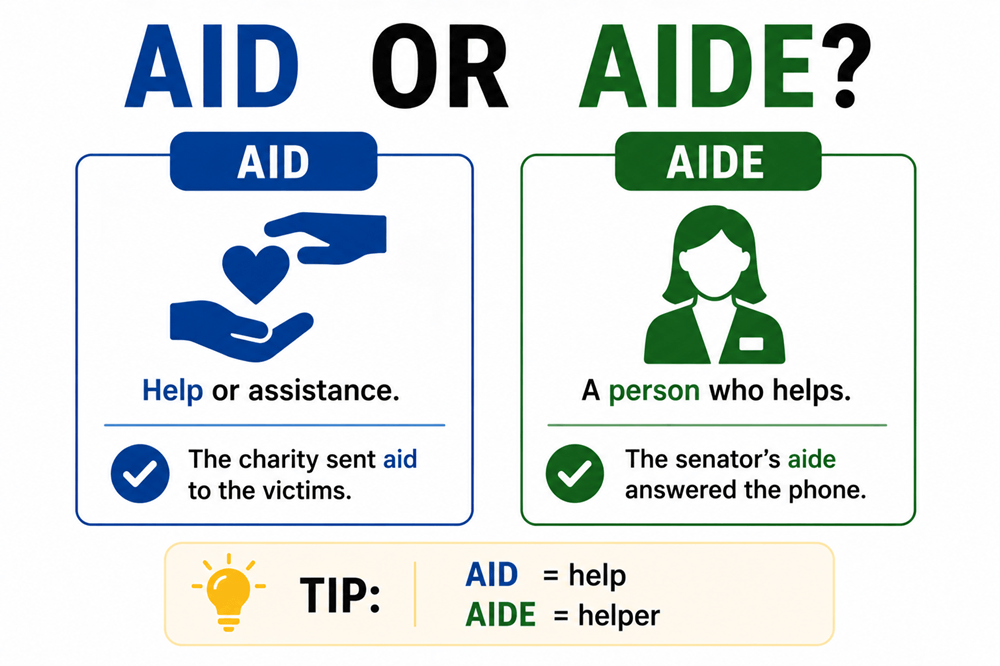
Aid and aide sound the same, but they do not mean the same thing. Use aid when you mean help, support, assistance, or the act of helping. Use aide when you mean a person who helps someone, especially in a job or official role. The easiest rule is this: aid is help, and an aide is a helper.
Quick Answer
Use aid when you mean help, support, assistance, or resources given to someone.
- Correct: The organization sent aid after the storm.
- Correct: The teacher gave extra aid to struggling students.
- Correct: First aid can save lives in an emergency.
Use aide when you mean a person who assists someone.
- Correct: The senator’s aide answered the phone.
- Correct: A classroom aide helped the teacher prepare materials.
- Correct: The nurse’s aide checked on the patient.
The simple rule is this: aid is assistance. Aide is a person who gives assistance.
Aid or Aide: What Is the Difference?
The difference between aid and aide is meaning and grammar. Aid can be a noun or a verb. As a noun, it means help, assistance, support, or resources. As a verb, it means to help or assist.
Aide is a noun. It means a helper, assistant, or staff member who supports another person. An aide may work for a politician, teacher, nurse, executive, military officer, or public official.
| Word | Part of Speech | Meaning | Example |
|---|---|---|---|
| Aid | Noun or verb | Help, assistance, or to help | The charity offered aid. |
| Aide | Noun | A person who helps | The aide organized the files. |
If you mean the help itself, use aid. If you mean the helper, use aide.
What Does Aid Mean?
Aid means help, assistance, support, or relief. It can refer to emotional help, financial help, medical help, emergency help, military help, educational help, or practical support.
Examples:
- The town received aid after the flood.
- The program offers financial aid to students.
- She used a hearing aid during the lecture.
- The country requested international aid.
In these sentences, aid is a noun. It names the help or support being given.
Aid can also be a verb meaning to help or assist.
- The new tool will aid the research team.
- Clear instructions aid understanding.
- The volunteers aided families after the fire.
- Exercise can aid recovery after an injury.
In these sentences, aid describes the action of helping. It is more formal than the word help, but the meaning is similar.
What Does Aide Mean?
Aide means a person who helps another person in a job, official role, or organized setting. An aide is not the help itself. An aide is the helper.
Examples:
- The governor’s aide prepared the briefing notes.
- The classroom aide worked with small groups of students.
- The home health aide visited the patient every morning.
- The military aide carried the officer’s documents.
In each sentence, aide refers to a person. That person assists, supports, organizes, manages details, or helps someone do their work.
Aide often appears in job titles or role descriptions:
- teacher’s aide
- nurse’s aide
- classroom aide
- home health aide
- campaign aide
- presidential aide
If the word refers to a person with a helping role, aide is the spelling you want.
Why Aid and Aide Are Easy to Confuse
Aid and aide are easy to confuse because they are homophones. That means they sound the same when spoken, even though they have different spellings and meanings.
The confusion also happens because both words are connected to helping. Aid means help. An aide is someone who helps. Since the ideas are so close, it is easy to choose the wrong spelling.
Compare these two sentences:
- The school provided aid to the student.
- The school hired an aide for the student.
The first sentence means the school provided help or support. The second sentence means the school hired a person to help. That one difference changes the spelling.
When to Use Aid
Use aid when you are talking about help, support, assistance, relief, or resources.
Use it for emergency help:
- The victims needed aid after the earthquake.
- Rescue workers brought aid to the damaged area.
- The agency delivered food aid and medical supplies.
Use it for money or support:
- She applied for financial aid.
- The school offers aid to low-income families.
- The grant provides aid for small businesses.
Use it in medical and practical phrases:
- first aid
- hearing aid
- visual aid
- teaching aid
Examples:
- Every office should have a first aid kit.
- The speaker used charts as visual aids.
- The hearing aid helped him follow the conversation.
In all of these cases, aid refers to help, support, or a helpful tool.
When to Use Aide
Use aide when you mean a person who assists another person. This word is especially common in schools, hospitals, government offices, political campaigns, and care settings.
Examples:
- The teacher’s aide helped prepare the lesson.
- The senator’s aide scheduled the meeting.
- A nurse’s aide brought water to the patient.
- The campaign aide answered questions from reporters.
In these sentences, the word refers to a person. You could often replace aide with assistant or helper.
- The teacher’s aide helped prepare the lesson.
- The teacher’s assistant helped prepare the lesson.
If assistant fits, aide may be correct.
First Aid or First Aide?
The correct phrase is first aid, not first aide.
Correct:
- She learned first aid at school.
- The first aid kit is in the cabinet.
- Basic first aid can help before medical professionals arrive.
Incorrect:
- She learned first aide at school.
- The first aide kit is in the cabinet.
First aid refers to emergency help or treatment. It is not a person, so aid is the correct spelling.
Teacher’s Aid or Teacher’s Aide?
The correct phrase is usually teacher’s aide when you mean a person who helps a teacher.
Correct:
- The teacher’s aide helped students with the worksheet.
- A classroom aide worked with the reading group.
- The school hired a new teacher’s aide.
Teaching aid is different. A teaching aid is a tool or material that helps with teaching.
- The map was used as a teaching aid.
- Flashcards can be useful teaching aids.
A teacher’s aide is a person. A teaching aid is a helpful object or resource.
Financial Aid or Financial Aide?
The correct phrase is financial aid.
Correct:
- She applied for financial aid before college.
- The university offers financial aid packages.
- Students must complete the form to receive financial aid.
Incorrect:
- She applied for financial aide before college.
- The university offers financial aide packages.
Financial aid means money, grants, loans, scholarships, or support. Since it is not a person, use aid.
Common Mistakes With Aid and Aide
The most common mistake is using aide when the sentence needs aid.
Incorrect:
- The charity sent aide to the village.
- He applied for financial aide.
- The class used visual aides during the presentation.
Correct:
- The charity sent aid to the village.
- He applied for financial aid.
- The class used visual aids during the presentation.
Another common mistake is using aid when the sentence needs aide.
Incorrect:
- The senator’s aid wrote the speech.
- The nurse’s aid checked on the patient.
- The classroom aid helped the teacher.
Correct:
- The senator’s aide wrote the speech.
- The nurse’s aide checked on the patient.
- The classroom aide helped the teacher.
If the word refers to a person, use aide. If it refers to help, use aid.
Aid in Example Sentences
Here are examples of aid used correctly:
- The organization provided aid after the hurricane.
- The student received financial aid for college.
- The new software can aid communication between teams.
- First aid training is useful in emergencies.
- The chart served as a visual aid during the lesson.
- The charity raised money to aid local families.
- The medicine may aid recovery.
- The country requested aid from neighboring nations.
In each sentence, aid means help, support, or the act of helping.
Aide in Example Sentences
Here are examples of aide used correctly:
- The mayor’s aide arranged the press conference.
- The classroom aide helped students find their seats.
- A home health aide visited her grandmother each morning.
- The campaign aide prepared the candidate’s schedule.
- The nurse’s aide changed the bedding.
- The executive aide handled travel arrangements.
- The aide carried the documents into the meeting room.
- The teacher’s aide made copies before class.
In each sentence, aide refers to a person who helps.
How to Remember Aid or Aide
A simple way to remember the difference is this:
- Aid = help
- Aide = helper
The final e in aide can remind you of employee. An aide is often an employee or assistant who helps someone do a job.
You can also use this quick test:
- If you can replace the word with help, use aid.
- If you can replace the word with assistant, use aide.
Example:
- The charity sent aid. The charity sent help. That works, so use aid.
- The senator’s aide called back. The senator’s assistant called back. That works, so use aide.
Final Answer
Aid and aide are both correct words, but they are used differently. Use aid when you mean help, support, assistance, relief, or the act of helping. Use aide when you mean a person who helps someone in a job, school, medical, political, or official setting.
The easiest rule is simple: aid is help, and an aide is a helper. If the word names assistance, choose aid. If it names a person, choose aide.