Requestor or Requester: Correct Spelling, Meaning, Difference, and Examples for Clear Writing
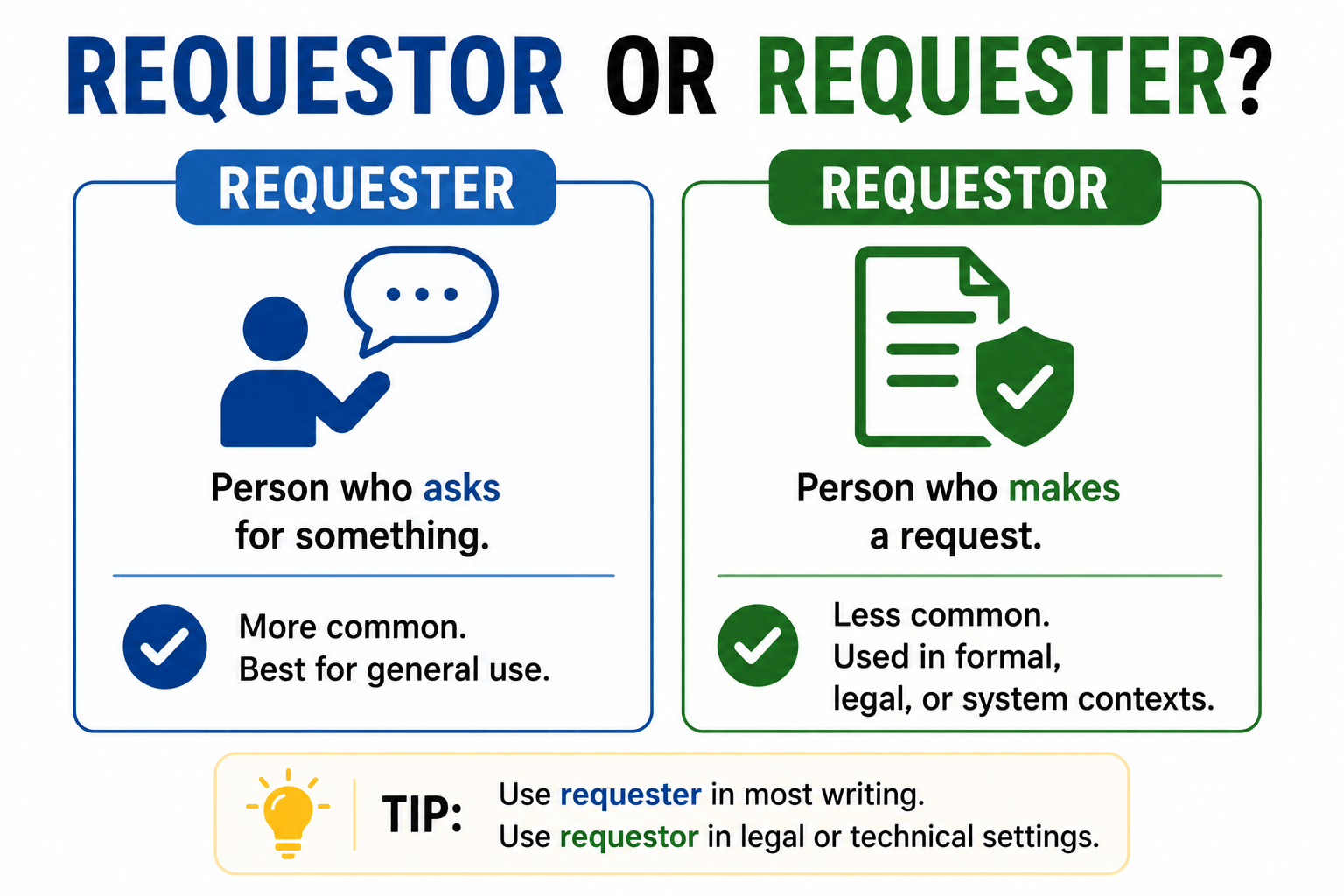
Requester and requestor both refer to someone who makes a request, but requester is the more common and standard spelling in everyday English. Requestor is a valid variant, often used in legal, technical, business, or administrative contexts. If you want the safest choice for most writing, use requester.
Quick Answer
Use requester when you mean a person who asks for something, especially in general writing.
- Correct: The requester asked for a copy of the report.
- Correct: The form must include the requester’s name.
- Correct: The requester will receive an email confirmation.
Requestor is also used, but it is less common. You may see it in legal documents, software systems, government forms, insurance paperwork, and internal business workflows.
- Also correct: The requestor must provide identification.
- Also correct: The system sends a notification to the requestor.
The simple rule is this: requester is the better default. Requestor is a specialized variant.
Requestor or Requester: What Is the Difference?
The difference between requestor and requester is mostly style and usage. Both words mean a person or party who makes a request. However, requester is more common in ordinary writing, while requestor often appears in formal systems, legal wording, technical documentation, or administrative forms.
For example, if you are writing a normal sentence, requester will usually look more natural:
- The requester asked for more information.
If you are writing a form, policy, ticketing system, legal notice, or records process, you might see requestor:
- The requestor must submit proof of authorization.
Both sentences are understandable. The main question is what tone and context you need.
| Word | Status | Best Use | Example |
|---|---|---|---|
| Requester | More common standard spelling | General writing, emails, articles, normal business use | The requester received the file. |
| Requestor | Less common variant | Legal, technical, administrative, or system-based contexts | The requestor must verify the account. |
If you are not following a specific style guide or form label, choose requester.
What Does Requester Mean?
Requester means a person who requests something. It comes from the verb request, meaning to ask for something formally, politely, or officially. The ending -er is commonly used for people who perform an action.
Examples:
- A teacher is someone who teaches.
- A buyer is someone who buys.
- A requester is someone who requests.
That pattern is one reason requester feels natural in modern English. It follows a familiar structure.
Examples in sentences:
- The requester asked for access to the document.
- The requester should explain why the information is needed.
- An email will be sent to the requester after approval.
- The requester can track the status of the application online.
In each sentence, requester means the person who made the request. The word is clear, simple, and widely understood.
What Does Requestor Mean?
Requestor also means a person who makes a request. It uses the ending -or, which appears in words like actor, donor, creator, and operator. In some formal or technical settings, requestor may be used as the preferred label.
Examples:
- The requestor must complete all required fields.
- The requestor is responsible for submitting accurate information.
- The system records the requestor’s username and department.
- The requestor will be notified when the case is closed.
These examples sound more administrative than conversational. That is where requestor often appears: in forms, ticket systems, compliance procedures, records requests, contract language, and software interfaces.
For everyday writing, however, requester is usually easier and more natural.
Is Requestor Wrong?
Requestor is not wrong, but it is less common than requester. It is better to think of requestor as a valid variant rather than a misspelling.
The word may look unusual to some readers because requester is the form they expect. In a simple article, email, or message, requestor can feel overly formal or technical.
Compare these examples:
- Natural: The requester asked for a refund.
- More formal: The requestor asked for a refund.
- Natural: The requester will get a confirmation email.
- More system-like: The requestor will get a confirmation email.
Neither version is impossible, but requester usually reads more smoothly. Unless your workplace, software, legal template, or form specifically uses requestor, requester is the better choice.
When to Use Requester
Use requester in general writing when you mean someone who asks for something. It is the best default for most readers.
Examples:
- The requester submitted the form on Monday.
- The requester should include a valid phone number.
- The requester asked for more time to provide documents.
- The support team replied to the requester within one business day.
Use requester in ordinary business writing:
- Please send the update to the requester.
- The requester wants the files by Friday.
- Ask the requester to confirm the delivery address.
Use requester in website copy, help articles, and user-friendly instructions:
- The requester can cancel the request from the dashboard.
- Once approved, the requester will receive access.
- The requester must choose a reason from the menu.
This spelling is clear and modern. It works in both casual and professional contexts.
When to Use Requestor
Use requestor when it is the established term in a specific system, legal document, policy, workplace process, or official form. If the document you are editing already uses requestor, it may be better to stay consistent.
Examples:
- The requestor must certify that the information is accurate.
- The requestor’s signature is required before processing.
- The requestor ID appears at the top of the case file.
- The system automatically assigns the requestor to the ticket.
Requestor may also appear in technical workflows, especially where people are assigned roles such as approver, submitter, owner, and requestor. In that kind of environment, the spelling may be part of the platform’s vocabulary.
Still, you should not choose requestor just because it sounds more official. If there is no specific reason to use it, requester is usually better.
Requester in Business and Customer Support
In business and customer support, requester often means the person who created a support ticket, asked for help, submitted a form, or requested a service.
Examples:
- The requester opened a ticket about a billing issue.
- The support agent contacted the requester for more details.
- The requester will be notified when the issue is resolved.
- The requester can upload attachments through the portal.
In these examples, requester sounds natural because the sentence is focused on the person who asked for something. It is also easier for general readers than requestor, which can feel more like internal system language.
Requestor in Legal and Administrative Writing
In legal, government, and administrative writing, requestor may be used to identify the person or organization making an official request. This is especially common in formal processes where the word appears as a role label.
Examples:
- The requestor must provide a mailing address.
- The requestor agrees to pay all applicable fees.
- The agency may contact the requestor for clarification.
- The requestor is responsible for submitting complete records.
This does not mean requestor is better in every formal sentence. It simply means the spelling is sometimes chosen in official documents. If you are writing outside that kind of context, requester will usually be clearer.
Common Mistakes With Requestor and Requester
The most common mistake is thinking that one spelling must always be wrong. The truth is more flexible. Requester is the more common standard form, but requestor exists as a valid variant.
Another mistake is switching between both spellings in the same document.
- Inconsistent: The requester submitted the form. The requestor will receive a response.
A cleaner version uses one spelling throughout:
- Consistent: The requester submitted the form. The requester will receive a response.
Or, if your system requires the variant:
- Consistent: The requestor submitted the form. The requestor will receive a response.
Consistency matters because switching between both spellings can make the writing look careless, even if both words are understood.
Requester or Requestor in Forms?
For forms, either spelling can appear, but requester is usually more reader-friendly. It looks plain, direct, and familiar.
Examples:
- Requester name
- Requester email
- Requester department
- Requester phone number
Requestor may appear if the form is legal, technical, or based on an older administrative template.
- Requestor name
- Requestor signature
- Requestor identification number
If you are designing a new form for general users, requester is usually the better choice. If you are following a required template, use the spelling already established by that template.
Requester or Requestor in Software?
In software, both forms appear, but requester is often more natural for user-facing text. A support platform might call the person who creates a ticket the requester. An internal system might call that person the requestor.
Examples:
- The requester can reopen the ticket.
- The requester will receive status updates.
- The requestor field is required.
- The requestor ID is stored in the database.
For interface copy that users will read, requester often feels clearer. For internal data labels or legacy systems, requestor may be used because the system already uses that term.
Examples of Requester in Sentences
Here are examples of requester used correctly:
- The requester asked for a copy of the invoice.
- The requester must upload a signed document.
- The requester will receive a confirmation message.
- The manager approved the requester’s access.
- The requester changed the delivery date.
- The requester should keep the reference number.
- The requester may cancel the application at any time.
These sentences are clear and suitable for most general writing.
Examples of Requestor in Sentences
Here are examples of requestor used correctly in more formal or system-based contexts:
- The requestor must sign the authorization form.
- The requestor agrees to provide accurate information.
- The requestor field cannot be left blank.
- The agency contacted the requestor for more details.
- The requestor’s credentials were verified before approval.
- The requestor ID was attached to the case record.
These examples show why requestor can sound more official, technical, or administrative.
How to Remember Requestor or Requester
A simple way to remember the difference is this:
- Requester = regular modern spelling
- Requestor = formal or specialized variant
You can also remember that requester follows the familiar pattern of a person doing an action:
- teach → teacher
- buy → buyer
- request → requester
That makes requester the easiest spelling to choose when you are writing for a general audience.
If you see requestor in a form or system, it may be intentional. But if you are writing your own sentence and want the cleanest choice, use requester.
Final Answer
Requester and requestor are both used for someone who makes a request, but requester is the more common and standard spelling. Use requester in most everyday, business, website, and user-friendly writing.
Requestor is a less common variant that often appears in legal, technical, administrative, or system-based contexts. The easiest rule is simple: choose requester unless a specific form, policy, platform, or style guide requires requestor.