Whether or Weather: Correct Meaning, Difference, Usage, and Examples for Clear Writing
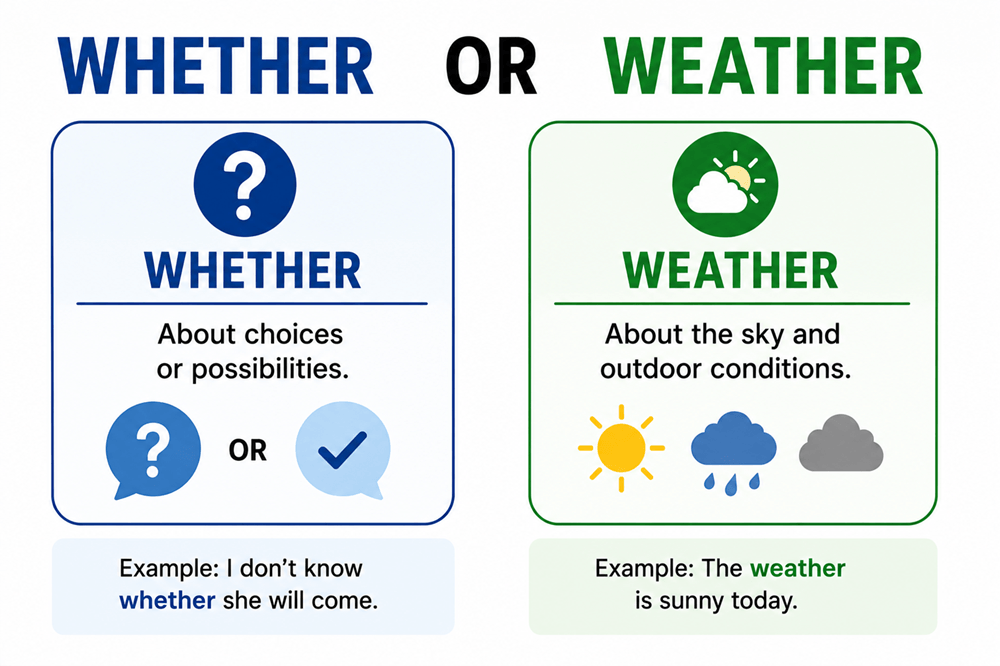
Whether and weather sound the same, but they mean very different things. Use whether when you are talking about choices, possibilities, uncertainty, or alternatives. Use weather when you mean outdoor conditions such as rain, sun, wind, snow, heat, or storms. The easiest rule is this: whether is about choices, and weather is about the sky.
Quick Answer
Use whether when the sentence involves a choice, doubt, question, or possibility.
- Correct: I do not know whether she will come.
- Correct: We need to decide whether to stay or leave.
- Correct: Tell me whether you want coffee or tea.
Use weather when talking about conditions outside.
- Correct: The weather is cold today.
- Correct: Bad weather delayed the flight.
- Correct: We checked the weather before leaving.
The simple rule is this: if you mean “if” or “which option,” use whether. If you mean rain, sunshine, clouds, heat, snow, or wind, use weather.
Whether or Weather: What Is the Difference?
The difference between whether and weather is meaning. These words are homophones, which means they sound alike but have different spellings and meanings. Because they sound the same in speech, it is easy to mix them up in writing.
Whether is a conjunction. It connects a sentence to an idea involving uncertainty, choice, or possibility. You often use it when there are two possible outcomes.
Weather is usually a noun. It refers to the condition of the air and sky at a particular time and place. It can also be used as a verb meaning to survive, endure, or be affected by exposure.
| Word | Meaning | Example |
|---|---|---|
| Whether | Used for choices, uncertainty, or alternatives | I wonder whether it will rain. |
| Weather | Outdoor conditions like rain, sun, wind, or snow | The weather looks rainy. |
If your sentence is about a decision or possibility, choose whether. If your sentence is about the atmosphere outside, choose weather.
What Does Whether Mean?
Whether means that there is a question, choice, possibility, or uncertainty. It is often used when someone does not know which option is true or which action will happen.
Examples:
- I am not sure whether the store is open.
- She asked whether we needed help.
- They debated whether to rent or buy.
- We need to know whether the plan will work.
In each sentence, whether introduces uncertainty. The store may be open or closed. Help may be needed or not needed. The plan may work or fail. There is more than one possible outcome.
Whether is especially common in phrases like:
- whether or not
- whether to
- whether it is
- whether you can
- whether they will
- whether we should
Whenever your sentence involves a choice, decision, doubt, possibility, or alternative, whether is probably the word you need.
What Does Weather Mean?
Weather usually means the condition of the atmosphere. It refers to what is happening outside, including temperature, clouds, rain, snow, wind, storms, humidity, fog, and sunshine.
Examples:
- The weather is beautiful today.
- Cold weather arrived earlier than expected.
- The game was canceled because of bad weather.
- We packed jackets after checking the weather.
In these sentences, weather is about outdoor conditions. It tells you what the sky and air are like.
Weather can also be used as a verb. As a verb, it means to endure or survive something difficult.
- The old house weathered many storms.
- The company weathered a difficult year.
- She weathered the criticism with patience.
In this verb use, weather does not always refer literally to rain or wind. It can mean getting through hardship without being destroyed.
Why Whether and Weather Are Confusing
Whether and weather are confusing because they are pronounced the same in many accents. When spoken aloud, there is usually no clear difference between them. The listener understands the meaning from context, but the writer has to choose the correct spelling.
The spelling can also be confusing because both words begin with we or whe sounds and contain many of the same letters. However, the meanings are easy to separate once you connect each word to its main idea.
- Whether = choice or possibility
- Weather = outdoor conditions
Think of weather as connected to the sky. If your sentence could involve a forecast, temperature, storm, or sunny day, you probably need weather. If your sentence could involve deciding between options, you need whether.
When to Use Whether
Use whether when the sentence includes uncertainty, a question, a decision, or a comparison between options.
Examples:
- I do not know whether he received the message.
- She wondered whether the answer was correct.
- We must decide whether to continue.
- The teacher asked whether the students understood.
Use whether before or when comparing two alternatives.
- Tell me whether you want soup or salad.
- We need to decide whether to drive or fly.
- He could not choose whether to accept or decline.
Use whether in the phrase whether or not.
- She will attend whether or not it rains.
- We are leaving whether or not they are ready.
- The rule applies whether or not you agree with it.
In all of these examples, the sentence is about possibility, choice, or uncertainty. That means whether is correct.
When to Use Weather
Use weather when you are talking about outdoor conditions or the atmosphere.
Examples:
- The weather changed quickly.
- Warm weather makes the beach more crowded.
- The weather report says it may snow tomorrow.
- Bad weather caused several delays.
Use weather in common phrases like:
- bad weather
- cold weather
- warm weather
- weather forecast
- weather report
- severe weather
- weather conditions
You can also use weather as a verb when something survives or endures hardship.
- The ship weathered the storm.
- The family weathered a difficult season.
- The building has weathered over time.
If the sentence is about the sky, the air, a forecast, or surviving a difficult situation, weather is the correct spelling.
Whether or Not
Whether or not is a common phrase that means “regardless of which option is true” or “if something happens or if it does not.”
Examples:
- We are going whether or not it rains.
- She will speak honestly whether or not people agree.
- The payment is due whether or not you received a reminder.
In these examples, whether or not shows that the result will stay the same either way. Rain or no rain, they are going. Agreement or no agreement, she will speak honestly.
Sometimes or not is unnecessary.
- Wordy: I do not know whether or not he called.
- Cleaner: I do not know whether he called.
Both versions are understandable, but the shorter version is often smoother when you are simply expressing uncertainty.
Weather or Whether It Rains?
The correct phrase depends on the meaning of the sentence.
Use whether when you mean “if.”
- I do not know whether it will rain.
- We will go whether it rains or not.
- Ask whether it is supposed to rain tomorrow.
Use weather when you mean outdoor conditions.
- The weather looks rainy.
- The weather report predicts rain.
- Rainy weather makes the roads slippery.
Compare the difference:
- Correct: I wonder whether the weather will improve.
- Correct: Whether it rains depends on the weather pattern.
These sentences use both words correctly. Whether introduces uncertainty. Weather names the outdoor condition.
Common Mistakes With Whether and Weather
The most common mistake is using weather when the sentence needs whether.
Incorrect:
- I do not know weather she is coming.
- We need to decide weather to stay or leave.
- Tell me weather you want tea or coffee.
Correct:
- I do not know whether she is coming.
- We need to decide whether to stay or leave.
- Tell me whether you want tea or coffee.
Another mistake is using whether when the sentence needs weather.
Incorrect:
- The whether is cold today.
- Bad whether delayed the train.
- Check the whether before the trip.
Correct:
- The weather is cold today.
- Bad weather delayed the train.
- Check the weather before the trip.
If you can replace the word with if, use whether. If you can replace it with forecast or outdoor conditions, use weather.
Examples of Whether in Sentences
Here are examples of whether used correctly:
- I am not sure whether the meeting is still happening.
- She asked whether I had finished the report.
- They debated whether to move to another city.
- We need to decide whether this plan is realistic.
- He wondered whether he had locked the door.
- Tell me whether you prefer morning or afternoon.
- Whether you agree or not, the rule still applies.
- The question is whether we have enough time.
In each sentence, whether introduces a choice, doubt, question, or possibility.
Examples of Weather in Sentences
Here are examples of weather used correctly:
- The weather was sunny all afternoon.
- Cold weather kept many people indoors.
- The weather forecast warned of heavy rain.
- Bad weather made the roads dangerous.
- The garden grows well in warm weather.
- We canceled the picnic because of the weather.
- The old barn weathered years of wind and rain.
- The team weathered a difficult season and kept improving.
In these examples, weather refers either to outdoor conditions or to enduring something difficult.
How to Remember Whether or Weather
A simple way to remember the difference is this:
- Whether = choices, questions, or possibilities
- Weather = rain, sun, wind, snow, or outdoor conditions
You can also remember that weather contains wea, like wear. You choose what to wear based on the weather. That connection can help you remember that weather is the sky-related word.
Another quick memory trick is:
Whether asks which possibility. Weather tells what it is like outside.
If the sentence is about a choice, use whether. If the sentence is about rain, sun, clouds, temperature, or storms, use weather.
Final Answer
Whether and weather are both correct words, but they are not interchangeable. Whether is used for choices, uncertainty, questions, and alternatives. Use it in phrases like whether or not, whether to go, and whether you agree.
Weather refers to outdoor conditions such as rain, sun, wind, snow, heat, clouds, and storms. It can also mean to endure something difficult. The easiest rule is simple: whether is for choices, and weather is for the sky.