Yea or Yeah: Difference, Correct Usage, Meaning, Pronunciation, and Memory Tips Explained
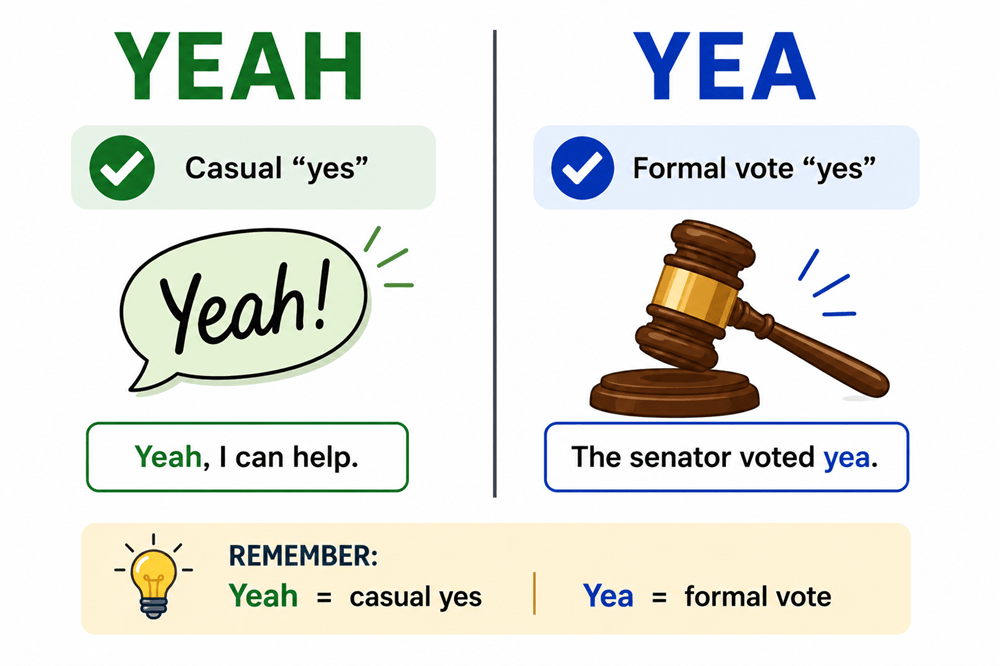
Yea and yeah are both real words, but they are not used the same way. Yeah is the casual word for yes. Yea is mostly used in formal voting, old-fashioned writing, or the phrase yea or nay. In everyday writing, you almost always want yeah.
Quick Answer
Use yeah when you mean a casual yes.
- Yeah, I can help.
- She said yeah when I asked.
- Yeah, that sounds good.
Use yea when talking about a formal vote or the phrase yea or nay.
- The senator voted yea.
- The final count was 42 yeas and 8 nays.
- The committee asked for a yea-or-nay decision.
The simple rule is: yeah means yes in conversation, while yea means yes in voting.
Yea or Yeah: What Is the Difference?
The main difference between yea and yeah is context. Yeah is informal and conversational. It is the word people use in texts, dialogue, casual emails, comments, and everyday speech when they mean yes.
Yea is more formal, older, and narrower in use. It usually appears in voting contexts or set expressions. You might see it in government, meetings, parliamentary language, or older-style writing.
| Word | Main Use | Example |
|---|---|---|
| Yeah | Casual yes | Yeah, I agree. |
| Yea | Formal yes vote | She voted yea. |
If the sentence sounds like normal conversation, choose yeah. If the sentence is about voting, choose yea.
What Does Yeah Mean?
Yeah means yes, but it sounds more casual. It is common in speech and informal writing.
Examples:
- Yeah, I saw that movie.
- Do you want coffee? Yeah, please.
- Yeah, I think you are right.
- She smiled and said, “Yeah, I’m ready.”
- Yeah, we can leave now.
Yeah is useful when you want natural dialogue. It sounds relaxed, friendly, and conversational. However, it may be too casual for formal writing, official documents, academic essays, or professional reports. In those contexts, yes is usually better.
What Does Yea Mean?
Yea means an affirmative vote or formal agreement. It is not the normal spelling for casual yes.
Examples:
- The board recorded ten yeas and two nays.
- All members voting yea should raise their hands.
- The proposal passed after more yeas than nays.
- He cast a yea vote.
Yea can also appear in the phrase yea or nay, which means yes or no.
- We need a yea or nay answer.
- The chair asked for a yea-or-nay vote.
Outside these contexts, yea often looks old-fashioned or mistaken.
Spelling Structure: Why Yeah Has H
Yeah is the casual, spoken form. The final h helps show the relaxed sound people make in conversation.
- yea + h = yeah
You can think of the h as the breathy, casual ending. When someone answers quickly in speech, the word often sounds like yeah, not the formal voting word yea.
A simple spelling clue is this:
- Yeah has ah at the end, like a casual spoken sound.
- Yea has no h, so it looks shorter and more formal.
If the word sounds like something a person would say in a relaxed conversation, use yeah with h.
Spelling Structure: Why Yea Looks Formal
Yea is short and old-looking. It has only three letters:
- y + e + a = yea
Because it is used in formal voting, it often appears beside nay. The pair is easy to remember:
- yea = yes vote
- nay = no vote
Both words are short, formal, and often used together. If you see nay, the matching word is usually yea, not yeah.
When to Use Yeah
Use yeah in casual conversation, dialogue, texting, comments, and informal writing.
- Yeah, I know what you mean.
- Yeah, that would be great.
- “Are you coming?” “Yeah, I’ll be there.”
- Yeah, I forgot to send it.
Yeah works best when the tone is relaxed. In a formal article or business message, consider using yes instead.
Casual:
- Yeah, I can attend.
More formal:
- Yes, I can attend.
When to Use Yea
Use yea when the sentence is about a vote, formal approval, or the phrase yea or nay.
- The motion passed with 12 yeas.
- Those in favor should vote yea.
- We need a clear yea or nay.
- Her yea vote helped pass the measure.
If you are not writing about voting or formal decision-making, yea is probably not the word you need.
Yea vs Yay
Yea is also confused with yay. These words do not mean the same thing.
| Word | Meaning | Example |
|---|---|---|
| Yeah | Casual yes | Yeah, I agree. |
| Yea | Formal yes vote | The member voted yea. |
| Yay | Expression of excitement | Yay, we won! |
Use yay when someone is cheering or celebrating. Use yeah for casual agreement. Use yea for voting.
Common Mistakes
A common mistake is using yea when the sentence needs casual agreement.
Incorrect:
- Yea, I’ll call you later.
Correct:
- Yeah, I’ll call you later.
Another mistake is using yeah in a formal vote count.
Incorrect:
- The measure passed with 20 yeahs.
Correct:
- The measure passed with 20 yeas.
Use the setting to choose the word. Conversation needs yeah. Voting needs yea.
How to Remember the Difference
Use these memory tips:
- Yeah has ah, like a casual spoken answer.
- Yea pairs with nay in voting.
- Yeah means casual yes.
- Yea means formal yes vote.
- Yay means excitement or celebration.
A simple memory sentence is: Say yeah in conversation, vote yea in a meeting, and cheer yay when you are excited.
Final Answer
Yeah is the correct word for casual yes. Example: Yeah, I can come.
Yea is used for a formal yes vote or in the phrase yea or nay. Example: The senator voted yea.
To remember the difference, look at the spelling. Yeah ends with ah, like a relaxed spoken sound. Yea pairs with nay in formal voting.