Preventive or Preventative: Difference, Correct Usage, Examples, and Memory Tips Explained Clearly
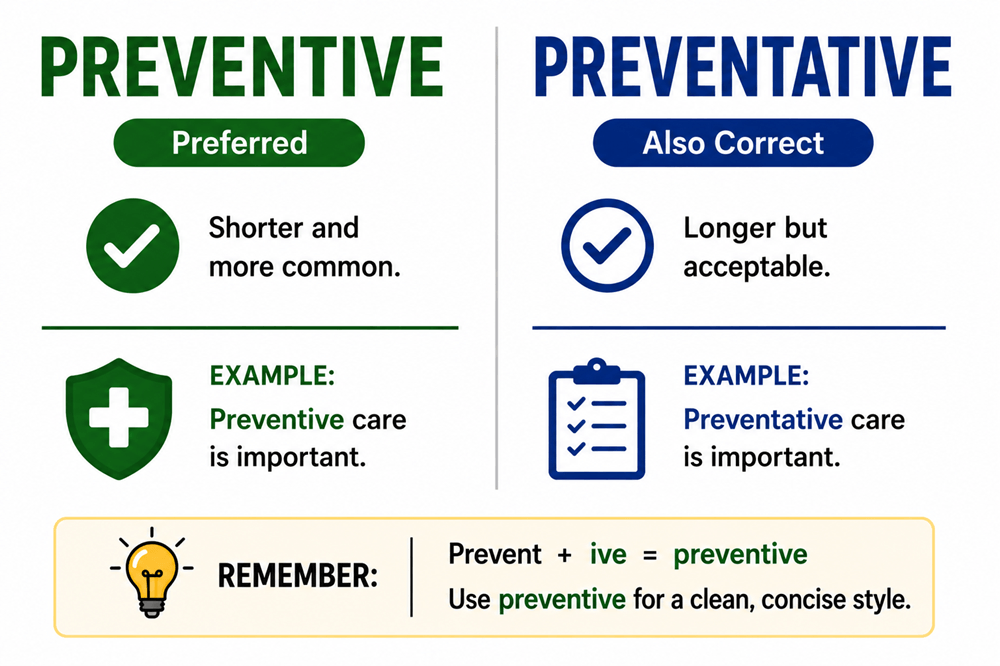
Preventive and preventative are both correct words. They both describe something meant to stop a problem before it happens. The main difference is style. Preventive is shorter, more common, and often preferred in medical, official, and professional writing. Preventative is also accepted, but it can sound longer or less direct.
Quick Answer
Use preventive as the cleaner, more common choice.
- Preventive care can help catch health problems early.
- The company added preventive security measures.
- Regular maintenance is a preventive step.
Use preventative if you prefer the longer form or if it sounds more natural in your sentence.
- The clinic offers preventative treatment.
- They took preventative action before the storm.
- Good planning can be preventative.
The simple rule is: preventive is preferred; preventative is acceptable but longer.
Preventive or Preventative: What Is the Difference?
The difference between preventive and preventative is not meaning. Both words mean designed to prevent something. If a measure is preventive or preventative, it is meant to stop illness, damage, risk, failure, danger, or trouble before it begins.
| Word | Status | Example |
|---|---|---|
| Preventive | Shorter and more common | Preventive care is important. |
| Preventative | Also correct, but longer | Preventative care is important. |
In most polished writing, preventive is the better default. It is shorter, sharper, and widely used in phrases like preventive medicine, preventive care, preventive maintenance, and preventive measures.
What Does Preventive Mean?
Preventive means intended to stop something unwanted from happening. It is commonly used in health care, safety, maintenance, law, education, business, cybersecurity, and planning.
Examples:
- Preventive care includes checkups, screenings, and vaccines.
- The building needs preventive maintenance every year.
- The school introduced preventive measures against bullying.
- Wearing sunscreen is a preventive habit.
- The software update was a preventive security step.
Preventive often appears before a noun. It describes the type of care, action, measure, plan, or treatment being discussed.
- preventive care
- preventive action
- preventive medicine
- preventive maintenance
- preventive strategy
Because it is concise, preventive works especially well in professional writing. It gets to the point without adding an extra syllable.
What Does Preventative Mean?
Preventative means the same thing as preventive. It describes something that helps prevent a problem. The word is longer because it includes the extra syllable -ta-.
Examples:
- The city took preventative action before the flood.
- Good sleep can be a preventative health habit.
- The policy was meant to be preventative, not punitive.
- They installed preventative safety equipment.
Preventative is not wrong. Some people use it naturally, and many readers will not object to it. However, some editors prefer preventive because it is shorter and more established in formal contexts.
Spelling Structure: Why Preventive Is Shorter
Preventive comes from prevent plus the adjective ending -ive.
- prevent + ive = preventive
The ending -ive often means having the nature of doing something.
- protect → protective
- support → supportive
- prevent → preventive
This structure is simple and direct. Preventive means having the purpose of preventing something.
A helpful spelling clue is:
- prevent + ive = preventive
No extra ta is needed.
Spelling Structure: Why Preventative Is Longer
Preventative adds a longer ending:
- prevent + ative = preventative
The ending -ative appears in other English words, so preventative feels natural to many speakers. Words like talkative, informative, and representative may make the longer form sound familiar.
Still, preventive is the simpler form. If you are trying to decide between them, ask yourself whether the extra syllable adds anything. Most of the time, it does not.
When to Use Preventive
Use preventive in most formal, medical, professional, and general writing.
- Preventive care can reduce long-term health risks.
- The mechanic recommended preventive maintenance.
- The team created a preventive plan to avoid delays.
- Preventive steps are cheaper than emergency repairs.
- The doctor discussed preventive treatment options.
Preventive is especially strong when the sentence needs to sound clean, official, or precise. It is usually the best choice for articles, reports, health writing, workplace policies, and educational content.
When to Use Preventative
Use preventative when you prefer the longer form, when it matches a source or organization’s wording, or when it sounds more natural in a conversational sentence.
- The family took preventative steps before the hurricane.
- The program focuses on preventative education.
- He believes exercise is preventative.
Even though preventative is acceptable, it may feel slightly wordier. If you want the most widely preferred form, choose preventive.
Preventive Care or Preventative Care?
Preventive care is usually the better phrase. It is common in health care and insurance language. It refers to care meant to prevent illness or detect problems early.
- Preventive care includes annual checkups.
- Many insurance plans cover preventive care.
- Vaccines are part of preventive medicine.
Preventative care is understandable, but preventive care sounds more standard and professional.
Common Mistakes
A common mistake is thinking preventative is incorrect. It is not incorrect, but it is often less preferred.
Acceptable:
- The city took preventative measures.
More concise:
- The city took preventive measures.
Another mistake is switching between both forms in the same article.
Inconsistent:
- The clinic offers preventive care and preventative screenings.
Better:
- The clinic offers preventive care and preventive screenings.
Choose one form and stay consistent. For most writing, choose preventive.
How to Remember the Difference
Use these memory tips:
- Preventive is shorter and usually preferred.
- Preventative is longer and also acceptable.
- Think: prevent + ive = preventive.
- Use preventive when you want a clean, professional style.
- Use preventative only when the longer form fits your tone or source.
A simple memory sentence is: Preventive prevents extra letters.
You can also remember it this way: Preventive is the efficient form for preventing problems.
Final Answer
Preventive and preventative are both correct. Both mean designed to stop a problem before it happens.
Preventive is shorter, more common, and usually preferred. Example: Preventive care helps protect your health.
Preventative is a longer accepted variant. Example: They took preventative action before the storm.
To remember the difference, use this rule: preventive is preferred and concise; preventative is acceptable but wordier.