Cc’d or Cc’ed: Correct Email Spelling, Usage, Examples, and Memory Tips Explained
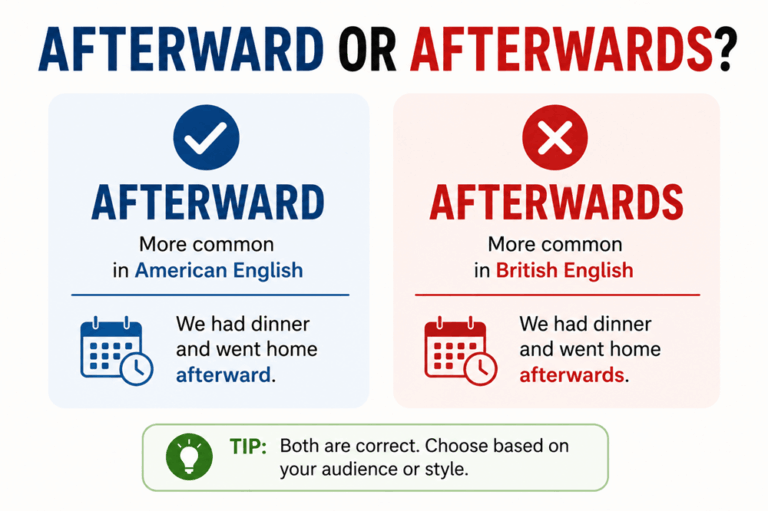
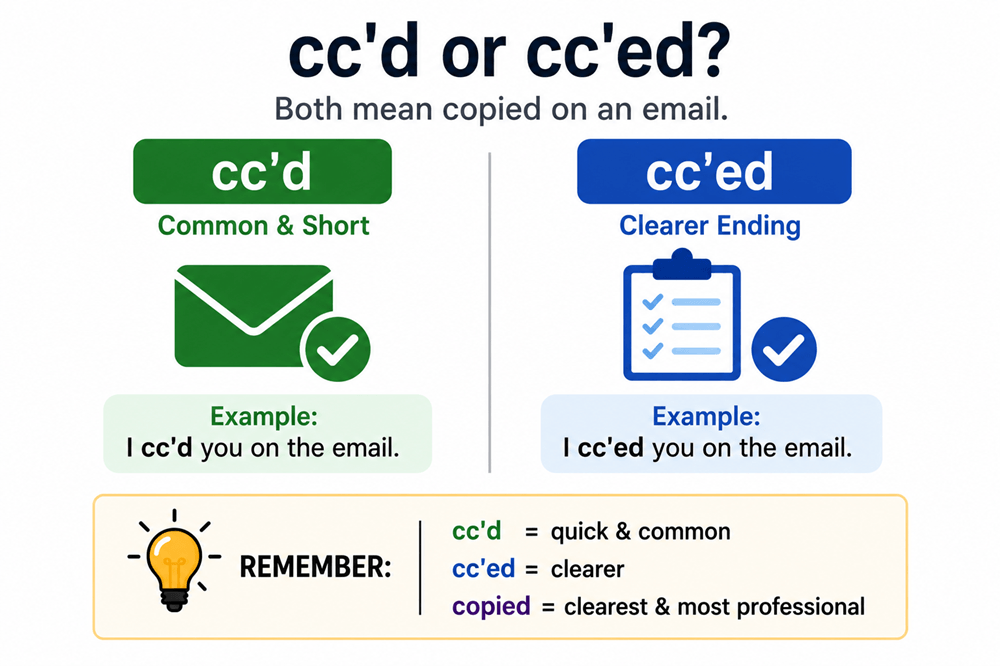
Cc’d, cc’ed, and CCed are all used when talking about adding someone to the carbon copy line of an email. However, cc’d is the shortest and most common informal style, while cc’ed is often clearer because it shows the spoken ending more directly. For polished writing, copied or included on the email is usually the clearest choice.
Quick Answer
Use cc’d or CC’d in casual and workplace writing when you mean someone was copied on an email.
- I cc’d Maria on the email.
- She was cc’d on the message.
- Please make sure James is CC’d on the thread.
Use cc’ed if you want the spelling to show the pronunciation more clearly.
- I cc’ed Maria on the email.
- She cc’ed the whole team.
- They were cc’ed on the update.
The simple rule is: cc’d is common and concise; cc’ed is clearer but a little more awkward-looking.
Cc’d or Cc’ed: What Is the Difference?
The difference between cc’d and cc’ed is spelling style, not meaning. Both forms mean that someone was added to the cc line of an email. The person receives a copy of the message, but they are usually not the main recipient.
| Form | Use | Example |
|---|---|---|
| Cc’d / cc’d | Common shortened form | I cc’d her on the email. |
| Cc’ed / cc’ed | Clearer pronunciation-based form | I cc’ed her on the email. |
| CCed / cced | Simpler no-apostrophe form | I CCed her on the email. |
In everyday email and office language, readers will understand all three. The best choice depends on tone, style, and how polished the writing needs to be.
What Does Cc Mean?
Cc stands for carbon copy. In email, it means someone receives a copy of a message. The main recipient appears in the To field, while additional people appear in the Cc field.
Examples:
- Please cc me on the final version.
- I will cc the manager so she has the update.
- He forgot to cc the finance team.
When you cc someone, you are not usually asking that person to take the main action. You are keeping them informed, making the message visible to them, or documenting that they received the information.
What Does Cc’d Mean?
Cc’d is a shortened past tense form of cc. It means someone was copied on an email.
Examples:
- I cc’d you on the invoice email.
- She cc’d her supervisor on the response.
- Were you cc’d on that message?
- He should have cc’d the project lead.
- The client was cc’d by mistake.
The apostrophe in cc’d shows that letters are missing from the fuller spoken form. It also helps separate the abbreviation cc from the past tense ending.
This form is short and familiar. That is why many people use it in quick workplace messages.
What Does Cc’ed Mean?
Cc’ed is another way to write the same past tense idea. It adds ’ed after cc, so the word more clearly shows the pronunciation: “see-seed.”
Examples:
- I cc’ed you on the original email.
- She cc’ed everyone involved in the meeting.
- They cc’ed legal before sending the contract.
- He accidentally cc’ed the wrong person.
Cc’ed may look slightly heavier than cc’d, but it can be easier for some readers to understand at a glance. This is especially true when the abbreviation is lowercase, because cc’d can look visually cramped.
What About CCed?
CCed is also used. It avoids the apostrophe completely and treats CC more like an ordinary verb.
- I CCed you on the email.
- She CCed the team.
- They were CCed on the announcement.
This form is clean, but some readers may find it odd because CC is an abbreviation. In very formal writing, it may be better to avoid all of these forms and write the sentence differently.
Clearer:
- I copied you on the email.
- She included the team on the email.
- They received a copy of the message.
Spelling Structure: Why Cc’d Uses an Apostrophe
Cc’d is formed from:
- cc + ’d = cc’d
The ’d ending is a shortened version of the past tense sound. This is similar to forms like:
- OK’d
- RSVP’d
- DM’d
The apostrophe helps show that an abbreviation is being turned into a verb. It also keeps the spelling from looking like a strange cluster of letters.
Think of it this way:
- cc = copy someone on an email
- cc’d = copied someone on an email
Spelling Structure: Why Cc’ed Uses “ed”
Cc’ed is formed from:
- cc + ’ed = cc’ed
This version makes the past tense ending more visible. Since people pronounce cc’ed like “see-seed,” the ed ending can feel more natural than just ’d.
The tradeoff is appearance. Cc’ed is clearer, but it can look a little awkward because it has both an apostrophe and an added ending.
That is why the choice often comes down to preference:
- cc’d = shorter and common
- cc’ed = clearer and more explicit
Should You Capitalize Cc?
You may see several styles:
- cc’d
- Cc’d
- CC’d
- cc’ed
- Cc’ed
- CCed
In email interfaces, the label is often written as Cc. In casual writing, many people use lowercase cc as a verb. In business writing, CC may look more like the abbreviation.
The most important rule is consistency. Do not switch between several versions in the same document.
Inconsistent:
- I cc’d Anna, and then Mark was CCed later.
Better:
- I cc’d Anna, and then Mark was cc’d later.
Or:
- I copied Anna, and then Mark was copied later.
When to Use Cc’d
Use cc’d in casual workplace messages, quick notes, emails, and chats.
- I cc’d you so you can follow the thread.
- She cc’d the department head.
- Please keep me cc’d on updates.
- He was cc’d for visibility.
This is probably the most natural form in everyday office communication. It is short, familiar, and easy to type.
When to Use Cc’ed
Use cc’ed when you want the past tense to be more obvious.
- I cc’ed the hiring manager.
- They cc’ed the support team.
- Were you cc’ed on the original message?
This form may be useful when writing for readers who might not immediately understand cc’d. It is also helpful when lowercase cc’d looks too short or unclear in the sentence.
When to Avoid Both
In polished writing, it is often better to avoid both cc’d and cc’ed. These forms are useful, but they are still informal and email-specific.
Instead of writing:
- I cc’d the client.
You can write:
- I copied the client on the email.
- I included the client on the email.
- I sent the client a copy.
These versions are clearer for formal reports, legal writing, public articles, and documents where email slang may feel too casual.
Common Mistakes
A common mistake is thinking only one form is correct. In reality, cc’d, cc’ed, and CCed are all understandable. The issue is style, not basic meaning.
Another mistake is using too many versions in one piece of writing.
Inconsistent:
- I cc’ed Paul, but I forgot to CC’d Nina.
Better:
- I cc’d Paul, but I forgot to cc Nina.
Another clean option:
- I copied Paul, but I forgot to copy Nina.
How to Remember Cc’d and Cc’ed
Use these memory tips:
- Cc’d is short, common, and good for quick email language.
- Cc’ed shows the ed sound more clearly.
- Copied is the clearest choice when you want polished writing.
- Pick one style and use it consistently.
A simple memory sentence is: Cc’d is quick; cc’ed is clearer; copied is cleanest.
Final Answer
Cc’d and cc’ed are both used to mean copied on an email. Cc’d is shorter and very common in workplace writing. Example: I cc’d you on the email.
Cc’ed is also acceptable and makes the past tense ending clearer. Example: I cc’ed you on the email.
For the clearest formal writing, use copied instead. Example: I copied you on the email. To remember the difference, use this rule: cc’d is concise, cc’ed is explicit, and copied is safest.