Cringy or Cringey: Which Spelling Is Correct and When Should You Use It
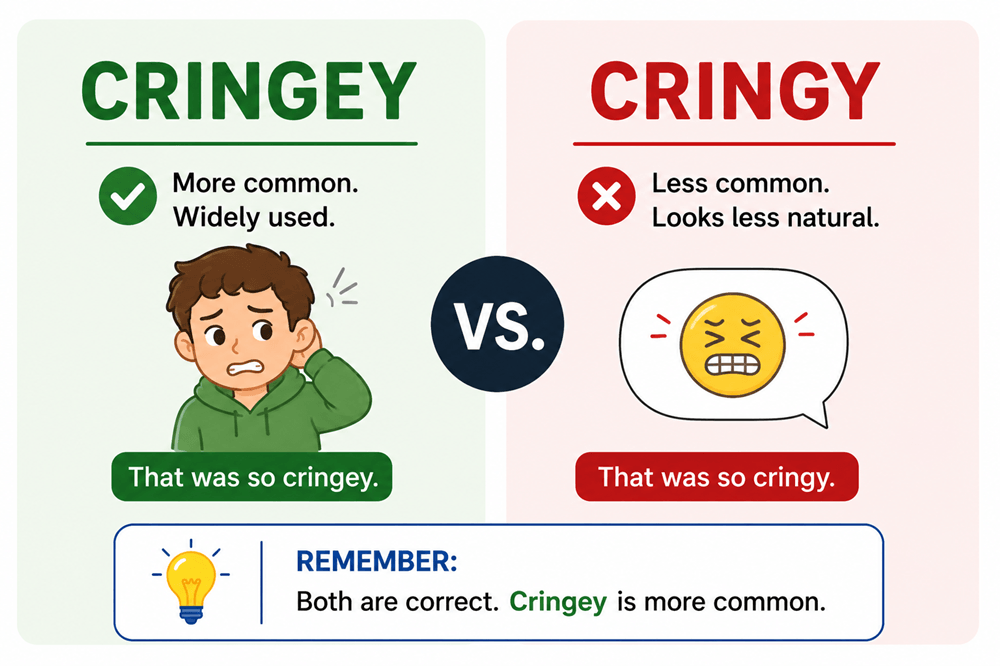
If you are choosing between cringy or cringey, both spellings are used, but cringey is often the more familiar choice in modern casual writing. Cringy is also understandable and follows a normal spelling pattern, but it can look less natural to some readers. Both words describe something awkward, embarrassing, uncomfortable, or painfully forced.
Cringy or Cringey: What Is the Difference?
Cringy and cringey mean the same thing. They both describe something that makes you cringe. If a joke feels painfully awkward, a video feels embarrassing, or a comment makes you physically uncomfortable from secondhand embarrassment, you can call it cringy or cringey.
The difference is mostly spelling preference and style. Cringey is very common in online writing, social media, texting, entertainment commentary, and casual speech. Cringy is shorter and follows the pattern of dropping the final e from cringe before adding y.
For example, both of these sentences make sense:
That old video is so cringey.
That old video is so cringy.
Most readers will understand both. Still, if you want the spelling that often looks more natural in casual modern English, cringey is usually the better pick.
What Does Cringey Mean?
Cringey is an adjective. It describes something that causes embarrassment, awkwardness, discomfort, or secondhand shame. You might use it when something feels too forced, too dramatic, too fake, too eager, or socially uncomfortable.
For example:
The speech was heartfelt, but a few jokes were cringey.
This means the jokes made people feel awkward instead of amused.
You might also write:
You found the scene cringey because the dialogue sounded unnatural.
Here, cringey means the scene was uncomfortable to watch because it did not feel believable.
The word is common when talking about old photos, awkward messages, embarrassing videos, bad flirting, forced trends, outdated posts, dramatic performances, and uncomfortable social moments.
What Does Cringy Mean?
Cringy has the same meaning as cringey. It also describes something that makes you cringe. The spelling is slightly shorter, and some people prefer it because it follows a common spelling rule.
The base word is cringe. When a word ending in silent e takes a suffix like y, English often drops the e. That gives you:
cringe – e + y = cringy
That makes cringy look logical. You see a similar pattern in words like:
smoke → smoky
ice → icy
shine → shiny
So cringy is not a random mistake. It has a spelling pattern behind it. The only reason it may look odd is that many people are more used to seeing cringey, especially online.
Why Cringey Looks More Natural to Many Readers
Cringey keeps the e from cringe, which helps the word stay visually connected to the original verb. When you see cringey, your eye immediately recognizes cringe inside it.
That may be one reason many people prefer it. It looks softer, clearer, and easier to connect with the word cringe. It also helps preserve the soft g sound in your mind. Without the e, cringy can look strange at first, even though people still pronounce it with the soft g.
This is similar to how some informal adjectives keep extra letters to make the pronunciation or meaning feel clearer. English does not always choose the shortest spelling. Sometimes the more familiar-looking spelling wins in everyday use.
Which Spelling Should You Use?
For most casual writing, cringey is the safer choice. It is widely recognized, easy to understand, and common in modern informal English.
Use cringey when writing:
social media captions
texts or comments
entertainment reviews
blog posts
personal essays
casual explanations
online articles
For example:
The movie had a few cringey moments, but the ending worked.
You deleted the post because it felt cringey years later.
His fake confidence made the whole interview cringey.
You can use cringy too, especially if you prefer the shorter spelling. But because cringey looks more familiar to many readers, it often feels smoother.
Is Cringey Too Informal?
Yes, cringey is informal. So is cringy. Both words belong mostly in casual writing and conversation. They are not usually the best choice for formal essays, academic papers, business reports, or polished professional documents.
If you need a more formal alternative, you can use words like:
awkward
embarrassing
uncomfortable
forced
unpleasant
painfully awkward
For example, instead of writing:
The presentation was cringey.
You could write:
The presentation felt awkward and overly rehearsed.
That version sounds more professional. But for casual writing, cringey works perfectly well.
A Simple Way to Remember Cringey
To remember cringey, connect it with the word cringe.
Cringey keeps cringe inside it.
That is the easiest memory trick. If something makes you cringe, it is cringey. The spelling keeps the base word almost completely visible.
You can also remember this phrase:
Cringey keeps the E for extra embarrassment.
That little trick helps because the main difference between the two spellings is the extra e. Since cringey often describes an extra awkward feeling, you can let the extra e remind you of the emotional meaning.
A Simple Way to Remember Cringy
To remember cringy, think of the spelling rule:
Drop the E before adding Y.
That gives you:
cringe → cringy
This spelling is useful if you like words that follow a neat pattern. The same idea appears in smoke → smoky and ice → icy. So while cringy may look less common, it is not hard to explain.
Still, if your goal is to choose the spelling most readers are likely to accept without pausing, cringey is usually better.
Cringy vs Cringey in Example Sentences
Both spellings can work in many of the same sentences:
Common: That commercial was painfully cringey.
Also understandable: That commercial was painfully cringy.
Common: You found your old diary cringey but funny.
Also understandable: You found your old diary cringy but funny.
Common: The fake apology sounded cringey.
Also understandable: The fake apology sounded cringy.
Common: His pickup line was more cringey than charming.
Also understandable: His pickup line was more cringy than charming.
The meaning stays the same. The style changes slightly. Cringey feels more familiar and casual. Cringy feels shorter and more rule-based.
The Final Answer on Cringy or Cringey
Cringy and cringey both mean awkward, embarrassing, or uncomfortable enough to make you cringe. Neither spelling is hard to understand, but cringey is often the more common and natural-looking choice in modern casual writing.
To remember the difference, think of cringey as the spelling that keeps cringe visible. Think of cringy as the shorter spelling that follows the rule of dropping the silent e before adding y.
So if you are writing a casual sentence and want the safest spelling, choose cringey. If you prefer the shorter form, cringy can still make sense. For formal writing, use a clearer word like awkward, embarrassing, or uncomfortable.