Offense or Offence: Correct Spelling, Regional Differences, and Easy Ways to Remember
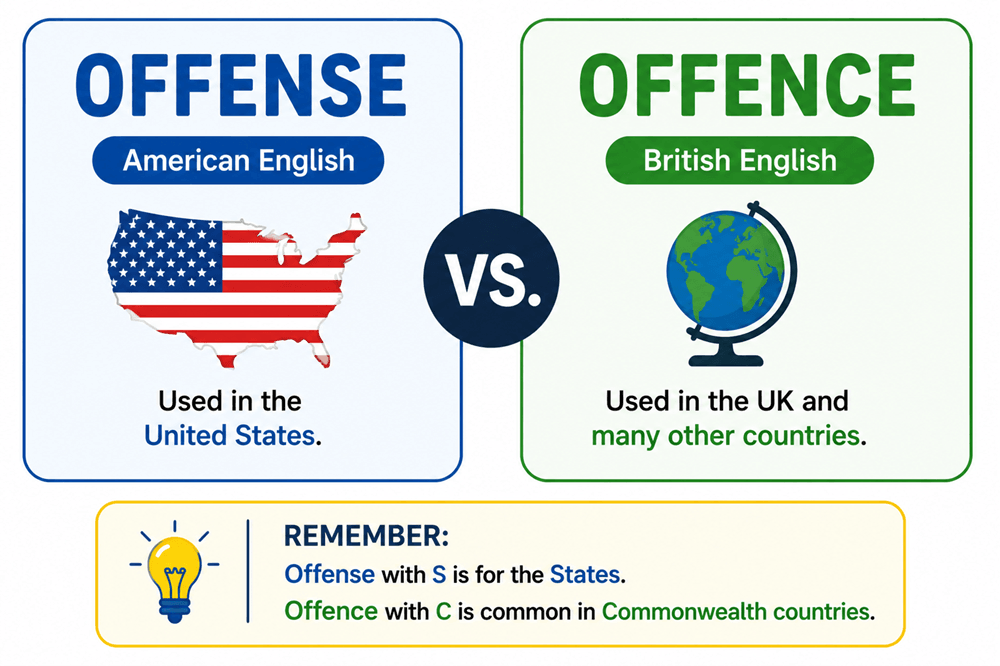
If you are choosing between offense or offence, both spellings can be correct. The difference is mostly regional. Offense is the standard spelling in American English, while offence is the standard spelling in British English and many other varieties of English. The meaning is usually the same, but the spelling should match your audience.
Offense or Offence: What Is the Difference?
Offense and offence mean the same thing in most contexts. They can refer to a crime, a violation, an insult, a hurt feeling, or the attacking side in sports. The spelling changes depending on whether you are using American English or British English.
Use offense in American English.
Use offence in British English.
For example:
American English: The player joined the team’s offense.
British English: The comment caused offence.
The word is not usually a case of one spelling being completely wrong. Instead, it is a case of choosing the spelling that fits your region, publication style, or intended audience.
What Does Offense Mean?
Offense is the American spelling. It can have several meanings, but they all connect to the idea of an action that attacks, breaks a rule, or causes harm.
In law, an offense can mean a crime or violation.
Parking in that area may be considered an offense.
In personal communication, offense can mean hurt, insult, or resentment.
You did not mean to cause offense with your question.
In sports, especially American football, basketball, and similar team sports, offense refers to the team or strategy focused on scoring.
The offense played aggressively in the second half.
If you are writing for a mostly American audience, offense is the spelling that will look natural.
What Does Offence Mean?
Offence is the British spelling. It is also common in many English-speaking places that follow British spelling patterns, such as the UK, Ireland, Australia, New Zealand, and parts of Canada.
Like offense, it can refer to a crime, insult, violation, or act of wrongdoing.
For example:
He was charged with a serious offence.
This means he was charged with a serious crime or legal violation.
You might also write:
No offence was intended by the remark.
This means the speaker did not mean to insult or upset anyone.
If you are writing for a British or international audience that expects British spelling, offence is usually the better choice.
Why Offense and Offence Are Easy to Confuse
Offense and offence are easy to confuse because they sound the same and mean almost the same thing. The only spelling difference is the ending:
offense ends in -se
offence ends in -ce
That small difference follows a larger American-versus-British spelling pattern. American English often uses -se where British English uses -ce in certain nouns.
You can see a similar pattern in:
defense and defence
license and licence, though this pair can be more complicated in British English because license may be used as a verb
pretense and pretence
Once you recognize this spelling family, offense and offence become easier to place.
A Simple Way to Remember Offense
To remember offense, connect the s with the United States.
Offense with S is for the States.
This is a simple memory trick because American English uses offense, and States begins with s. If your audience is American, choose the spelling with s.
You can also remember:
American offense matches American defense.
Both words end in -se in American English. If you write defense, you should usually write offense too.
A Simple Way to Remember Offence
To remember offence, connect the c with Commonwealth spelling.
Offence with C is common in Commonwealth English.
This works because many places that use British-style spelling also use offence. The c can remind you of countries that follow that convention.
You can also remember:
British offence matches British defence.
Both words end in -ce in British English. If your article uses defence, it should probably use offence as well.
Offense and Offence in Legal Writing
In legal writing, the regional spelling matters because the word may appear in official documents, rules, policies, and laws. If you are writing in the United States, use offense.
The driver committed a traffic offense.
If you are writing in British English, use offence.
The driver committed a traffic offence.
The meaning is the same: a rule or law was broken. But the spelling should match the legal system or audience you are writing for. In legal contexts, consistency matters because a spelling that looks normal in one country may look odd in another.
Offense and Offence in Everyday Writing
In everyday writing, offense and offence often refer to hurt feelings, insult, or emotional reaction.
American English:
You took offense at the joke.
British English:
You took offence at the joke.
Both sentences mean the same thing. The person felt insulted, hurt, or annoyed by the joke.
You may also see the phrase no offense or no offence.
No offense, but that idea needs more work.
No offence, but that idea needs more work.
This phrase is often used before a direct or critical comment. It can sound casual, defensive, or even rude depending on tone, so it should be used carefully.
Offense in Sports
In American sports writing, offense is especially common. It often means the part of the team responsible for scoring.
For example:
The offense struggled during the first quarter.
A strong offense can control the pace of the game.
The coach changed the offense after halftime.
In British English, sports writing may still use different terminology depending on the sport. But when the word is used, British-style spelling would normally be offence.
Offense vs Offence in Side-by-Side Examples
These examples show how both spellings can be correct depending on region:
American: He was charged with a minor offense.
British: He was charged with a minor offence.
American: She took offense at the comment.
British: She took offence at the comment.
American: The team’s offense looked stronger this season.
British: The team’s offence looked stronger this season.
American: No offense was intended.
British: No offence was intended.
The meaning does not change. The spelling changes according to the English variety you are using.
How to Choose the Right Spelling
Before choosing between offense and offence, ask yourself who your reader is.
If your reader is mainly in the United States, use offense.
If your reader is mainly in the UK, Australia, New Zealand, Ireland, or another place that follows British spelling, use offence.
If you are writing for your own website, pick one spelling style and stay consistent. Do not switch between offense and offence in the same article unless you are intentionally comparing them.
Consistency makes your writing look cleaner and more professional.
The Final Answer on Offense or Offence
Offense and offence are both correct spellings. Offense is American English. Offence is British English. The word can refer to a crime, rule violation, insult, hurt feeling, or attacking side in sports.
To remember the difference, use this simple clue: offense with S is for the States. For British and Commonwealth spelling, remember that offence matches defence.
So if you are writing for American readers, choose offense. If you are writing for British-style English readers, choose offence. Both are valid, but the best spelling depends on your audience.