Flakey or Flaky: Correct Spelling, Meaning, and Easy Ways to Remember
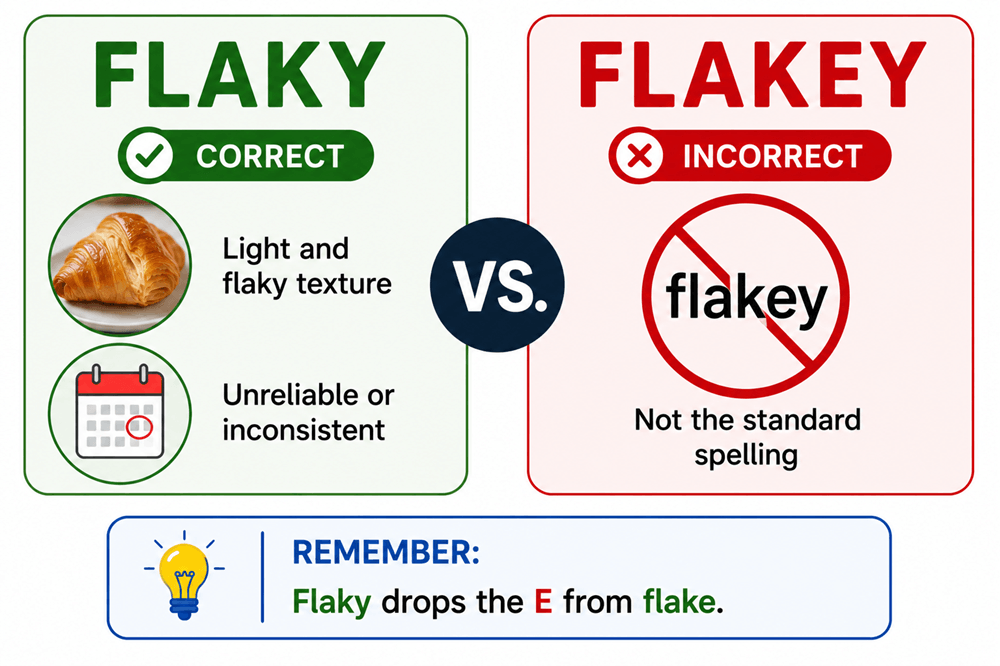
If you are choosing between flakey or flaky, the standard spelling is flaky. It can describe something that breaks into thin layers, like pastry or dry skin. It can also describe a person who is unreliable, forgetful, or likely to cancel plans. Flakey may appear sometimes as a variant, but flaky is the cleaner and more accepted spelling.
Flakey or Flaky: Which Spelling Is Correct?
The usual correct spelling is flaky.
Flakey is less common and is usually treated as a variant spelling. In most modern writing, especially schoolwork, articles, recipes, product descriptions, emails, and professional content, flaky is the better choice.
You should write:
Correct: The croissant was buttery and flaky.
Less common: The croissant was buttery and flakey.
You should also write:
Correct: He has been acting flaky about the meeting.
Less common: He has been acting flakey about the meeting.
The meaning is usually understood either way, but flaky is the spelling most readers expect. If you want your writing to look polished and standard, choose flaky.
What Does Flaky Mean?
Flaky is an adjective with two main meanings. The first meaning is physical. It describes something made of, covered with, or breaking into thin layers or flakes.
For example:
The pie crust was light and flaky.
This means the crust had thin, delicate layers that broke apart easily.
You might also write:
Your skin feels dry and flaky in winter.
Here, flaky means the skin is peeling or forming tiny dry pieces.
The second meaning is about behavior. When a person is called flaky, it usually means they are unreliable, inconsistent, forgetful, scattered, or likely to change plans at the last minute.
For example:
She is friendly, but she can be flaky about showing up on time.
This means she may not always follow through reliably.
Why Flakey Looks Like It Could Be Right
The spelling flakey looks logical because the base word is flake. Since flake ends in a silent e, your mind may expect the full word to stay visible when -y is added:
flake + y = flakey
That seems reasonable at first. English sometimes keeps letters in ways that help the base word remain recognizable. But in this case, the standard spelling drops the final silent e before adding y.
The usual pattern is:
flake – e + y = flaky
This is the same kind of change you see in words like:
smoke → smoky
ice → icy
shine → shiny
So even though flakey may look understandable, flaky follows the standard spelling pattern more cleanly.
The Simple Spelling Rule for Flaky
The basic rule is:
Drop the silent E before adding Y.
That gives you:
flake → flaky
You do not need to keep the e from flake. The word still keeps its long a sound, and readers still recognize the connection to flakes.
This is why flaky has only one e, and that e appears in the middle of the word, not before the final y.
You can picture it like this:
f l a k y
Not:
f l a k e y
The shorter version is the standard version.
A Simple Way to Remember Flaky
The easiest memory trick is:
Flaky drops the E from flake.
Start with flake. Remove the silent e. Add y. You get flaky.
You can also remember this phrase:
A flaky crust breaks away, and the E breaks away too.
This gives you a visual clue. When something is flaky, little pieces may break away. In the spelling, the silent e also “breaks away” before the y.
Another short reminder is:
Flaky is the simple spelling.
If you are choosing between the longer flakey and the shorter flaky, choose the shorter one for standard writing.
Flaky for Food and Texture
One common use of flaky is in food writing. It often describes baked goods with thin, delicate layers.
For example:
The biscuits came out warm, golden, and flaky.
The pastry should be tender, crisp, and flaky.
A good pie crust is flaky, not tough.
The fish was flaky and soft after baking.
In food descriptions, flaky is usually positive. It suggests lightness, tenderness, and a pleasing texture. A flaky croissant, flaky biscuit, flaky crust, or flaky piece of fish sounds appetizing.
This use is easy to remember because it connects directly to flakes. A flaky food separates into small layers or pieces.
Flaky for Skin, Paint, and Surfaces
Flaky can also describe surfaces that peel, chip, or come off in small pieces.
For example:
The old paint became dry and flaky.
Your scalp may feel itchy and flaky.
The wall had flaky patches near the window.
The cold weather left your hands rough and flaky.
In these examples, flaky is usually negative or neutral. It describes something that is dry, damaged, peeling, or not smooth.
The spelling stays the same whether the word describes pastry, skin, paint, fish, or any other surface.
Flaky for People and Behavior
The figurative meaning of flaky describes someone who is not dependable. A flaky person may cancel plans often, forget commitments, change their mind suddenly, or fail to follow through.
For example:
He is fun to talk to, but he is flaky about making plans.
You stopped relying on her because she became too flaky.
The group needed someone steady, not flaky.
His flaky communication made the project harder than it needed to be.
This use is informal. It works well in casual writing, personal essays, conversations, and everyday descriptions. In formal writing, you may prefer words like unreliable, inconsistent, undependable, or unpredictable.
Is Flakey Ever Correct?
Flakey may appear sometimes, especially in informal writing, brand names, usernames, or creative spelling. Some readers may understand it without trouble. However, it is not the preferred spelling in standard modern English.
For ordinary writing, flaky is the safer answer. It looks cleaner, follows the usual spelling rule, and matches what most dictionaries, editors, and readers expect.
Use flakey only if it is part of a proper name, a brand spelling, a quoted title, or a deliberate stylistic choice. Otherwise, write flaky.
Flakey vs Flaky in Example Sentences
Side-by-side examples make the spelling difference easier to see:
Correct: The pastry was flaky and buttery.
Less common: The pastry was flakey and buttery.
Correct: The paint looked dry and flaky.
Less common: The paint looked dry and flakey.
Correct: She gets flaky when plans are made too far ahead.
Less common: She gets flakey when plans are made too far ahead.
Correct: The salmon was tender and flaky.
Less common: The salmon was tender and flakey.
Correct: His flaky behavior made the team nervous.
Less common: His flakey behavior made the team nervous.
The meaning is clear in both versions, but flaky is the standard spelling.
Common Phrases With Flaky
Here are common phrases that use flaky naturally:
Flaky crust means a crust with light, thin layers.
The secret to flaky crust is cold butter.
Flaky skin means dry or peeling skin.
The lotion helped with flaky skin.
Flaky paint means paint that is peeling or chipping.
The flaky paint made the door look old.
Flaky friend means a friend who is unreliable about plans.
You like him, but he can be a flaky friend.
Flaky texture means a texture that separates into small pieces or layers.
The fish had a soft, flaky texture.
In every phrase, flaky is the better spelling.
How to Check Yourself Before Writing Flaky
Before choosing between flakey and flaky, ask whether you are describing layers, peeling, texture, or unreliable behavior. If yes, the word you need is almost always flaky.
Then use the spelling check:
Start with flake.
Drop the silent E.
Add Y.
Write flaky.
This quick check works because the main mistake is keeping the e. Once you remember that the e drops, the spelling becomes simple.
The Final Answer on Flakey or Flaky
The standard spelling is flaky. Use it when describing something that breaks into flakes, forms thin layers, peels away, or feels dry and patchy. You can also use it informally for someone who is unreliable or inconsistent.
Flakey may appear as a less common variant, but it is not the best choice for most modern writing. To remember the spelling, use this simple rule: flaky drops the E from flake.
So when you are writing about pastry, pie crust, fish, skin, paint, surfaces, or unreliable behavior, choose flaky. It is the clean, standard, and reader-friendly spelling.