Lein or Lien: Which Spelling Is Correct?
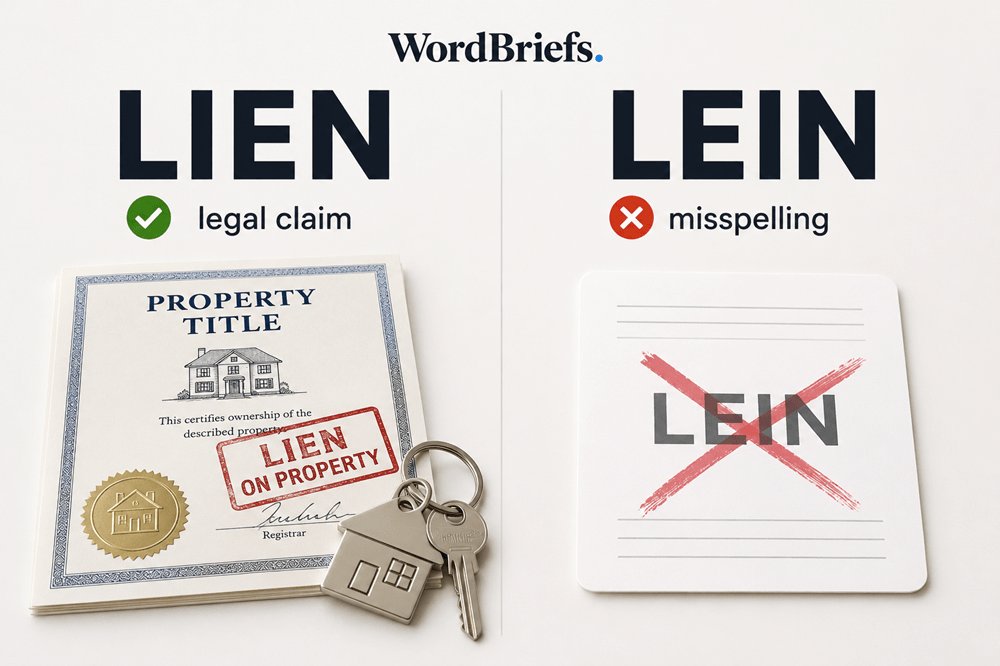
The correct spelling is lien.
Lein is usually a misspelling when you mean a legal claim against property, money, or an asset.
Examples:
- The bank placed a lien on the property.
- The contractor filed a lien for unpaid work.
- The car still has a lien on the title.
- You should check whether there is a lien before buying the house.
The spelling lein may appear as a surname or name in some cases, but it is not the standard spelling for the legal word. If you are talking about a claim, debt, title, mortgage, car loan, property, or unpaid bill, the word you probably want is lien.
Quick Answer
Use lien.
Do not use lein when you mean a legal claim.
Correct:
- There is a lien on the house.
Incorrect:
- There is a lein on the house.
The word lien can look strange because it does not sound exactly the way many people expect. Since it is pronounced like leen, people often guess the spelling as lein. But the correct order is:
l-i-e-n
Not:
l-e-i-n
What Does Lien Mean?
A lien is a legal claim against property or another asset. It usually exists because someone owes money.
For example, if a person buys a car with a loan, the lender may have a lien on the car until the loan is paid off. If a homeowner does not pay a contractor, the contractor may be able to file a lien against the property.
Simple examples:
- The lender has a lien on the car.
- The unpaid taxes created a lien on the property.
- The house cannot be sold easily until the lien is resolved.
- A mechanic’s lien may happen when repair work is not paid for.
In everyday language, a lien means someone has a legal interest in property because of a debt or obligation.
Why Is Lein Wrong?
Lein is wrong when you mean the legal word lien.
The correct spelling is:
l-i-e-n
The incorrect spelling is:
l-e-i-n
This mistake happens because English has many words with confusing ie and ei patterns. People may remember the phrase “i before e,” but they may still reverse the letters when typing quickly.
In this word, the correct spelling is lien, with i before e.
Think:
lien = li + en
Not:
lein = le + in
Is Lein Ever Correct?
Lein can be a surname or a name, so it is not impossible to see it written somewhere.
Example:
- Mr. Lein signed the document.
In that sentence, Lein is a person’s name, so it can be correct.
But if you are writing about property, debt, loans, legal claims, cars, titles, or unpaid bills, lein is almost certainly wrong. The standard English word is lien.
Correct:
- The property has a lien.
Incorrect:
- The property has a lein.
Lien vs. Loan
People also sometimes connect lien with loan, and that makes sense because liens often appear in financial situations.
A loan is borrowed money.
A lien is a legal claim connected to property or an asset, often because of a loan or unpaid debt.
Examples:
- She took out a loan to buy the car.
- The lender placed a lien on the car.
The loan is the money borrowed.
The lien is the claim against the car until the debt is paid.
They are related, but they are not the same word.
Common Types of Liens
You may see lien in phrases like:
- property lien
- tax lien
- mechanic’s lien
- judgment lien
- mortgage lien
- car lien
- lien holder
A lien holder is the person, company, or lender that has the legal claim.
Example:
- The bank is listed as the lien holder on the car title.
This means the bank has an interest in the car until the loan is paid.
How to Remember the Spelling
A simple way to remember lien is:
A lien is tied to a loan or legal claim.
Both lien and legal start with l, and both are connected in meaning.
Another memory trick:
Lien has “lie” at the start, but it is not a lie.
Look at the spelling:
lien = l + i + e + n
The first three letters are lie.
That may help you remember the correct order: l-i-e.
You can also think:
A lien can lie on a title.
This sentence sounds a little playful, but it helps connect the spelling lie inside lien with the idea of a claim sitting on a property title.
Spelling Structure
The word lien has four letters:
l-i-e-n
The tricky part is the middle:
ie
Many people accidentally reverse the letters and write lein, but that is not the standard legal word.
Correct spelling:
lien
Common misspelling:
lein
Other possible mistakes include:
- lean
- line
- lienn
- lein
The word lean is especially different. Lean can mean to tilt or to be thin, and it is not the same as lien.
Examples:
- The ladder began to lean against the wall.
- The bank placed a lien on the property.
Lien in Sentences
Here are some examples of lien used correctly:
- The house had a tax lien.
- The lender removed the lien after the loan was paid.
- A title search can reveal a lien on a property.
- The mechanic filed a lien for unpaid repairs.
- The buyer refused to purchase the car because it had a lien.
- The bank was still the lien holder.
- The property owner had to clear the lien before selling the house.
In each sentence, lien refers to a legal or financial claim.
Common Mistakes
Mistake 1: Writing lein instead of lien
Incorrect:
- The car has a lein on it.
Correct:
- The car has a lien on it.
If the word means a legal claim, use lien.
Mistake 2: Confusing lien with lean
Incorrect:
- The bank placed a lean on the house.
Correct:
- The bank placed a lien on the house.
Lean means to tilt or to be thin. Lien means a legal claim.
Mistake 3: Capitalizing lien for no reason
Incorrect:
- The property has a Lien.
Correct:
- The property has a lien.
Do not capitalize lien unless it appears at the beginning of a sentence or in a title.
Final Answer: Lein or Lien?
The correct spelling is lien.
Lein is usually a misspelling when you are talking about a legal claim against property, a car, a title, or another asset.
Use lien in phrases like:
- property lien
- tax lien
- car lien
- mechanic’s lien
- lien holder
The easiest way to remember it is that lien begins with lie:
l-i-e-n
So the correct spelling is:
lien
Not:
lein