Another Word for In Addition: Better Alternatives With Examples
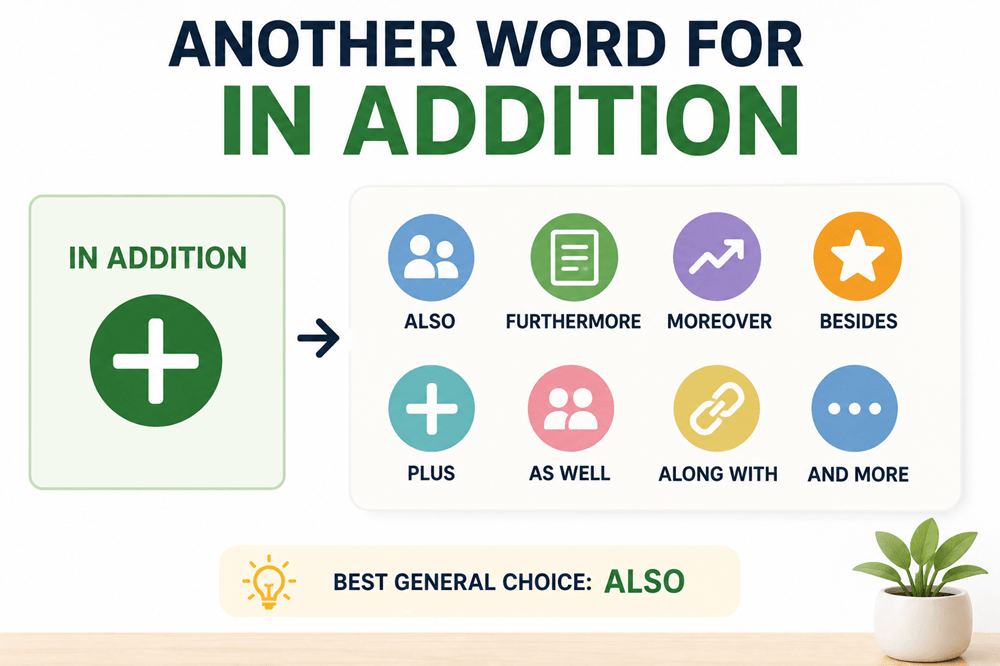
If you need another word for in addition, the best choice is usually also.
In addition is used when you want to add more information to a sentence or paragraph. It means also, as well, or besides that.
Examples:
- The hotel has free parking. In addition, it offers breakfast.
- She speaks Spanish. In addition, she is learning French.
- The app is easy to use. In addition, it is free.
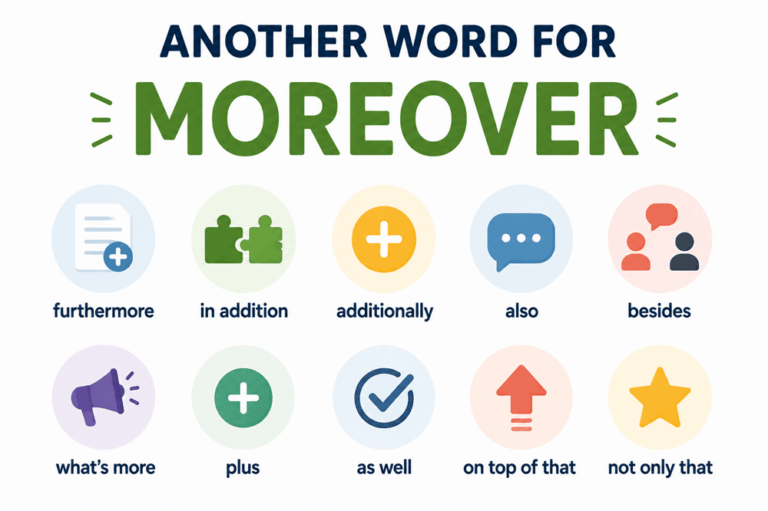
Good alternatives include also, besides, furthermore, moreover, as well, plus, along with, and additionally.
The best word depends on your tone. Some choices are formal, while others sound casual and conversational.
Quick Answer
Good alternatives for in addition include:
- also
- additionally
- besides
- furthermore
- moreover
- as well
- plus
- along with
- on top of that
- what’s more
- not only that
- to add to that
Best general replacement:
also
Example:
- The course is affordable. In addition, it is beginner-friendly.
- The course is affordable. It is also beginner-friendly.
Best formal replacement:
furthermore
Example:
- The evidence is strong. Furthermore, it supports the main argument.
Best casual replacement:
plus
Example:
- The room is clean. Plus, it has a great view.
What Does In Addition Mean?
In addition means that you are adding another point.
It helps connect ideas smoothly.
Example:
- The job pays well. In addition, it offers flexible hours.
This means the job has one benefit, and there is another benefit too.
You can use in addition in essays, reports, articles, emails, and presentations. It is clear and useful, but it can sound a little formal if you use it too often.
Also
Also is the simplest replacement for in addition.
Examples:
- She is a writer. She is also a teacher.
- The website is fast. It is also easy to use.
- He bought milk. He also bought bread.
Also works well in almost every type of writing. It is shorter and more natural than in addition.
Compare:
- In addition, the plan saves money.
- The plan also saves money.
The second sentence is smoother and more direct.
Additionally
Additionally means the same thing as in addition.
It sounds formal and polished.
Examples:
- The plan reduces costs. Additionally, it improves efficiency.
- The article explains spelling rules. Additionally, it gives examples.
- The software is secure. Additionally, it is easy to install.
Use additionally in essays, reports, business writing, and professional explanations.
However, avoid using it too often. It can sound stiff if every paragraph begins with additionally.
Furthermore
Furthermore is a formal alternative.
It means you are adding a point that strengthens the previous idea.
Examples:
- The rule is easy to understand. Furthermore, it is easy to apply.
- The study had a large sample size. Furthermore, the results were consistent.
- The proposal is affordable. Furthermore, it can be implemented quickly.
Use furthermore when the new point supports or strengthens your argument.
It is common in academic writing, essays, and formal reports.
Moreover
Moreover is similar to furthermore.
It adds another important point and often sounds formal.
Examples:
- The method is simple. Moreover, it produces reliable results.
- The policy is fair. Moreover, it is easy to enforce.
- The product is affordable. Moreover, it lasts a long time.
Moreover can sound more serious than also or plus.
Use it when you want your writing to sound polished and logical.
Besides
Besides can mean in addition to that.
Examples:
- I do not want to go out. Besides, it is raining.
- The apartment is too small. Besides, the rent is high.
- She is talented. Besides, she works very hard.
Besides often adds a reason or extra point.
It can sound slightly conversational, but it is still acceptable in many types of writing.
As Well
As well means also or too.
Examples:
- She sings and plays guitar as well.
- The guide explains grammar and spelling as well.
- We need chairs, tables, and lights as well.
As well usually comes near the end of a sentence.
Compare:
- She is a manager. In addition, she trains new employees.
- She is a manager and trains new employees as well.
This sounds natural and conversational.
Plus
Plus is a casual alternative to in addition.
Examples:
- The phone is cheap. Plus, it has a good camera.
- The recipe is easy. Plus, it only takes 20 minutes.
- The hotel is close to the beach. Plus, breakfast is included.
Use plus in casual writing, blog posts, product descriptions, and friendly explanations.
Avoid plus in very formal essays or academic papers.
Along With
Along with means together with or in addition to.
Examples:
- She brought her laptop, along with her notes.
- The meal came with soup, along with a salad.
- The article explains synonyms, along with example sentences.
Use along with when you are adding something that belongs with another thing.
It is especially useful inside a sentence.
On Top of That
On top of that is a casual phrase meaning in addition.
Examples:
- The car is expensive. On top of that, it needs repairs.
- He was late. On top of that, he forgot the documents.
- The room was noisy. On top of that, the bed was uncomfortable.
This phrase often adds emphasis. It can be positive or negative, but it is common when listing problems.
What’s More
What’s more means in addition, often with emphasis.
Examples:
- The book is short. What’s more, it is easy to understand.
- The service is fast. What’s more, it is affordable.
- The tool is free. What’s more, it works on any device.
This phrase sounds conversational but still polished. It works well in articles, reviews, and persuasive writing.
Formal Alternatives to In Addition
For formal writing, use:
- additionally
- furthermore
- moreover
- also
- along with
- in addition to
- as well as
Examples:
- Furthermore, the results support the main claim.
- Moreover, the policy is cost-effective.
- The report includes survey data, as well as expert interviews.
These choices work well in essays, reports, and professional writing.
Casual Alternatives to In Addition
For casual writing, use:
- also
- plus
- besides
- as well
- on top of that
- what’s more
Examples:
- The bag is stylish. Plus, it has lots of pockets.
- I like the design. It is affordable as well.
- The weather is bad. Besides, I am tired.
These alternatives sound more natural in everyday speech and blog-style writing.
In Addition vs In Addition To
In addition usually starts a new sentence or clause.
Example:
- The house is large. In addition, it has a garden.
In addition to comes before a noun, pronoun, or noun phrase.
Example:
- In addition to a garden, the house has a garage.
- In addition to English, she speaks French.
Do not confuse the two.
Correct:
- In addition, the course includes videos.
- In addition to videos, the course includes quizzes.
Common Mistakes
Mistake 1: Repeating in addition too often
Repetitive:
- In addition, the app is free. In addition, it is easy to use. In addition, it works offline.
Better:
- The app is free. It is also easy to use and works offline.
Mistake 2: Using furthermore in casual writing
Too formal:
- I like the pizza. Furthermore, the fries are good.
Better:
- I like the pizza. Plus, the fries are good.
Mistake 3: Using plus in formal essays
Too casual:
- The evidence is reliable. Plus, it supports the claim.
Better:
- The evidence is reliable. Furthermore, it supports the claim.
Final Answer: Another Word for In Addition
Good alternatives for in addition include also, additionally, besides, furthermore, moreover, as well, plus, along with, on top of that, and what’s more.
The best choice depends on tone:
Also = best general choice
Additionally = formal and clear
Furthermore = adds a strong supporting point
Moreover = formal and logical
Plus = casual and simple
As well = natural and conversational
Along with = good inside a sentence
For most writing, the safest alternative is:
also