Literally or Figuratively: Meaning Difference, Correct Usage, and Clear Examples for Writers
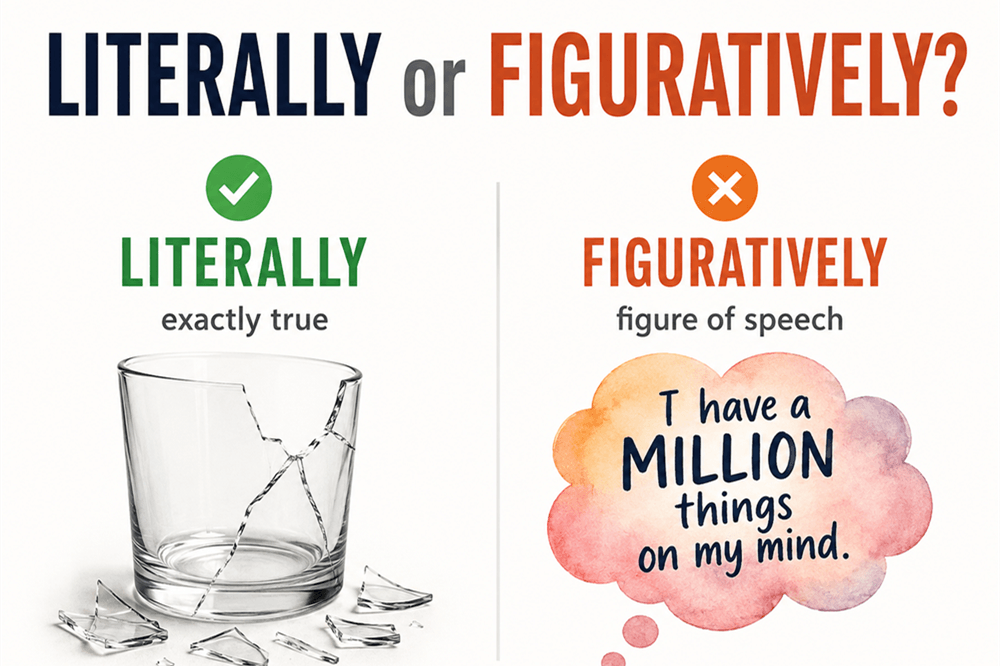
Literally and figuratively both describe how something should be understood. The quick difference is this: literally means something is true in the exact, real, or basic sense. Figuratively means something is not meant exactly, but is used as a figure of speech, comparison, exaggeration, or image. If something truly happened, use literally. If it is only an expressive way to describe something, use figuratively.
Quick Answer
Use literally when you mean something happened in a real or exact way.
- The box was literally too heavy to lift.
- She literally ran five miles before breakfast.
- The old building was literally falling apart.
Use figuratively when you mean something is not exact, but symbolic, exaggerated, or imaginative.
- He was figuratively carrying the whole team on his back.
- She was figuratively drowning in paperwork.
- The news figuratively knocked him off his feet.
The simple rule is: literally means exactly true; figuratively means not exactly true.
Literally or Figuratively: What Is the Difference?
The difference between literally and figuratively is the difference between exact meaning and non-exact meaning.
Literally means the words should be understood in their basic, direct, real sense. If you say, “The room was literally empty,” you mean there were actually no people or things in the room. You are not exaggerating or using a metaphor.
Figuratively means the words should not be taken in their exact sense. If you say, “The room was figuratively frozen,” you probably do not mean the room was covered in ice. You may mean the people were silent, tense, or emotionally cold.
| Word | Meaning | Use | Example |
|---|---|---|---|
| Literally | Exactly, actually, or truly | Real meaning | The glass literally broke. |
| Figuratively | Symbolically or not exactly | Non-literal meaning | His heart figuratively broke. |
Both words are useful, but they point readers in opposite directions. Literally tells the reader to take the statement as fact. Figuratively tells the reader to understand the statement as an image, expression, or comparison.
What Does Literally Mean?
Literally means in the exact or real sense of the words. It tells the reader that you are not speaking symbolically, casually, or exaggerating for effect.
For example, if you say, “I literally lost my keys,” you mean your keys are actually missing. If you say, “The road was literally blocked,” you mean something was truly preventing people from passing.
Examples:
- The door was literally locked from the inside.
- He literally jumped over the fence.
- The child literally cried for an hour.
- The floor was literally covered with water.
- She literally wrote the whole report by hand.
- The sign literally says “Do Not Enter.”
In each sentence, literally means the statement is meant exactly. The door was really locked. He really jumped. The floor was really covered with water.
What Does Figuratively Mean?
Figuratively means in a non-literal way. It tells the reader that the words are being used for effect, comparison, symbolism, exaggeration, or emotional force.
For example, if you say, “I am figuratively drowning in work,” you do not mean you are underwater. You mean you have too much work and feel overwhelmed. If you say, “Her words figuratively cut him,” you do not mean the words made a physical wound. You mean the words hurt him emotionally.
Examples:
- She was figuratively on top of the world after the promotion.
- He was figuratively buried under deadlines.
- The team was figuratively running on empty.
- That comment figuratively lit a fire under him.
- The city figuratively came alive at night.
- Her confidence figuratively opened doors for her.
In each sentence, the meaning is expressive rather than exact. The person is not truly buried, the city is not truly alive, and confidence does not literally open a physical door.
Literal Meaning Versus Figurative Meaning
A literal meaning is the direct meaning of the words. A figurative meaning is the meaning created by imagination, comparison, or expression.
Look at this sentence:
- He broke the ice.
Literal meaning:
- He actually broke a piece of ice.
Figurative meaning:
- He made people feel more comfortable in a social situation.
Now look at another example:
- She has a mountain of homework.
Literal meaning:
- There is an actual mountain made of homework.
Figurative meaning:
- She has a very large amount of homework.
Most of the time, readers understand figurative language from context. But when the difference matters, literally and figuratively help make your meaning clear.
Examples of Literally in Sentences
Here are more examples of literally used correctly:
- The table was literally split in half.
- She literally stood outside in the rain for twenty minutes.
- The suitcase literally weighed more than fifty pounds.
- He literally forgot his own phone number for a moment.
- The car literally stopped in the middle of the road.
- The baby literally slept through the entire party.
- The painting literally hangs above the fireplace.
- The room was literally dark after the power went out.
In these examples, literally confirms that the statement is true in a real and direct way.
Examples of Figuratively in Sentences
Here are more examples of figuratively used correctly:
- After the bad review, he felt figuratively crushed.
- The new manager figuratively cleaned house during her first week.
- She was figuratively walking on air after hearing the good news.
- The argument figuratively opened old wounds.
- The project was figuratively hanging by a thread.
- His joke figuratively broke the ice.
- The pressure figuratively weighed on her shoulders.
- The speech figuratively planted a seed in the audience’s minds.
In these examples, the language is not meant exactly. It creates an image or feeling that helps the reader understand the situation.
Literally and Figuratively Side by Side
Seeing the words together can make the difference easier to remember.
| Literally | Figuratively |
|---|---|
| The glass literally shattered. | Her confidence figuratively shattered. |
| He literally carried the box. | He figuratively carried the team. |
| The room was literally freezing. | The conversation was figuratively freezing. |
| She literally opened the door. | The opportunity figuratively opened the door. |
In the literal sentences, something actually happens. In the figurative sentences, the words create a comparison or emotional image.
Why Literally Is Often Misused
Literally is often used in casual speech for emphasis, even when the statement is not actually literal.
For example:
- I literally died laughing.
In most cases, the speaker did not actually die. They mean they laughed very hard. This is a common informal use of literally as an intensifier, but it can confuse readers in careful writing.
Another example:
- My head literally exploded.
Unless the person is describing a real physical event, this is not literal. A more accurate sentence would be:
- My head figuratively exploded.
Or, more naturally:
- I was completely shocked.
In casual conversation, people often understand this kind of exaggeration. In formal writing, professional writing, teaching, editing, or clear explanations, it is better to use literally only when the statement is truly exact.
Is It Wrong to Use Literally for Emphasis?
In everyday speech, many people use literally to make a statement stronger. You may hear sentences like:
- I literally cannot wait.
- She literally talks nonstop.
- That movie literally destroyed me.
Some of these uses are understood as casual exaggeration. However, they may bother readers who expect literally to mean “actually” or “exactly.”
For clean writing, use literally only when you truly mean the exact meaning. If you are exaggerating, you can often remove the word or use a stronger adjective instead.
| Casual | Clearer |
|---|---|
| I literally died laughing. | I laughed so hard. |
| That test literally killed me. | That test was exhausting. |
| She literally exploded with anger. | She was extremely angry. |
Common Figurative Language Examples
Many common expressions are figurative. They are not meant to be understood word for word.
- Break the ice means make a situation less awkward.
- Under the weather means feeling sick.
- A piece of cake means something is easy.
- Hit the nail on the head means say exactly the right thing.
- Spill the beans means reveal a secret.
- On cloud nine means very happy.
- Burning bridges means damaging relationships or opportunities.
These phrases are usually understood figuratively. If someone says a test was “a piece of cake,” they are probably not talking about dessert. They mean the test was easy.
Common Mistakes to Avoid
One common mistake is using literally when the statement is clearly not true in an exact way.
Incorrect:
- I was literally glued to my chair.
Correct if exact:
- I was literally glued to my chair because someone spilled adhesive on it.
Better if exaggerated:
- I was figuratively glued to my chair.
- I could not stop watching.
Another mistake is using figuratively when the sentence is actually literal.
Incorrect:
- The door was figuratively locked, so we could not enter.
Correct:
- The door was literally locked, so we could not enter.
If the door was truly locked, the meaning is literal.
How to Remember Literally or Figuratively
Use this simple memory trick:
Literally means the words are true by the letter.
Figuratively means the words create a figure of speech.
You can also remember it this way:
- Literally = exactly true
- Figuratively = creatively true, not exactly true
If something really happened, use literally. If the sentence is using an image, comparison, metaphor, or exaggeration, use figuratively.
Final Answer
Literally means something is true in the exact, real, or basic sense. Figuratively means something is not meant exactly, but is used as a figure of speech, image, comparison, or exaggeration. Use literally for exact truth and figuratively for non-literal expression.