Skip to content
Word Briefs
  • About
  • Contact
Word Briefs
  • Isle or aisle
    Confusing Words

    Isle or Aisle: Difference, Correct Usage, Spelling Structure, and Memory Tips Explained

    ByJeremy Howard June 18, 2026

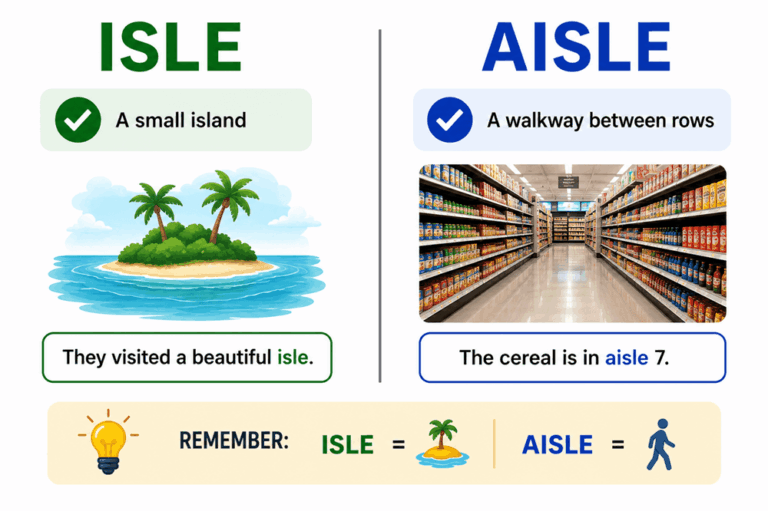
    Isle and aisle sound the same, but they mean very different things. Isle means a small island. Aisle means a walkway between rows of seats, shelves, or other spaces. The easiest way to remember the difference is this: an isle is land, and an aisle is a path. Quick Answer Use isle when you mean…
    Read More Isle or Aisle: Difference, Correct Usage, Spelling Structure, and Memory Tips ExplainedContinue

  • Disc or disk
    Confusing Words

    Disc or Disk: Difference, Correct Usage, Spelling Structure, and Memory Tips Explained

    ByJeremy Howard June 18, 2026

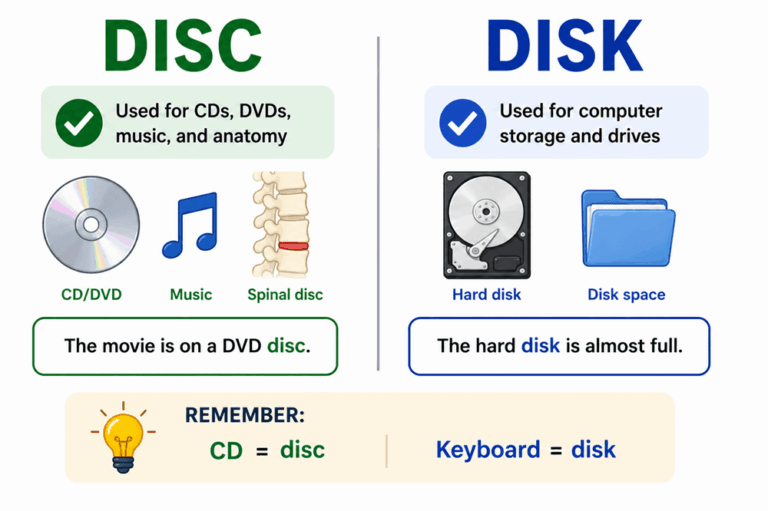
    Disc and disk are both correct, but they are used in different contexts. Disc is more common for optical media, music, anatomy, and round flat objects in British English. Disk is more common for computer storage, hard drives, and many American English uses. The safest rule is this: use disc for CDs and music, and…

    Read More Disc or Disk: Difference, Correct Usage, Spelling Structure, and Memory Tips ExplainedContinue

  • Spelling

    Suprise or Surprise: Correct Spelling, Meaning, Usage, Examples, and Memory Tips Explained

    ByJeremy Howard June 18, 2026

    Surprise is the correct spelling. Suprise is a common misspelling. Use surprise when something unexpected happens, when someone feels shocked or amazed, or when someone causes another person to feel that way. The key spelling clue is simple: surprise has two r’s. Quick Answer Use surprise, not suprise. Correct: The party was a complete surprise….

    Read More Suprise or Surprise: Correct Spelling, Meaning, Usage, Examples, and Memory Tips ExplainedContinue

  • Transferred or transfered
    Spelling

    Transferred or Transfered: Correct Spelling, Meaning, Grammar, and Memory Tips Explained Clearly

    ByJeremy Howard June 18, 2026

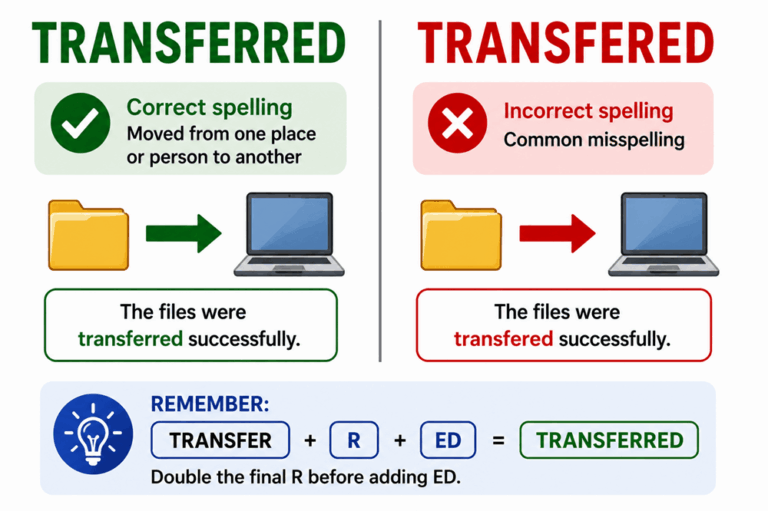
    Transferred is the correct spelling. Transfered is a common misspelling. Use transferred when you mean moved, sent, shifted, or changed from one place, person, job, school, account, or system to another. The key spelling rule is simple: transfer doubles the final r before adding -ed. Quick Answer Use transferred, not transfered. Correct: She transferred to…

    Read More Transferred or Transfered: Correct Spelling, Meaning, Grammar, and Memory Tips Explained ClearlyContinue

  • Shiney or shiny
    Spelling

    Shiney or Shiny: Correct Spelling, Meaning, Usage, Examples, and Memory Tips Explained

    ByJeremy Howard June 18, 2026

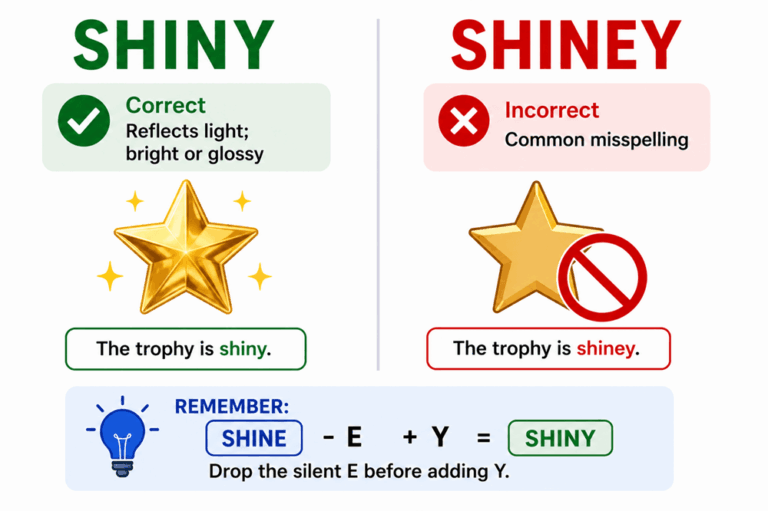
    Shiny is the correct spelling. Shiney is a common misspelling. Use shiny when something reflects light, looks bright, appears glossy, or seems new and polished. The key spelling rule is simple: when shine becomes shiny, the final e is dropped before adding y. Quick Answer Use shiny, not shiney. Correct: She wore shiny black shoes….

    Read More Shiney or Shiny: Correct Spelling, Meaning, Usage, Examples, and Memory Tips ExplainedContinue

  • Principal or principle
    Confusing Words

    Principal or Principle: Difference, Correct Usage, Spelling Structure, and Memory Tips Explained

    ByJeremy Howard June 18, 2026

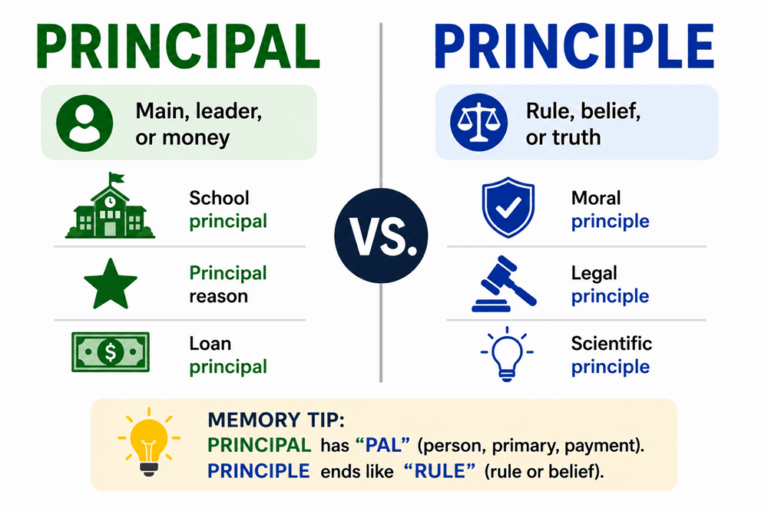
    Principal and principle sound the same, but they mean different things. Principal can mean most important, a school leader, or a sum of money. Principle means a rule, belief, truth, or standard. The easiest way to remember the difference is this: a principal can be a person, but a principle is an idea. Quick Answer…

    Read More Principal or Principle: Difference, Correct Usage, Spelling Structure, and Memory Tips ExplainedContinue

  • Capitol or capital
    Confusing Words

    Capitol or Capital: Difference, Correct Usage, Spelling Structure, and Memory Tips Explained

    ByJeremy Howard June 18, 2026

    Capitol and capital are easy to confuse because they sound almost the same and both can relate to government. The difference is specific: capitol means a building where lawmakers meet, while capital can mean a city, money, an uppercase letter, or something very important. In most sentences, capital is the word you need. Quick Answer…

    Read More Capitol or Capital: Difference, Correct Usage, Spelling Structure, and Memory Tips ExplainedContinue

  • Theirs or their's
    Spelling

    Theirs or Their’s: Difference, Correct Usage, Apostrophe Rule, and Memory Tips Explained

    ByJeremy Howard June 18, 2026

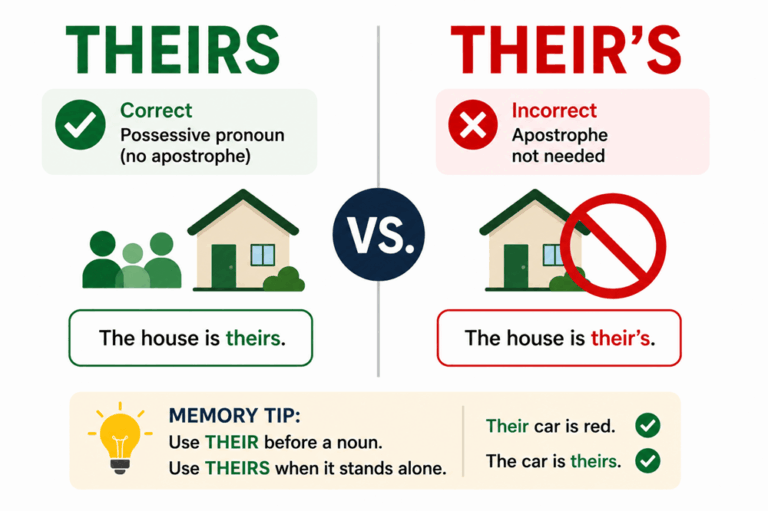
    Theirs is the correct spelling. Their’s is incorrect because possessive pronouns do not need apostrophes. Use theirs when something belongs to them and the noun is not repeated. The apostrophe may look tempting, but it does not belong in this word. Quick Answer Use theirs, not their’s. Correct: The blue car is theirs. Correct: This…

    Read More Theirs or Their’s: Difference, Correct Usage, Apostrophe Rule, and Memory Tips ExplainedContinue

  • Advise or advice
    Confusing Words

    Advise or Advice: Difference, Meaning, Correct Usage, Spelling, and Memory Tips Explained

    ByJeremy Howard June 18, 2026

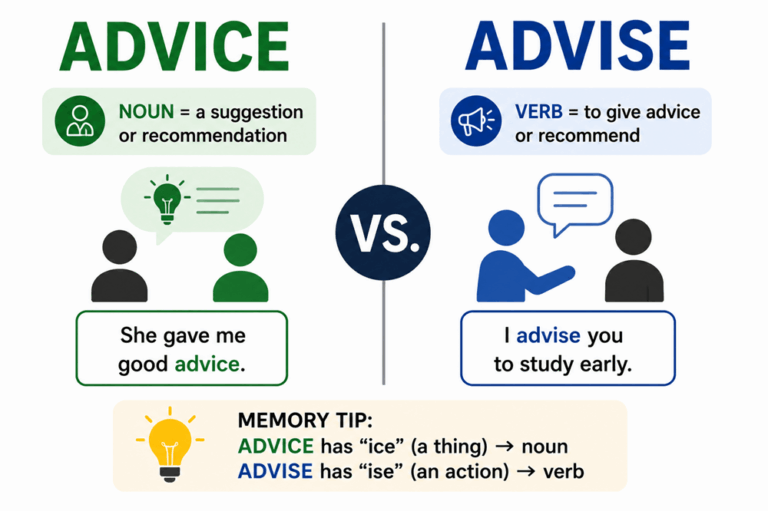
    Advise and advice are easy to confuse because they look almost the same. The difference is grammar. Advice is a noun. It means a suggestion, recommendation, or helpful opinion. Advise is a verb. It means to give advice. The spelling clue is the final letter: advice ends in c, while advise ends in s. Quick…

    Read More Advise or Advice: Difference, Meaning, Correct Usage, Spelling, and Memory Tips ExplainedContinue

  • Purposely or purposefully
    Confusing Words

    Purposely or Purposefully: Difference, Correct Usage, Meaning, Examples, and Memory Tips Explained

    ByJeremy Howard June 18, 2026

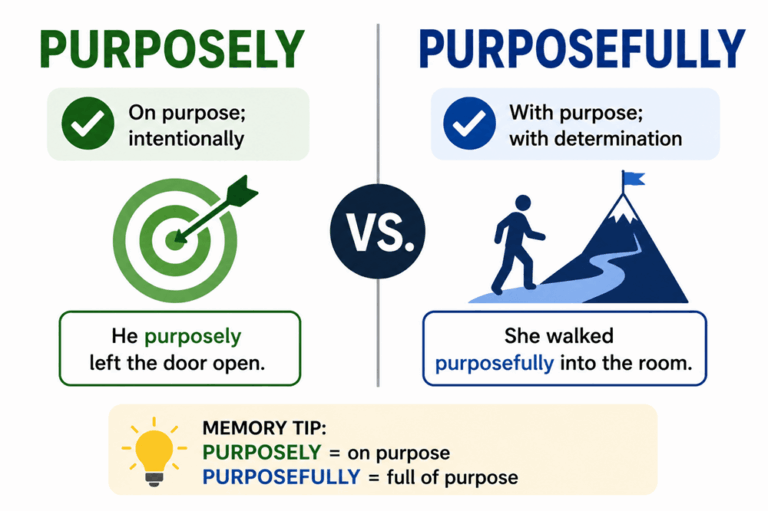
    Purposely and purposefully are both correct words, but they do not always mean exactly the same thing. Purposely usually means intentionally or on purpose. Purposefully means with purpose, determination, or clear intention. The difference is small, but it matters in careful writing. Quick Answer Use purposely when you mean someone did something intentionally. She purposely…

    Read More Purposely or Purposefully: Difference, Correct Usage, Meaning, Examples, and Memory Tips ExplainedContinue

Page navigation

Previous PagePrevious 1 … 25 26 27 28 29 … 44 Next PageNext
  • Disclaimer
  • Terms of Use
  • Privacy Policy

© 2026 Word Briefs

  • About
  • Contact
Search