Skip to content
Word Briefs
  • About
  • Contact
Word Briefs
  • Utmost or upmost
    Spelling

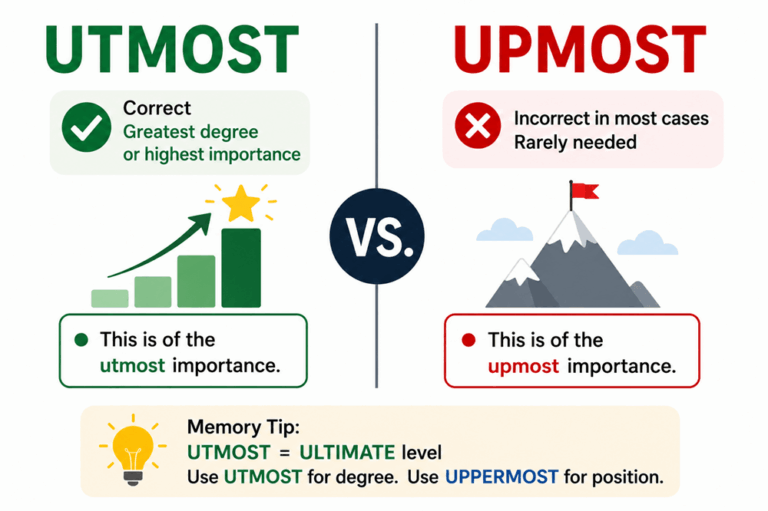
    Utmost or Upmost: Meaning, Correct Usage, Spelling Structure, and Memory Tips Explained

    ByJeremy Howard June 18, 2026

    Utmost is the correct word in most situations. It means greatest, highest, most extreme, or most important. Upmost is rare and usually not the word you want. If you are writing phrases like utmost respect, utmost importance, or do your utmost, always use utmost. Quick Answer Use utmost when you mean the greatest degree, highest…
    Read More Utmost or Upmost: Meaning, Correct Usage, Spelling Structure, and Memory Tips ExplainedContinue

  • Reoccurring or recurring
    Confusing Words

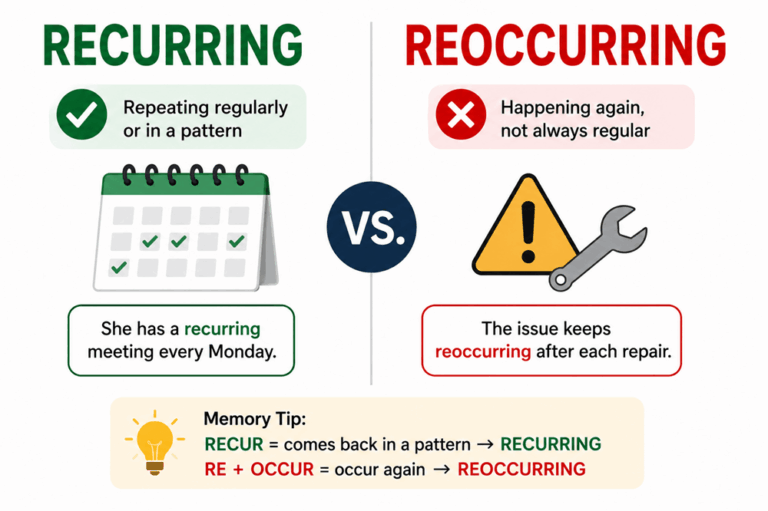
    Reoccurring or Recurring: Correct Meaning, Usage, Spelling Structure, and Memory Tips Explained

    ByJeremy Howard June 18, 2026

    Recurring and reoccurring are both real words, but recurring is usually the better choice. Use recurring for something that happens again and again in a pattern. Use reoccurring only when something happens again, but not necessarily on a regular schedule. Quick Answer Use recurring when something repeats regularly or keeps coming back. She has a…

    Read More Reoccurring or Recurring: Correct Meaning, Usage, Spelling Structure, and Memory Tips ExplainedContinue

  • Puting or putting
    Spelling

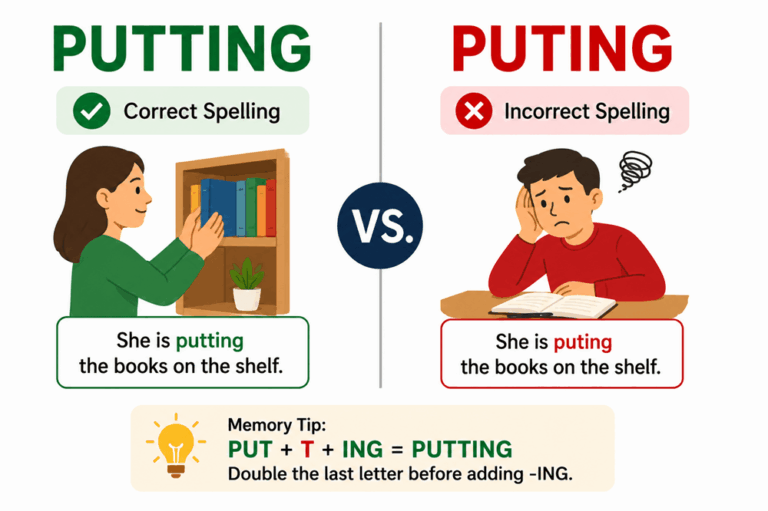
    Puting or Putting: Correct Spelling, Meaning, Grammar, Examples, and Memory Tips Explained Clearly

    ByJeremy Howard June 18, 2026

    Putting is the correct spelling. Puting is a misspelling. Use putting when you mean placing something somewhere, moving something into a position, adding something, or doing the present action of put. The key spelling rule is simple: put doubles the final t before adding -ing. Quick Answer Use putting, not puting. Correct: She is putting…

    Read More Puting or Putting: Correct Spelling, Meaning, Grammar, Examples, and Memory Tips Explained ClearlyContinue

  • Family's or families
    Confusing Words

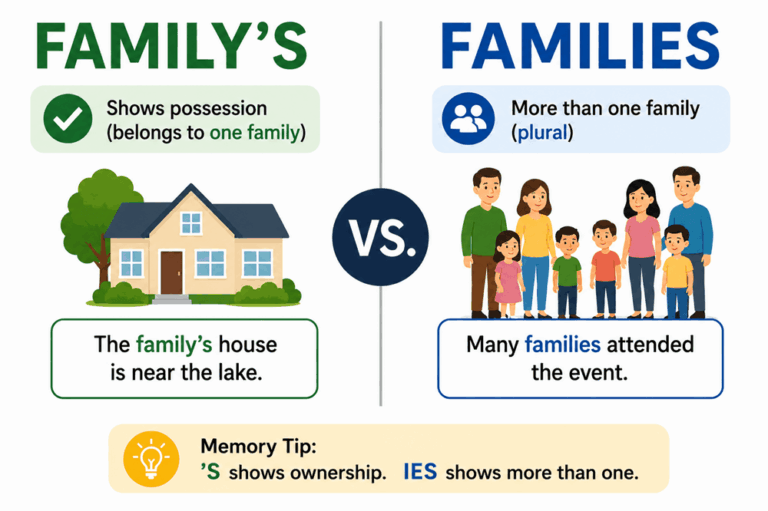
    Family’s or Families: Difference, Correct Use, Apostrophe Rules, and Memory Tips Explained

    ByJeremy Howard June 18, 2026

    Family’s and families are both correct, but they mean different things. Family’s means something belongs to one family. Families is the plural form of family, meaning more than one family. The apostrophe is the key clue. Quick Answer Use family’s when one family owns or has something. My family’s house is near the lake. The…

    Read More Family’s or Families: Difference, Correct Use, Apostrophe Rules, and Memory Tips ExplainedContinue

  • Ok or okay
    Confusing Words

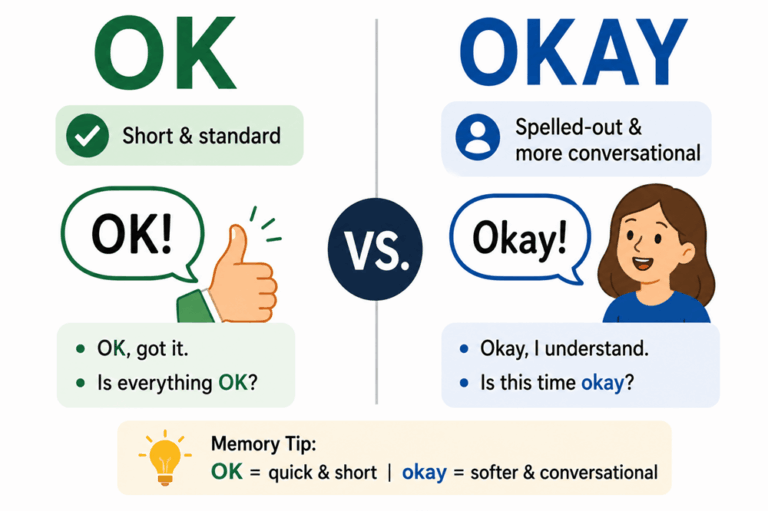
    OK or Okay: Meaning, Correct Spelling, Usage, Capitalization, and Memory Tips Explained

    ByJeremy Howard June 18, 2026

    OK and okay are both correct. They mean acceptable, fine, all right, or approved. The main difference is style. OK is shorter and more common in quick writing, while okay feels a little more casual, softer, and conversational. Ok with only the O capitalized is common online, but OK or okay is usually better in…

    Read More OK or Okay: Meaning, Correct Spelling, Usage, Capitalization, and Memory Tips ExplainedContinue

  • Woah or whoa
    Spelling

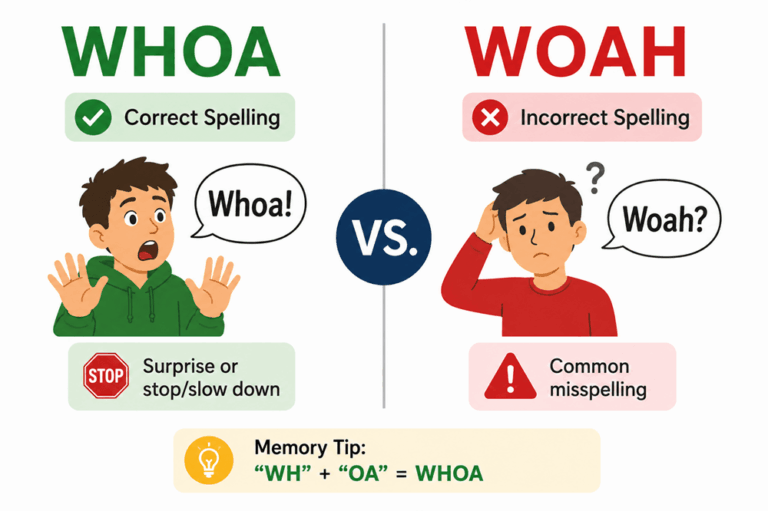
    Woah or Whoa: Correct Spelling, Meaning, Usage, and Memory Tips Clearly Explained

    ByJeremy Howard June 18, 2026

    Whoa is the correct standard spelling. Woah is a common misspelling, especially in casual online writing. Use whoa when you want to show surprise, shock, excitement, or a command to stop. If you are writing for school, work, articles, captions, or polished content, whoa is the safer choice. Quick Answer Use whoa, not woah. Correct:…

    Read More Woah or Whoa: Correct Spelling, Meaning, Usage, and Memory Tips Clearly ExplainedContinue

  • Smelled or smelt
    Confusing Words

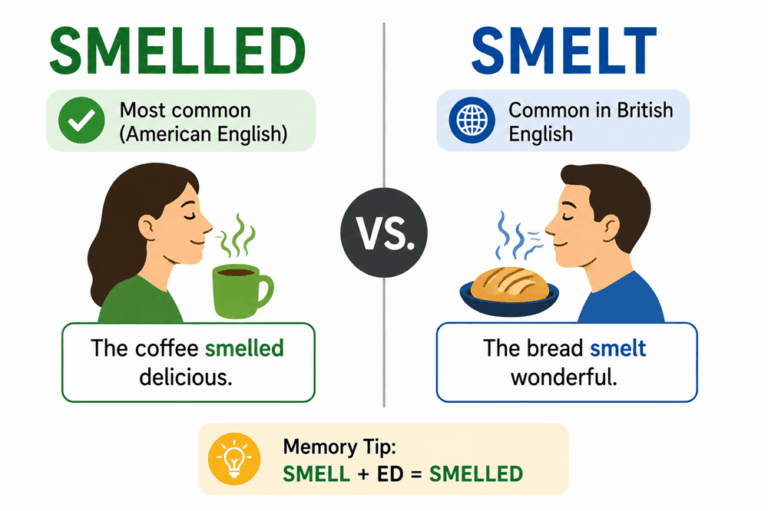
    Smelled or Smelt: Difference, Correct Usage, Spelling Patterns, and Easy Memory Tips

    ByJeremy Howard June 18, 2026June 18, 2026

    Smelled and smelt can both be correct, but they are not always used the same way. Smelled is the standard past tense of smell in American English and is accepted everywhere. Smelt is more common in British English, but it can also mean melting metal from ore, which makes it easier to confuse. Quick Answer…

    Read More Smelled or Smelt: Difference, Correct Usage, Spelling Patterns, and Easy Memory TipsContinue

  • Queue or que
    Spelling

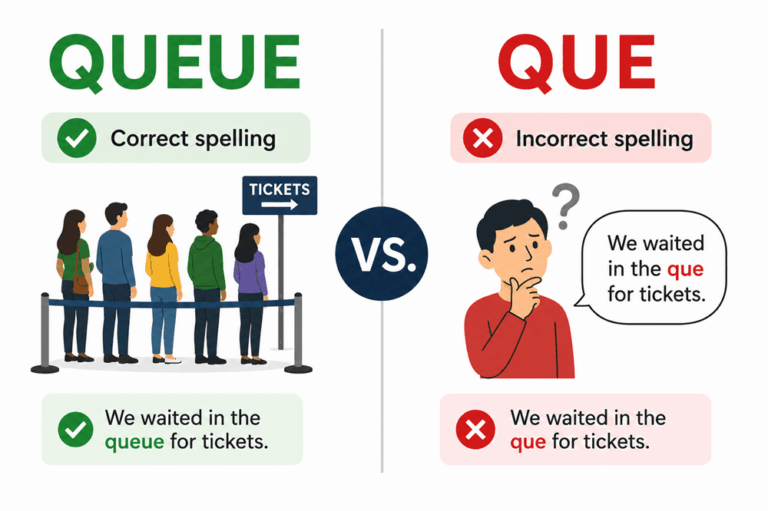
    Queue or Que: Correct Spelling, Meaning, Pronunciation, Usage, and Examples Explained Clearly

    ByJeremy Howard June 18, 2026

    Queue is the correct English word when you mean a line of people, a waiting list, or a sequence of items waiting to be handled. Que is not the correct spelling for this meaning in English. If you are talking about waiting your turn, use queue. Quick Answer Use queue when you mean a line,…

    Read More Queue or Que: Correct Spelling, Meaning, Pronunciation, Usage, and Examples Explained ClearlyContinue

  • Medicare or medicaid
    Confusing Words

    Medicare or Medicaid: Key Differences, Eligibility, Coverage, Costs, and Examples Explained Clearly

    ByJeremy Howard June 18, 2026

    Medicare and Medicaid are both U.S. health coverage programs, but they are not the same. Medicare is mainly for people age 65 or older and certain younger people with disabilities. Medicaid is mainly for people with limited income and resources. Some people can qualify for both. Quick Answer Use Medicare when talking about federal health…

    Read More Medicare or Medicaid: Key Differences, Eligibility, Coverage, Costs, and Examples Explained ClearlyContinue

  • Pricy or pricey
    Spelling

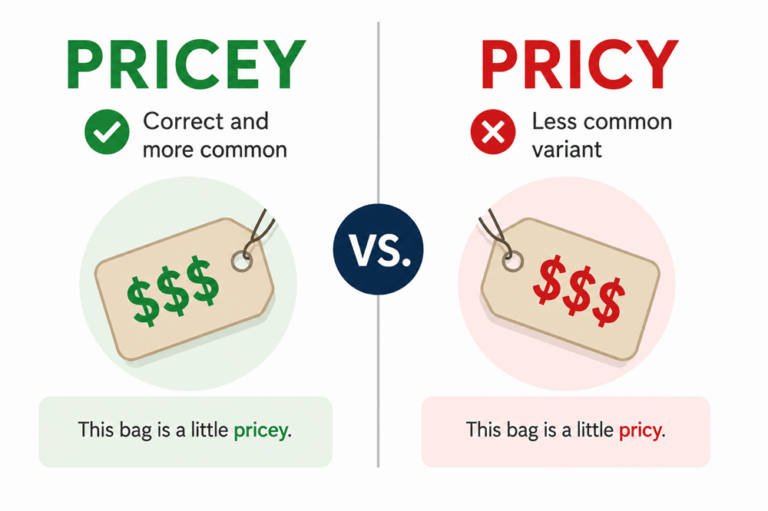
    Pricy or Pricey: Correct Spelling, Meaning, Usage, and Examples Explained Clearly

    ByJeremy Howard June 18, 2026

    Pricey is the more common and preferred spelling when something costs a lot of money. Pricy is also accepted by some dictionaries, but it is much less common and may look unusual to many readers. In most modern writing, especially for websites, school, business, reviews, and everyday use, pricey is the better choice. Quick Answer…

    Read More Pricy or Pricey: Correct Spelling, Meaning, Usage, and Examples Explained ClearlyContinue

Page navigation

Previous PagePrevious 1 … 26 27 28 29 30 … 44 Next PageNext
  • Disclaimer
  • Terms of Use
  • Privacy Policy

© 2026 Word Briefs

  • About
  • Contact
Search