Smelled or Smelt: Difference, Correct Usage, Spelling Patterns, and Easy Memory Tips
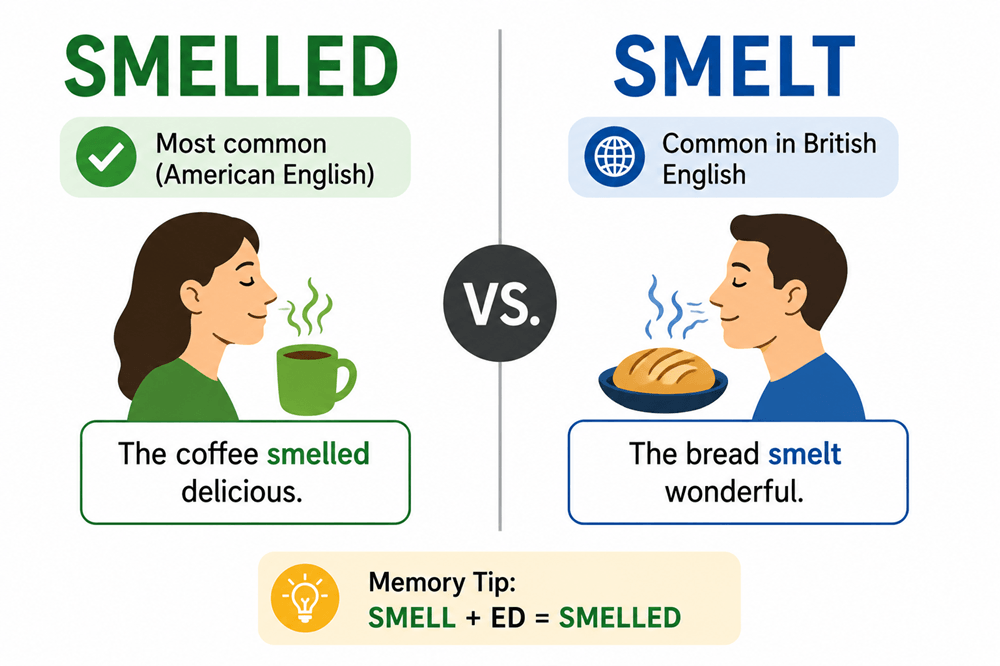
Smelled and smelt can both be correct, but they are not always used the same way. Smelled is the standard past tense of smell in American English and is accepted everywhere. Smelt is more common in British English, but it can also mean melting metal from ore, which makes it easier to confuse.
Quick Answer
Use smelled if you want the safest and most widely accepted past tense of smell.
- The kitchen smelled like fresh bread.
- She smelled smoke in the hallway.
- The flowers smelled sweet after the rain.
Use smelt mainly in British English when you mean the past tense of smell.
- The kitchen smelt like fresh bread.
- She smelt smoke in the hallway.
- The flowers smelt sweet after the rain.
The simple rule is: smelled is the safest choice, while smelt is mostly British for the past tense of smell.
Smelled or Smelt: What Is the Difference?
The main difference is regional usage. Smelled is the regular past tense form of smell. It follows the common English pattern of adding -ed to a verb.
Smelt is an irregular past tense form. It is commonly used in British English, but it is less common in American English. American readers usually expect smelled.
| Word | Best Use | Example |
|---|---|---|
| Smelled | American English and general use | The soup smelled delicious. |
| Smelt | British English past tense | The soup smelt delicious. |
If you are writing for a broad audience, smelled is usually the better choice because it is clear in both American and British English.
What Does Smelled Mean?
Smelled is the past tense and past participle of smell. It can mean that someone noticed an odor, or that something gave off an odor.
Examples:
- I smelled coffee as soon as I walked in.
- The dog smelled the visitor’s shoes.
- The room smelled clean after we opened the windows.
- He smelled gas and called for help.
- The old books smelled dusty.
Because smelled follows the regular -ed pattern, it is easy for readers to recognize. It looks like other regular past tense verbs such as walked, looked, washed, and opened.
What Does Smelt Mean?
Smelt can be the past tense of smell in British English. In that use, it means the same thing as smelled.
Examples:
- The bread smelt wonderful.
- He smelt smoke near the garage.
- The towels smelt fresh after washing.
However, smelt also has another meaning. It can mean to melt or extract metal from ore. This is a completely different verb.
- The factory smelts iron ore.
- The workers smelted the metal.
Because smelt has this extra meaning, smelled is often clearer when you are talking about odor.
When to Use Smelled
Use smelled in American English, formal writing, school writing, business writing, and general online articles. It is the safest spelling because it is widely understood and does not sound unusual to American readers.
Examples:
- The laundry smelled fresh.
- The milk smelled sour.
- She smelled perfume in the elevator.
- The house smelled like cinnamon.
- We smelled smoke before we saw the fire.
Use smelled especially when clarity matters. If your audience includes American readers, smelled will almost always look more natural than smelt.
When to Use Smelt
Use smelt when writing in British English and when the style of the sentence fits that form. It is more common in the UK and in some other English varieties that accept irregular past tense forms such as learnt, spelt, and dreamt.
Examples:
- The garden smelt lovely after the rain.
- The kitchen smelt of garlic and herbs.
- The room smelt musty after being closed all winter.
In American English, these sentences would usually use smelled. Neither form changes the meaning when the topic is odor. The difference is style and region.
Smelled and Smelt as Past Participles
Both words can also be used after have, has, or had.
American and general use:
- I have smelled that perfume before.
- The basement had smelled damp for weeks.
British-style use:
- I have smelt that perfume before.
- The basement had smelt damp for weeks.
If you are unsure which one to use, choose smelled. It works naturally in more situations.
Spelling Pattern: Why Smelled Is Easier to Remember
Smelled follows a regular spelling pattern:
- smell + ed = smelled
This is the same pattern used by many common verbs:
- call + ed = called
- fill + ed = filled
- pull + ed = pulled
- smell + ed = smelled
Because smell already ends in double l, you simply add ed. You do not remove a letter or change the base word. This makes smelled easy to spell once you remember the structure: smell stays whole, then add -ed.
Memory Tips for Smelled or Smelt
Use these tricks to remember the difference:
- Smelled has smell inside it, so it clearly connects to smelling.
- Smelled ends in -ed, the regular past tense ending.
- Smelt is shorter and more irregular, like other British-style forms such as learnt and spelt.
- Smelt can also mean melting metal, so use smelled if you want to avoid confusion.
A simple memory sentence is: If you smelled it with your nose, “smelled” is always safe.
Common Mistakes
The most common mistake is thinking smelt is always wrong. It is not wrong when used as the past tense of smell in British English.
Correct:
- The room smelled strange.
- The room smelt strange.
The first version is more common in American English. The second version is more common in British English.
Another mistake is using smelt in American writing when the audience expects smelled.
Less natural in American English:
- The cookies smelt amazing.
Better for American English:
- The cookies smelled amazing.
Smelled, Smelt, and Smelted
Be careful with the metal-related verb smelt. When smelt means to extract metal by heating, the past tense is usually smelted.
- The workers smelted copper.
- The ore was smelted in a furnace.
This is separate from smelled or smelt meaning noticed an odor. If the sentence is about a nose, odor, scent, or smell, use smelled or British-style smelt. If the sentence is about metal, ore, or furnaces, use the metal-related meaning.
Final Answer
Smelled and smelt are both correct as past tense forms of smell. Smelled is standard in American English and is the safest choice for most writing. Smelt is more common in British English.
To remember the difference, look at the spelling structure: smelled keeps the full word smell and adds -ed. If you are unsure, use smelled. It is clear, widely accepted, and easy to recognize.