Skip to content
Word Briefs
  • About
  • Contact
Word Briefs
  • Seeing or seing
    Spelling

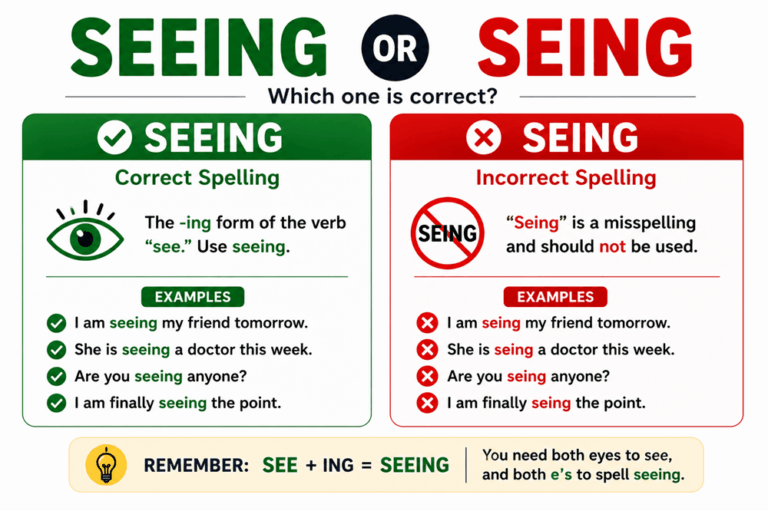
    Seeing or Seing: Correct Spelling, Meaning, and Easy Examples for Writers

    ByJeremy Howard June 8, 2026

    The correct spelling is seeing. Seing is a misspelling and should not be used in standard English. The word seeing comes from the verb see plus the ending -ing. Even though the spelling may look unusual with three vowels together, seeing is the correct form. Quick Answer Use seeing, not seing. Correct: I am seeing…
    Read More Seeing or Seing: Correct Spelling, Meaning, and Easy Examples for WritersContinue

  • Toward or towards
    Confusing Words

    Toward or Towards: Correct Meaning, Usage, and American Versus British English Rules

    ByJeremy Howard June 8, 2026

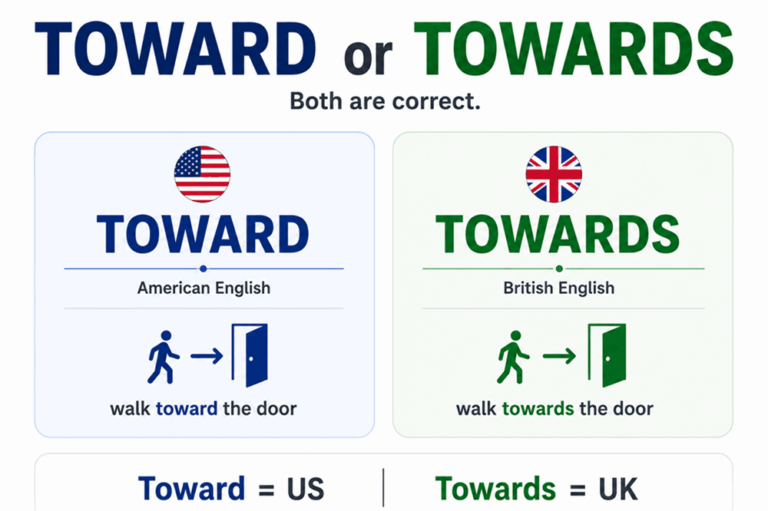
    Toward and towards are both correct words, and they usually mean the same thing. The main difference is regional preference. Toward is more common in American English, while towards is more common in British English. Use toward for most U.S. writing and towards if you are following British English style. Quick Answer Toward and towards…

    Read More Toward or Towards: Correct Meaning, Usage, and American Versus British English RulesContinue

  • Who or whom
    Confusing Words

    Who or Whom: Simple Grammar Rule, Correct Usage, and Easy Examples for Writers

    ByJeremy Howard June 8, 2026

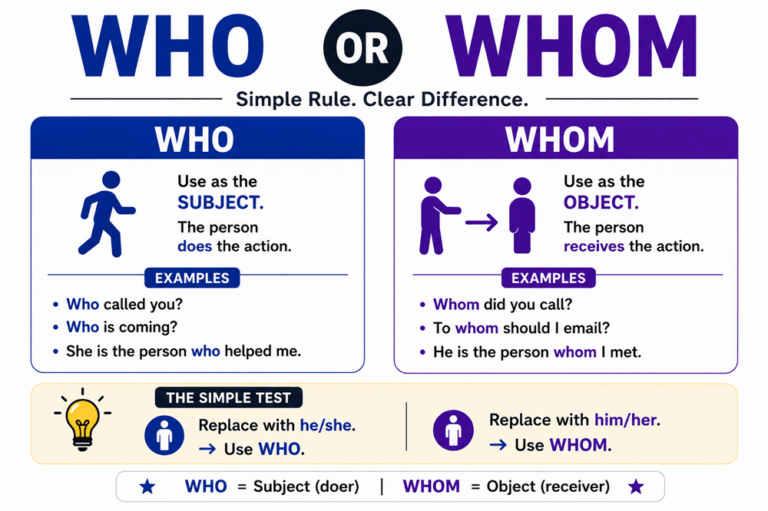
    Who and whom are easy to confuse because both words refer to people. The quick rule is this: use who when the person is doing the action, and use whom when the person is receiving the action. A simple test can help: if you can answer with he or she, use who. If you can…

    Read More Who or Whom: Simple Grammar Rule, Correct Usage, and Easy Examples for WritersContinue

  • Its or it's
    Confusing Words

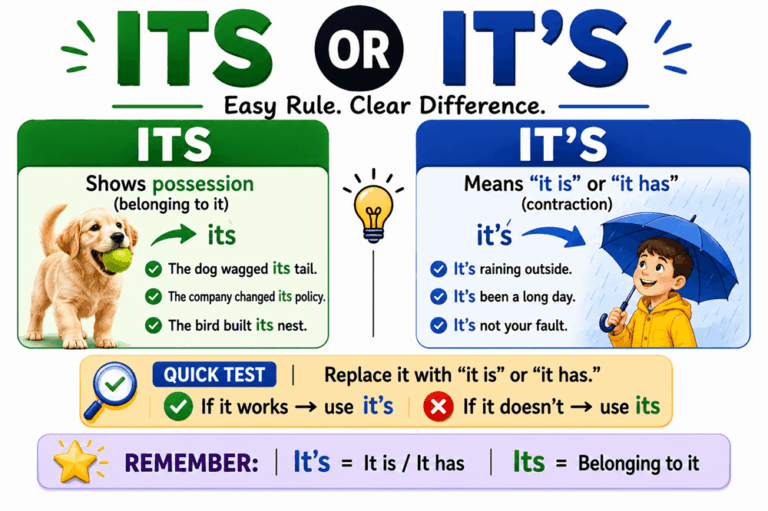
    Its or It’s: Simple Difference, Correct Usage, and Easy Examples for Writers

    ByJeremy Howard June 8, 2026

    Its and it’s are easy to confuse because they sound exactly the same, but they mean different things. Its shows possession, while it’s is a contraction meaning it is or it has. The quickest test is simple: if you can replace the word with it is or it has, use it’s. If not, use its….

    Read More Its or It’s: Simple Difference, Correct Usage, and Easy Examples for WritersContinue

  • Grey or gray
    Confusing Words

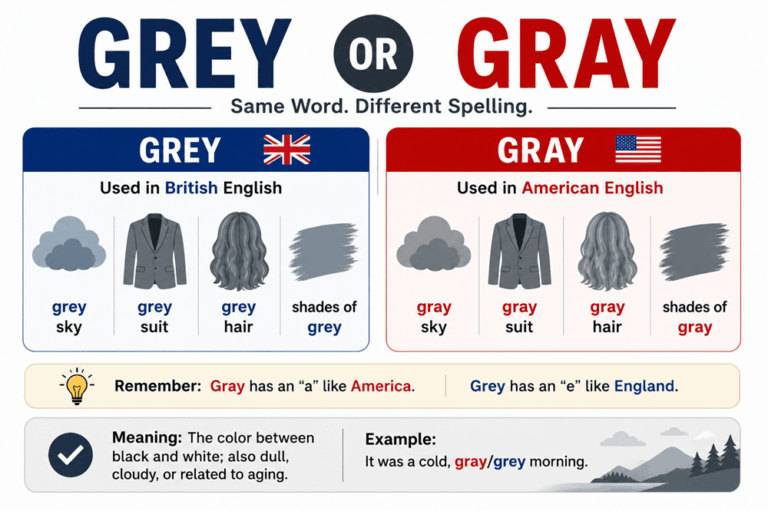
    Grey or Gray: Correct Spelling, Meaning, and American Versus British English Usage

    ByJeremy Howard June 8, 2026

    Grey and gray are both correct spellings of the same word. The difference is regional: gray is more common in American English, while grey is more common in British English. Both words can describe the color between black and white, a dull mood, cloudy weather, or hair that has lost its natural color. Quick Answer…

    Read More Grey or Gray: Correct Spelling, Meaning, and American Versus British English UsageContinue

  • Effect or affect
    Confusing Words

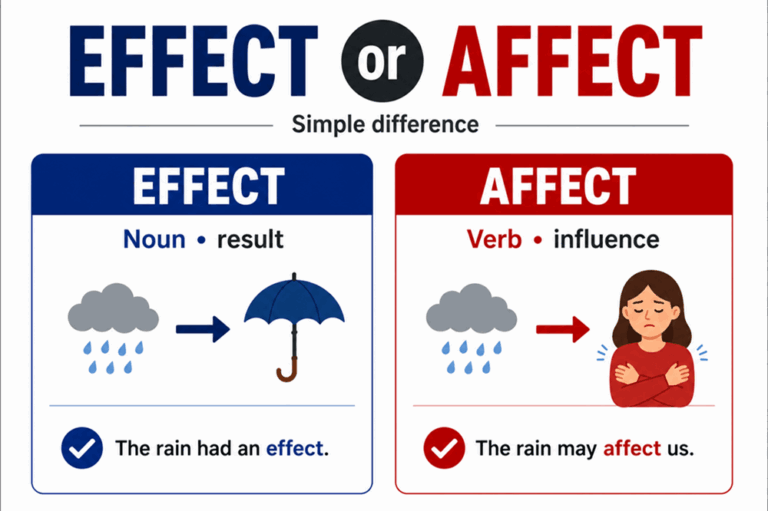
    Effect or Affect: Simple Difference, Correct Usage, and Easy Examples for Writers

    ByJeremy Howard June 8, 2026

    Effect and affect are easy to confuse because they sound similar and both relate to change. The quick rule is this: affect is usually a verb, and effect is usually a noun. If something changes something else, it affects it. The result of that change is the effect. Quick Answer Use affect when you mean…

    Read More Effect or Affect: Simple Difference, Correct Usage, and Easy Examples for WritersContinue

  • Fight or flight
    Phrases & Expressions

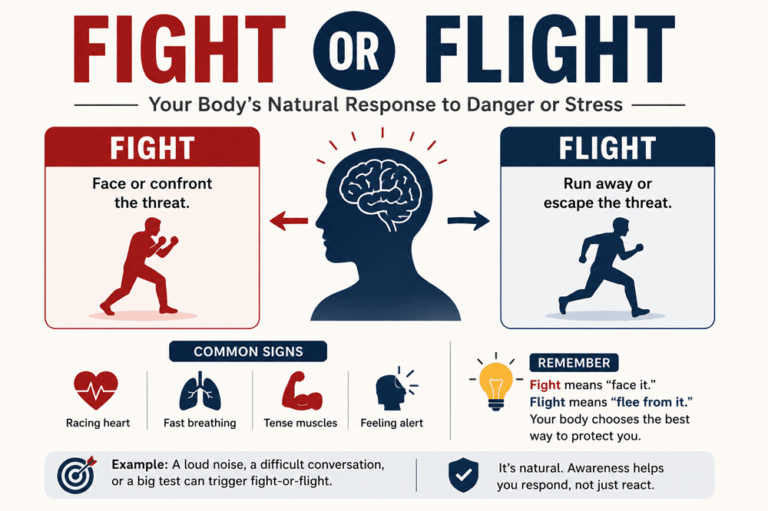
    Fight or Flight Meaning: What This Common Stress Response Really Means in Life

    ByJeremy Howard June 8, 2026June 8, 2026

    Fight or flight means the body’s natural reaction to danger, fear, stress, or pressure. When you feel threatened, your mind and body may prepare either to face the problem or escape from it. The phrase is often used in psychology, health, relationships, work stress, and everyday conversation to describe an automatic survival response. Quick Answer…

    Read More Fight or Flight Meaning: What This Common Stress Response Really Means in LifeContinue

  • Cancelled or canceled
    Confusing Words

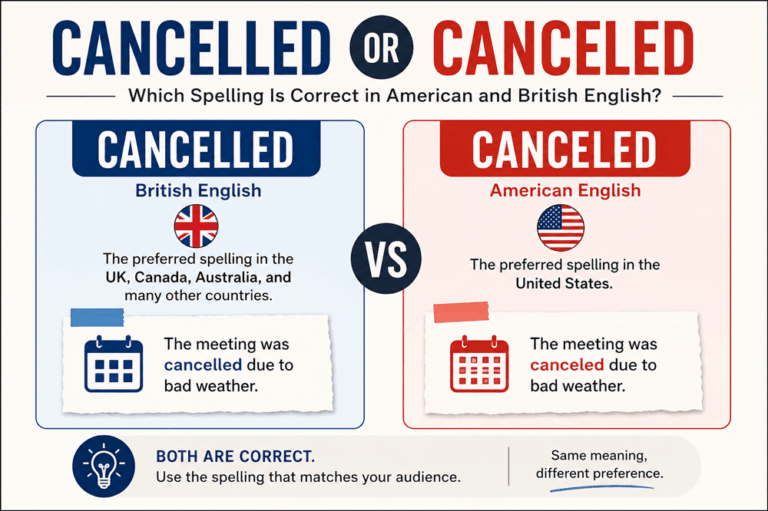
    Cancelled or Canceled: Which Spelling Is Correct in American and British English?

    ByJeremy Howard June 8, 2026

    The words cancelled and canceled are both correct, but they are used in different forms of English. Canceled is more common in American English, while cancelled is more common in British English. If you are writing for a U.S. audience, use canceled. If you are writing for a U.K., Canadian, Australian, or international audience, cancelled…

    Read More Cancelled or Canceled: Which Spelling Is Correct in American and British English?Continue

  • Jist or gist
    Spelling

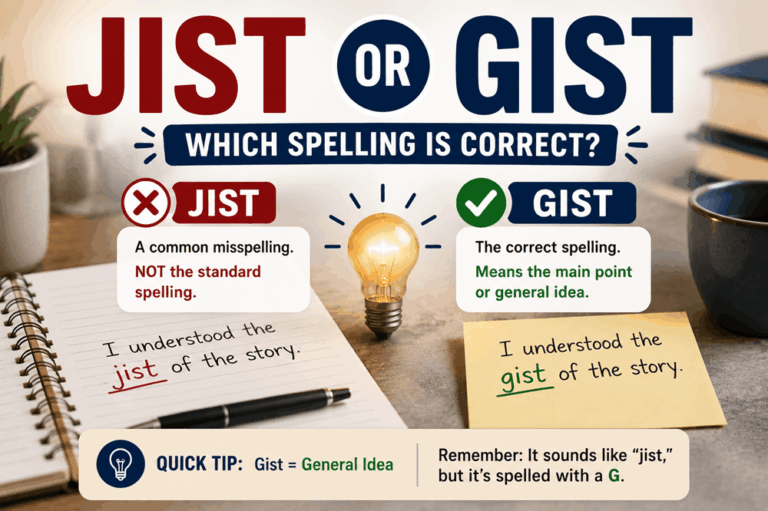
    Jist or Gist: Which Spelling Is Correct?

    ByJeremy Howard June 5, 2026

    Gist is the correct spelling when you mean the main point, basic idea, or short summary of something. Jist is a common misspelling of gist in standard English. If you are writing for school, work, email, or a public article, use gist. Jist or Gist: Simple Examples Correct: I understood the gist of the story….

    Read More Jist or Gist: Which Spelling Is Correct?Continue

  • Cozy or cosy
    Spelling

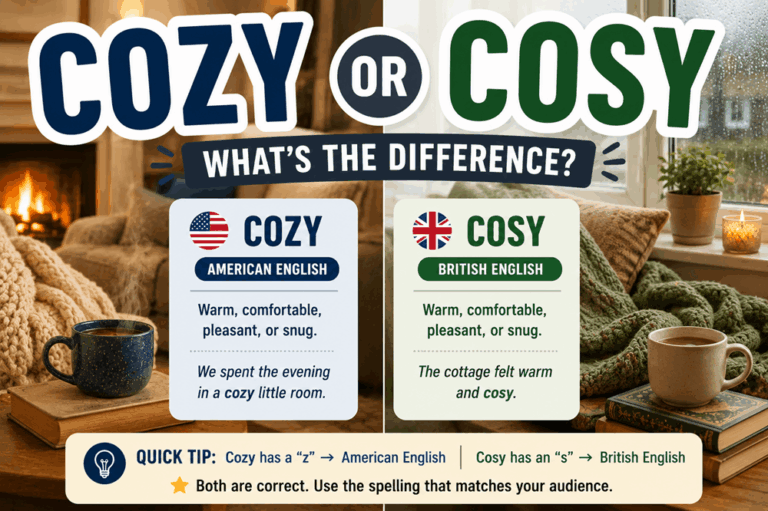
    Cozy or Cosy: What’s the Difference and Which Should You Use?

    ByJeremy Howard June 5, 2026

    Cozy and cosy are both correct spellings. Use cozy in American English. Use cosy in British English and in many English varieties that follow British spelling. Both words mean warm, comfortable, pleasant, or snug. The meaning is the same. Only the spelling changes. Cozy or Cosy: Simple Examples American English: The cabin felt warm and…

    Read More Cozy or Cosy: What’s the Difference and Which Should You Use?Continue

Page navigation

Previous PagePrevious 1 … 41 42 43 44 Next PageNext
  • Disclaimer
  • Terms of Use
  • Privacy Policy

© 2026 Word Briefs

  • About
  • Contact
Search