Skip to content
Word Briefs
  • About
  • Contact
Word Briefs
  • Check or cheque
    Confusing Words

    Check or Cheque: Correct Meaning, Spelling Difference, and Usage Examples Explained Clearly

    ByJeremy Howard June 9, 2026

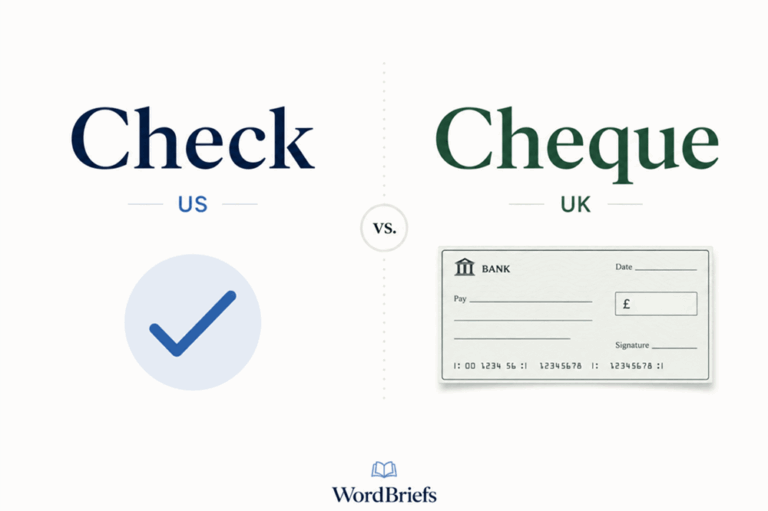
    Check and cheque are both correct words, but they are not always used the same way. In American English, check is used for almost every meaning, including a bank payment. In British English, cheque usually means a written bank payment, while check is used for meanings like inspect, verify, stop, or mark. Quick Answer Use…
    Read More Check or Cheque: Correct Meaning, Spelling Difference, and Usage Examples Explained ClearlyContinue

  • Ambiance or ambience
    Confusing Words

    Ambiance or Ambience: Correct Spelling, Meaning, Difference, and Usage Examples Explained

    ByJeremy Howard June 9, 2026

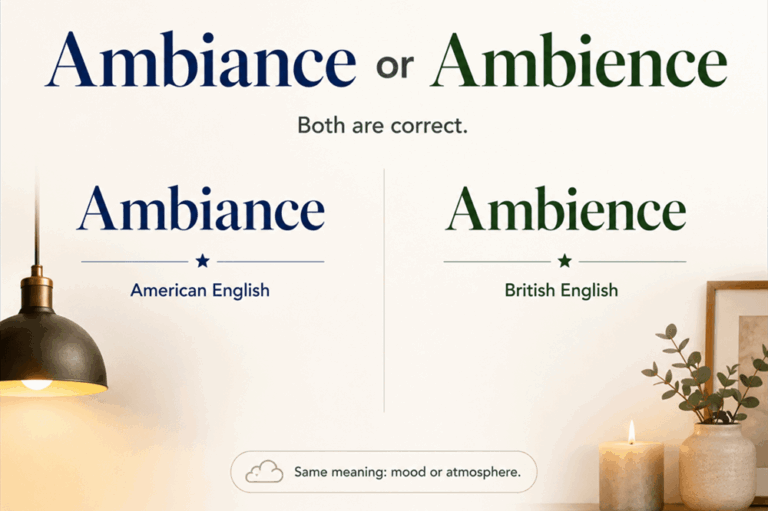
    Ambiance and ambience are both correct spellings. They mean the mood, atmosphere, or feeling of a place, event, room, restaurant, or setting. The main difference is preference: ambiance is common in American English, while ambience is often more common in British English. In most everyday writing, either spelling can work as long as you use…

    Read More Ambiance or Ambience: Correct Spelling, Meaning, Difference, and Usage Examples ExplainedContinue

  • Boujee or Bougie
    Confusing Words

    Boujee or Bougie: Meaning Difference, Correct Spelling, Slang Usage, and Examples Today

    ByJeremy Howard June 9, 2026

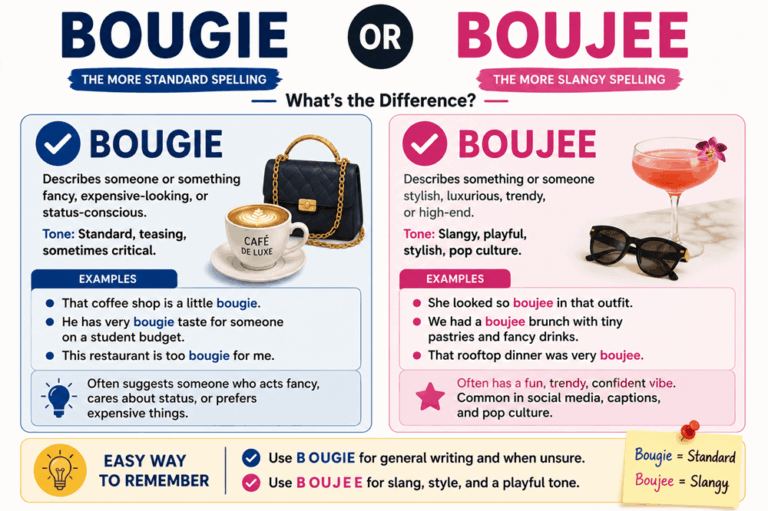
    Bougie and boujee are both used in modern English, but they do not always feel the same. Bougie is the more standard spelling and is often used for someone or something that seems fancy, status-conscious, or a little pretentious. Boujee is a slangier spelling that often feels more playful, trendy, stylish, or connected to pop…

    Read More Boujee or Bougie: Meaning Difference, Correct Spelling, Slang Usage, and Examples TodayContinue

  • Connector or Connecter
    Spelling

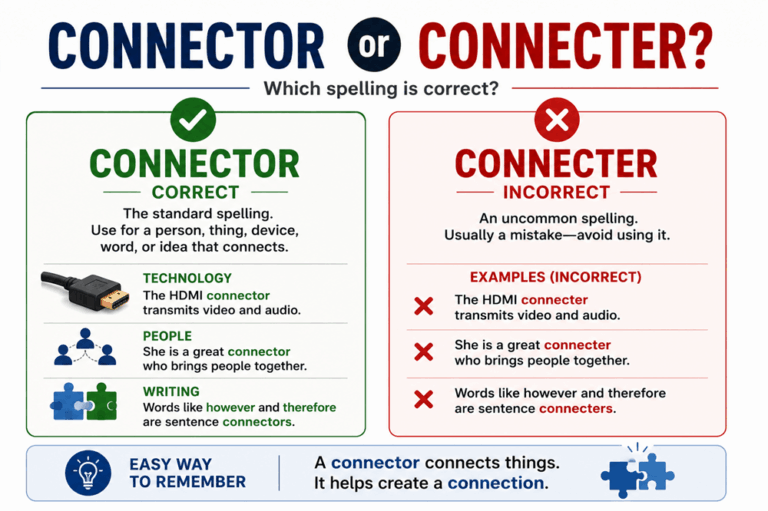
    Connector or Connecter: Correct Spelling, Meaning, Usage, and Simple Examples for Writers

    ByJeremy Howard June 9, 2026

    The standard spelling is connector. Connecter is rare and usually not the preferred spelling in modern English. Use connector when you mean a person, thing, device, part, cable, word, or idea that connects one thing to another. In most everyday, academic, technical, and professional writing, connector is the safer and more natural choice. Quick Answer…

    Read More Connector or Connecter: Correct Spelling, Meaning, Usage, and Simple Examples for WritersContinue

  • Momma or moma
    Spelling

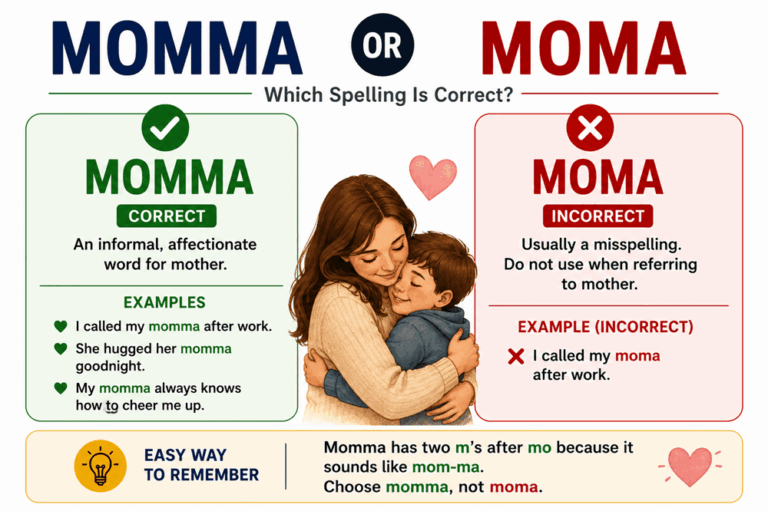
    Momma or Moma: Correct Spelling, Meaning, and Simple Examples for Writers

    ByJeremy Howard June 9, 2026

    The correct spelling is usually momma. Moma is not the standard spelling when you mean an informal word for mother. Use momma when you want a warm, casual, affectionate word similar to mama or mom. The spelling moma is usually a mistake unless it is part of a name, brand, username, or acronym. Quick Answer…

    Read More Momma or Moma: Correct Spelling, Meaning, and Simple Examples for WritersContinue

  • Respondent or respondant
    Spelling

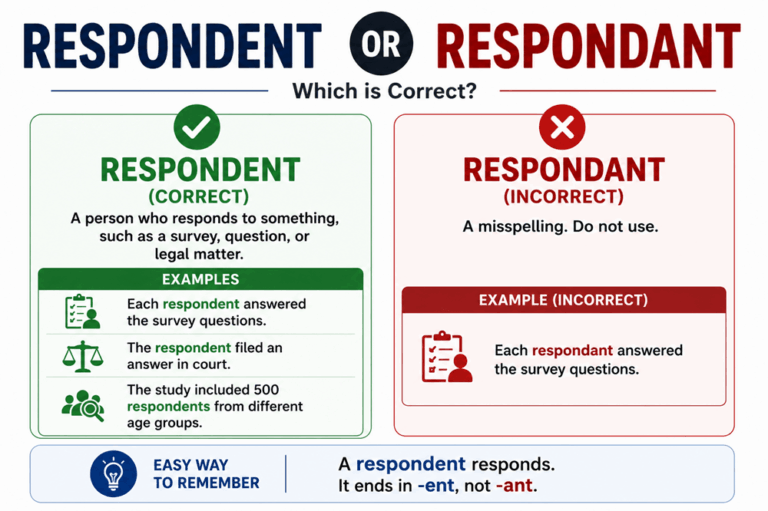
    Respondent or Respondant: Correct Spelling, Meaning, and Examples for Clear English Writing

    ByJeremy Howard June 9, 2026

    The correct spelling is respondent. Respondant is a misspelling and should not be used in standard English. A respondent is a person who responds to something, such as a survey, legal case, questionnaire, complaint, or formal request. The word ends in -ent, not -ant. Quick Answer Use respondent, not respondant. Correct: Each respondent answered five…

    Read More Respondent or Respondant: Correct Spelling, Meaning, and Examples for Clear English WritingContinue

  • Literally or figuratively
    Confusing Words

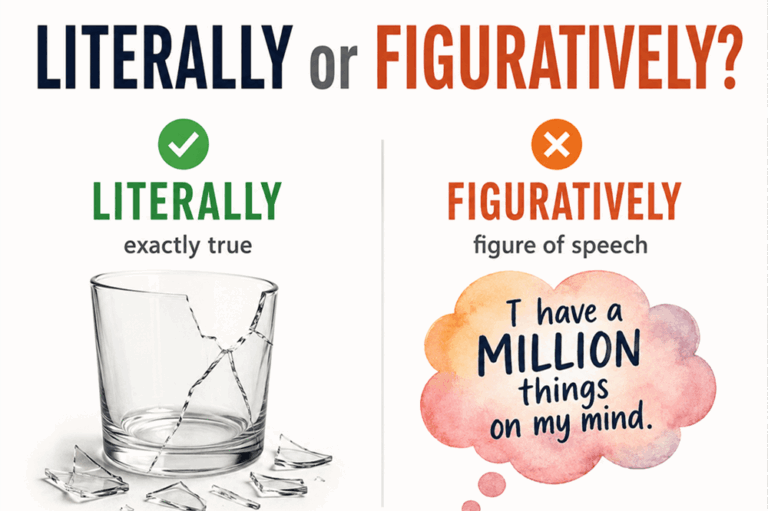
    Literally or Figuratively: Meaning Difference, Correct Usage, and Clear Examples for Writers

    ByJeremy Howard June 9, 2026

    Literally and figuratively both describe how something should be understood. The quick difference is this: literally means something is true in the exact, real, or basic sense. Figuratively means something is not meant exactly, but is used as a figure of speech, comparison, exaggeration, or image. If something truly happened, use literally. If it is…

    Read More Literally or Figuratively: Meaning Difference, Correct Usage, and Clear Examples for WritersContinue

  • Bumb or bum
    Spelling

    Bumb or Bum: Correct Spelling, Meaning, and Examples for Everyday English Writers

    ByJeremy Howard June 9, 2026

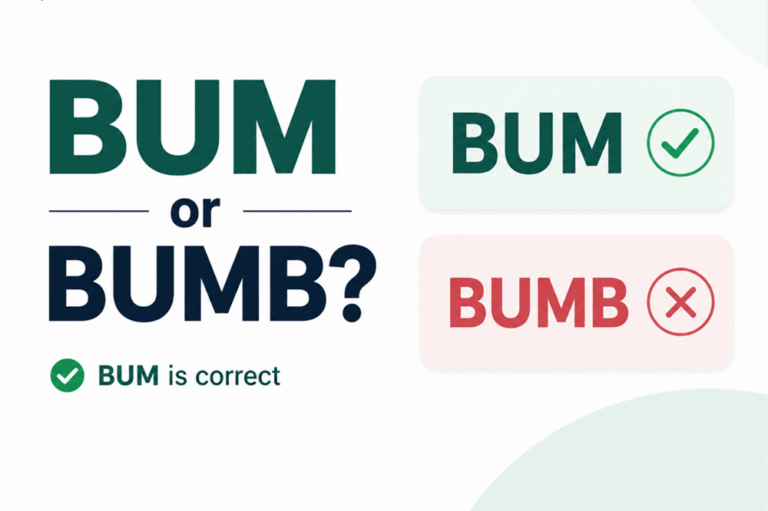
    The correct spelling is bum. Bumb is not the standard spelling in English and should usually be treated as a misspelling. The word bum has several informal meanings. It can refer to a person’s bottom, describe something poor or useless, or mean asking someone for something without paying. Because some meanings can sound rude or…

    Read More Bumb or Bum: Correct Spelling, Meaning, and Examples for Everyday English WritersContinue

  • Shudders or shutters
    Confusing Words

    Shudders or Shutters: Simple Meaning Difference, Correct Usage, and Clear Examples for Writers

    ByJeremy Howard June 8, 2026

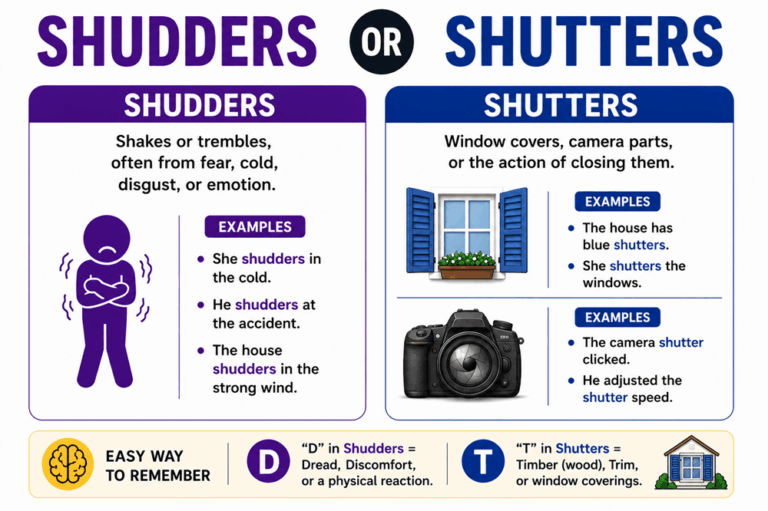
    Shudders and shutters are both correct words, but they mean very different things. Shudders usually means shakes, trembles, or reacts with fear, cold, disgust, or emotion. Shutters are covers for windows, or parts of a camera that open and close. The words sound similar, so they are easy to mix up in writing. Quick Answer…

    Read More Shudders or Shutters: Simple Meaning Difference, Correct Usage, and Clear Examples for WritersContinue

  • Tortellini or tortelloni
    Confusing Words

    Tortellini or Tortelloni: Meaning, Size Difference, Filling, and Correct Pasta Usage Explained

    ByJeremy Howard June 8, 2026

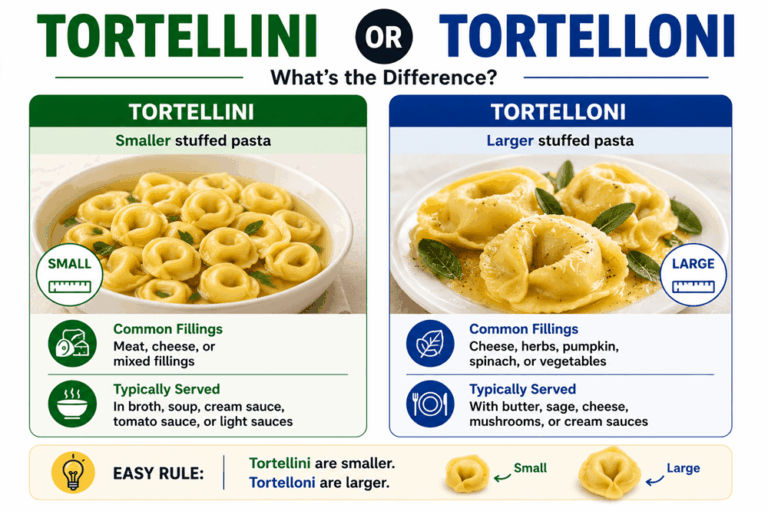
    Tortellini and tortelloni are both ring-shaped Italian stuffed pastas, but they are not exactly the same. The quick difference is size: tortellini are smaller, while tortelloni are larger. Their fillings are often different too. Tortellini commonly have meat or cheese fillings, while tortelloni are often filled with cheese, herbs, pumpkin, or vegetables. Quick Answer Use…

    Read More Tortellini or Tortelloni: Meaning, Size Difference, Filling, and Correct Pasta Usage ExplainedContinue

Page navigation

Previous PagePrevious 1 … 40 41 42 43 44 Next PageNext
  • Disclaimer
  • Terms of Use
  • Privacy Policy

© 2026 Word Briefs

  • About
  • Contact
Search