Skip to content
Word Briefs
  • About
  • Contact
Word Briefs
  • Complement or compliment
    Confusing Words

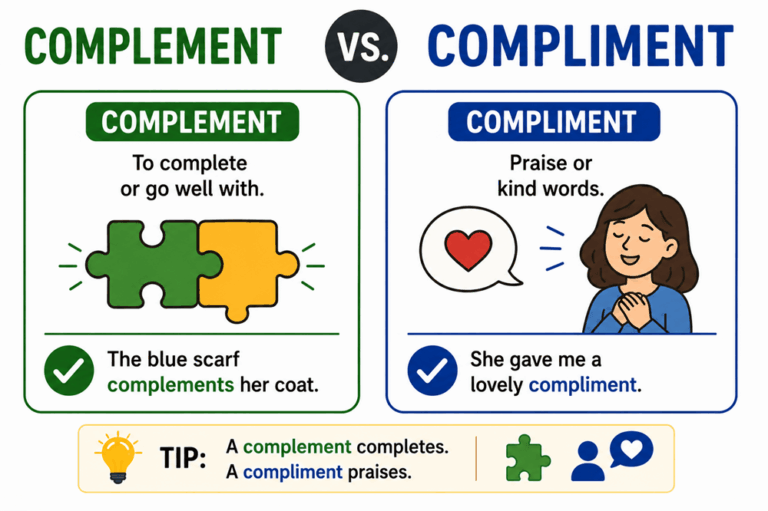
    Complement or Compliment: Correct Meaning, Spelling Difference, Usage, and Easy Examples Explained

    ByJeremy Howard June 10, 2026

    Complement and compliment are both correct words, but they mean different things. Use complement when one thing completes, improves, or goes well with another. Use compliment when someone says something kind, polite, or admiring. The easiest rule is: a compliment is praise, while a complement completes. Quick Answer Use complement when something completes or matches…
    Read More Complement or Compliment: Correct Meaning, Spelling Difference, Usage, and Easy Examples ExplainedContinue

  • Truely or truly
    Spelling

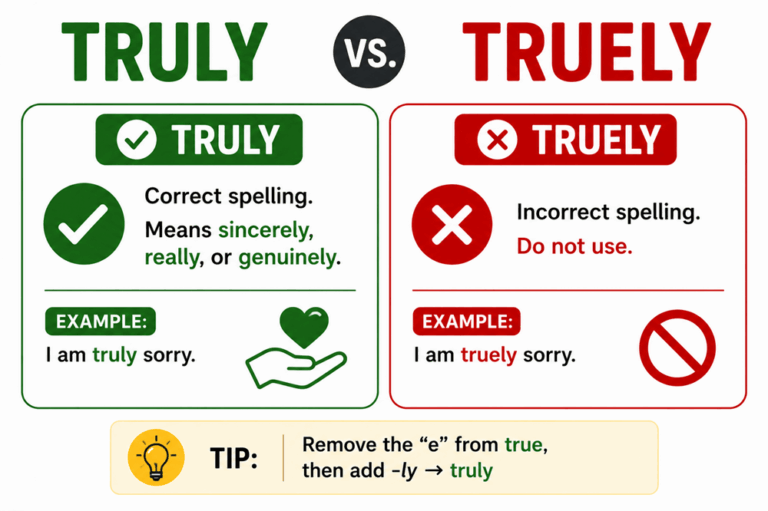
    Truely or Truly: Correct Spelling, Meaning, Usage, and Easy Examples Explained Clearly

    ByJeremy Howard June 10, 2026

    The correct spelling is truly. Truely is a common misspelling and should not be used in standard English. Even though the adjective is true, the adverb drops the final e before adding -ly. Use truly when you mean honestly, sincerely, really, accurately, or genuinely. Quick Answer Use truly, not truely. Correct: I am truly sorry….

    Read More Truely or Truly: Correct Spelling, Meaning, Usage, and Easy Examples Explained ClearlyContinue

  • Desert or dessert
    Confusing Words

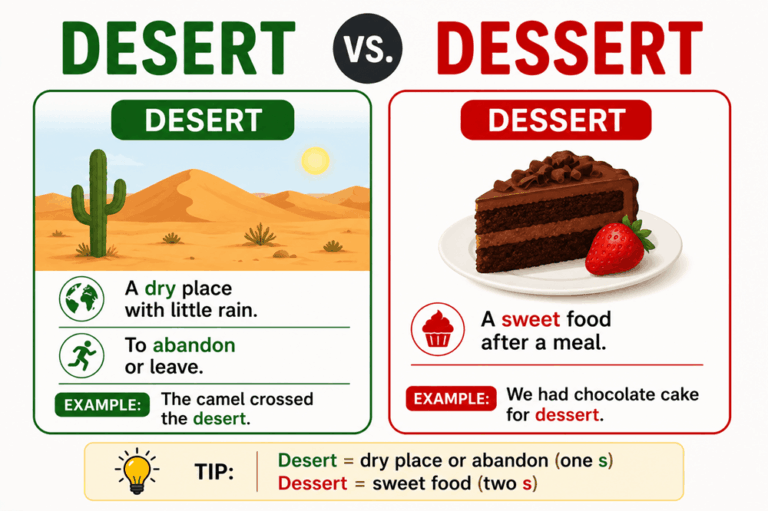
    Desert or Dessert: Correct Meaning, Spelling Difference, Pronunciation, and Easy Examples Explained

    ByJeremy Howard June 10, 2026

    Desert and dessert are both correct words, but they mean different things. A desert is a dry place with little rain, or it can mean to abandon someone. A dessert is a sweet food eaten after a meal. The easiest way to remember the spelling is that dessert has two s letters because you usually…

    Read More Desert or Dessert: Correct Meaning, Spelling Difference, Pronunciation, and Easy Examples ExplainedContinue

  • Travelling or traveling
    Confusing Words

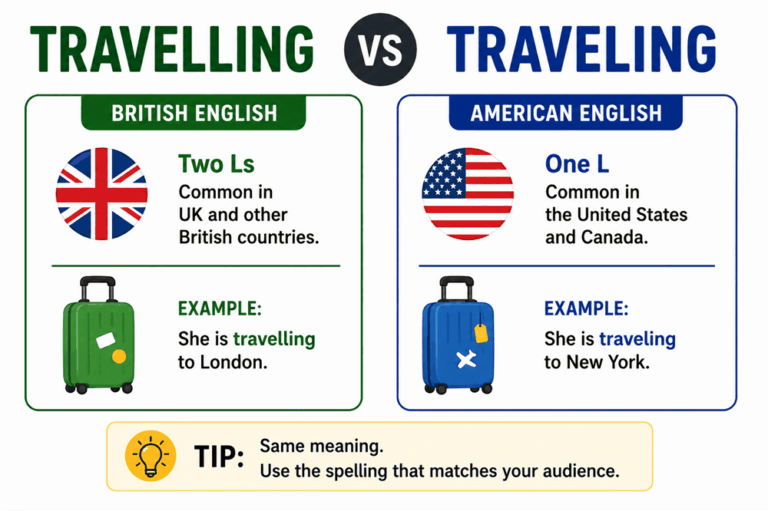
    Travelling or Traveling: Correct Spelling, Meaning, American and British English Usage Explained

    ByJeremy Howard June 10, 2026

    Travelling and traveling are both correct spellings. The difference is regional. Traveling with one l is the standard spelling in American English, while travelling with two ls is the standard spelling in British English. Both words mean going from one place to another, especially over some distance. Quick Answer Use traveling if you are writing…

    Read More Travelling or Traveling: Correct Spelling, Meaning, American and British English Usage ExplainedContinue

  • Leafs or leaves
    Confusing Words

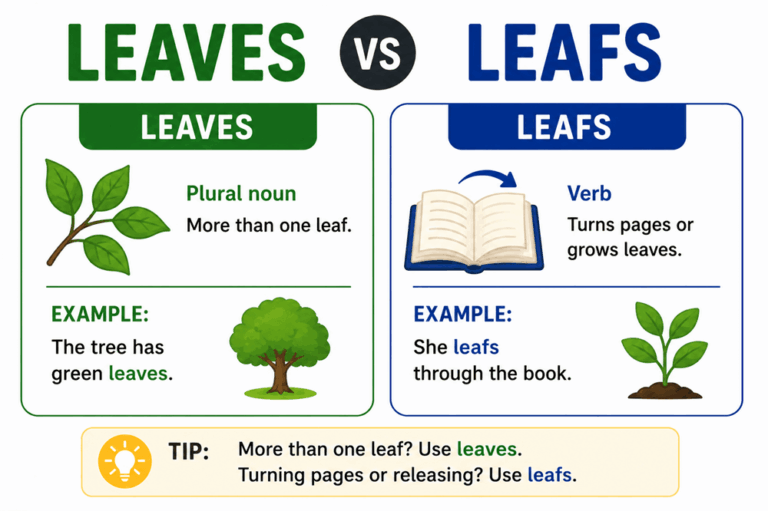
    Leafs or Leaves: Correct Plural, Verb Meaning, and Simple Examples Explained Clearly

    ByJeremy Howard June 10, 2026

    Leaves is the correct plural of leaf in standard English. If you are talking about more than one leaf on a tree, plant, flower, or table, use leaves. Leafs is usually not the plural form, but it can be correct as a verb, as in she leafs through a book. It can also appear in…

    Read More Leafs or Leaves: Correct Plural, Verb Meaning, and Simple Examples Explained ClearlyContinue

  • Loosing or losing
    Confusing Words

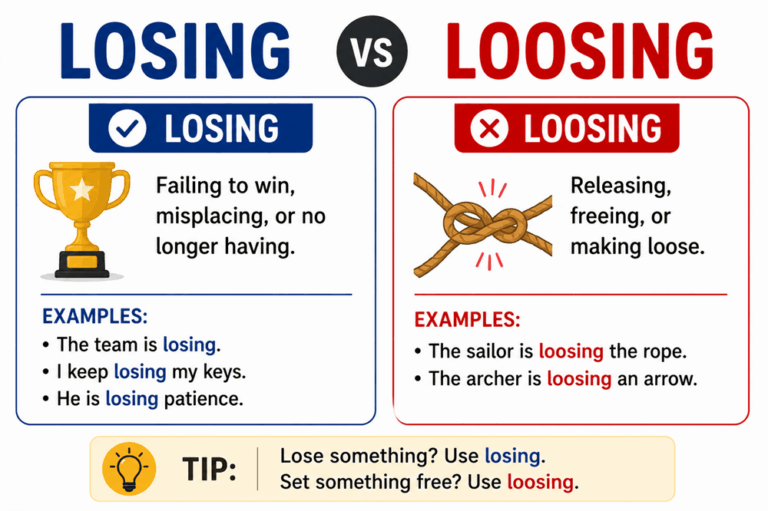
    Loosing or Losing: Correct Meaning, Spelling Difference, Usage, and Easy Examples Explained

    ByJeremy Howard June 10, 2026

    Losing and loosing are both real words, but they do not mean the same thing. In most everyday sentences, the correct word is losing. Use losing when someone fails to win, misplaces something, or no longer has something. Loosing is much rarer and means releasing, freeing, or making something loose. Quick Answer Use losing when…

    Read More Loosing or Losing: Correct Meaning, Spelling Difference, Usage, and Easy Examples ExplainedContinue

  • Dieing or dying
    Spelling

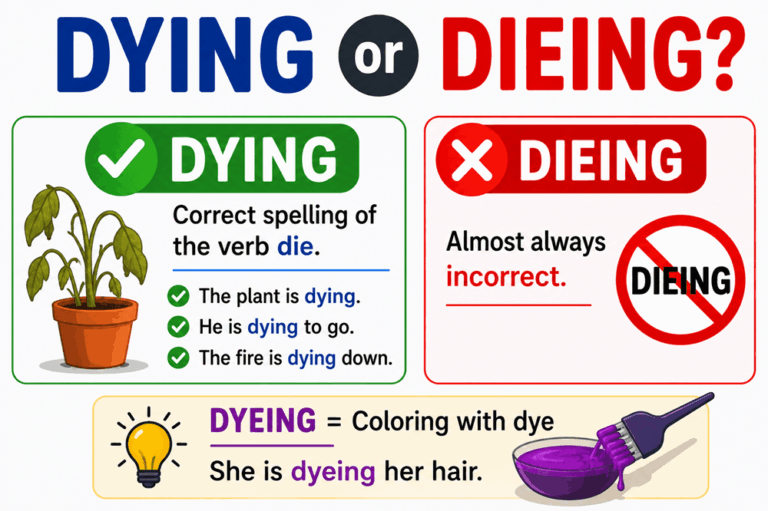
    Dieing or Dying: Correct Spelling, Meaning, Usage, and Simple Examples Explained Clearly

    ByJeremy Howard June 10, 2026

    The correct spelling is usually dying. Use dying when you mean approaching death, stopping, fading away, or strongly wanting something. Dieing is almost never the word you need in everyday writing. If you mean coloring fabric, hair, or material, the correct word is dyeing, not dying or dieing. Quick Answer Use dying when talking about…

    Read More Dieing or Dying: Correct Spelling, Meaning, Usage, and Simple Examples Explained ClearlyContinue

  • Judgement or judgment
    Confusing Words

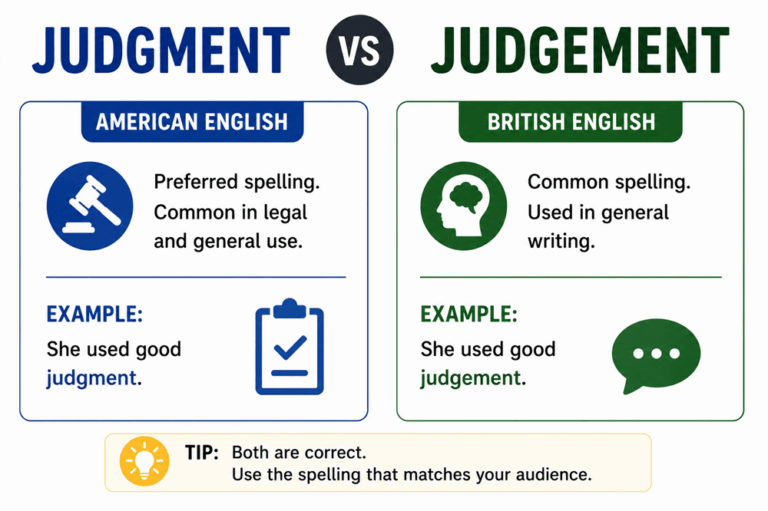
    Judgement or Judgment: Correct Spelling, Meaning, Regional Usage, and Examples Explained

    ByJeremy Howard June 10, 2026June 10, 2026

    Judgment and judgement are both used in English, but judgment is the preferred spelling in American English. Judgement is common in British English for general writing, though judgment is often used in legal contexts. Both words mean the ability to make decisions, an opinion, or an official decision made by a court. Quick Answer Use…

    Read More Judgement or Judgment: Correct Spelling, Meaning, Regional Usage, and Examples ExplainedContinue

  • Then or than
    Confusing Words

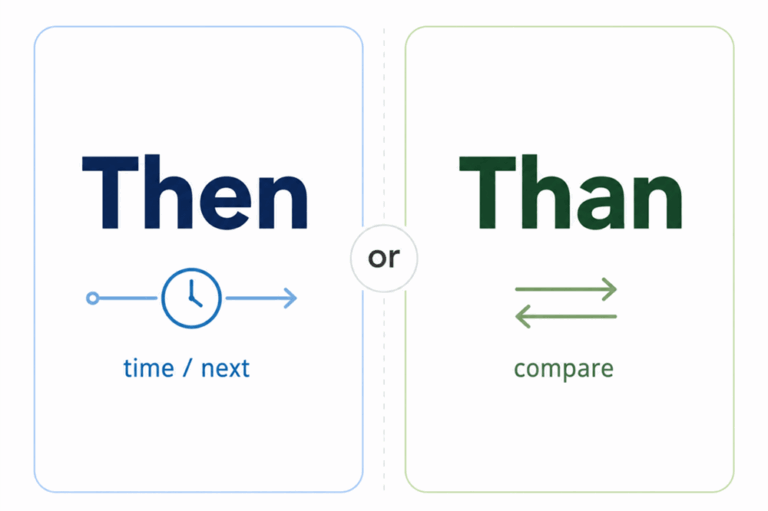
    Then or Than: Correct Meaning, Grammar Difference, Usage, and Simple Examples Explained

    ByJeremy Howard June 10, 2026June 10, 2026

    Then and than are both correct words, but they are used differently. Use then when you are talking about time, sequence, or what happens next. Use than when you are making a comparison. The easiest rule is: then is about time, and than is about comparison. Quick Answer Use then when something happens next, after…

    Read More Then or Than: Correct Meaning, Grammar Difference, Usage, and Simple Examples ExplainedContinue

  • Layed or laid
    Spelling

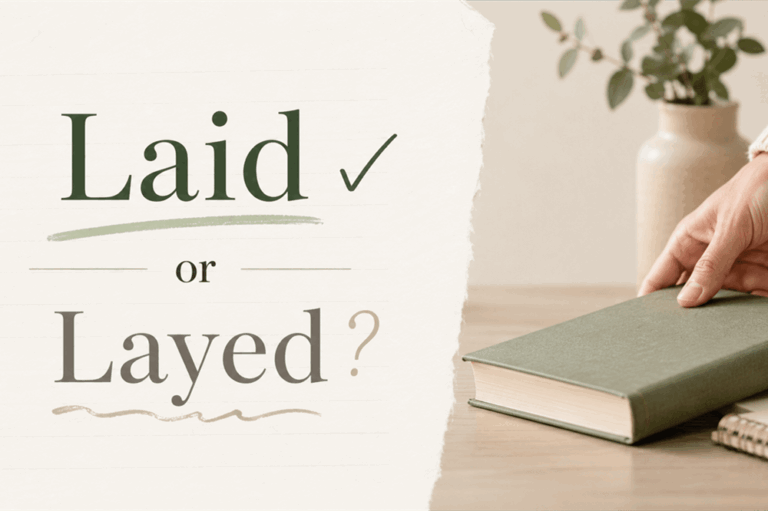
    Layed or Laid: Which Spelling Is Correct for Clear Everyday Writing?

    ByJeremy Howard June 10, 2026June 10, 2026

    When you are choosing between layed or laid, the correct word is almost always laid. It is the standard past tense and past participle of lay, meaning to put or place something down. Layed may look logical, but it is not the accepted spelling in modern English. If you want your writing to look polished,…

    Read More Layed or Laid: Which Spelling Is Correct for Clear Everyday Writing?Continue

Page navigation

Previous PagePrevious 1 … 38 39 40 41 42 … 44 Next PageNext
  • Disclaimer
  • Terms of Use
  • Privacy Policy

© 2026 Word Briefs

  • About
  • Contact
Search