Skip to content
Word Briefs
  • About
  • Contact
Word Briefs
  • Busses or buses
    Confusing Words

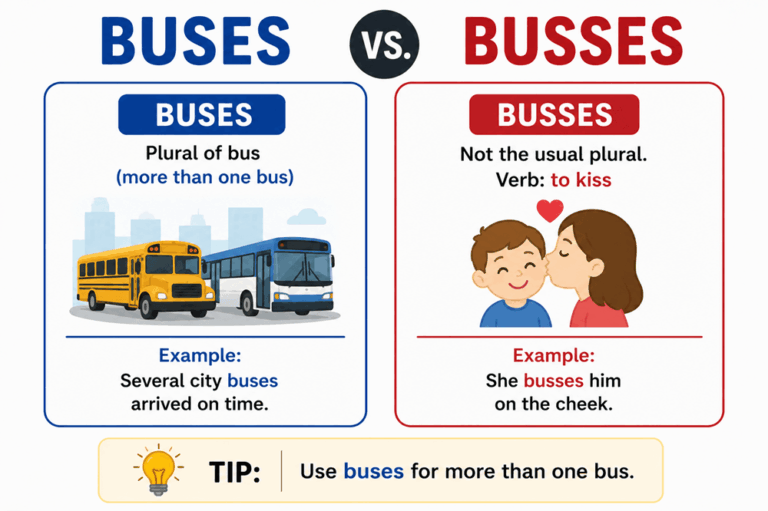
    Busses or Buses: Correct Plural, Spelling Difference, Usage, and Examples Explained Clearly

    ByJeremy Howard June 11, 2026

    Buses is the standard plural of bus. Use buses when you mean more than one bus, such as school buses, city buses, shuttle buses, or tour buses. Busses is a less common spelling and is usually avoided for the vehicle meaning. It can also be a verb form of buss, an old-fashioned word meaning to…
    Read More Busses or Buses: Correct Plural, Spelling Difference, Usage, and Examples Explained ClearlyContinue

  • Gases or gasses
    Confusing Words

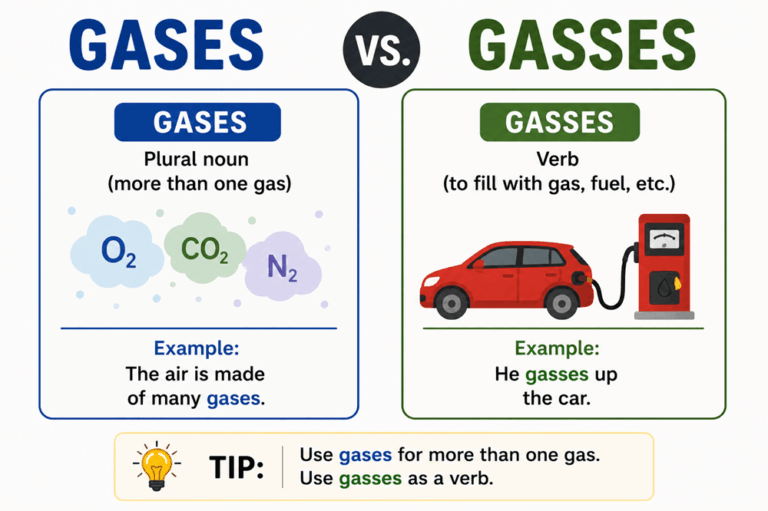
    Gases or Gasses: Correct Plural, Verb Meaning, Usage, and Examples Explained

    ByJeremy Howard June 11, 2026

    Gases is the standard plural of gas when you mean more than one type or amount of gas. Use gases in science, schoolwork, formal writing, and everyday writing about oxygen, carbon dioxide, natural gas, or other substances. Gasses is usually a verb form, as in he gasses up the car, though it can sometimes appear…

    Read More Gases or Gasses: Correct Plural, Verb Meaning, Usage, and Examples ExplainedContinue

  • Spelt or spelled
    Confusing Words

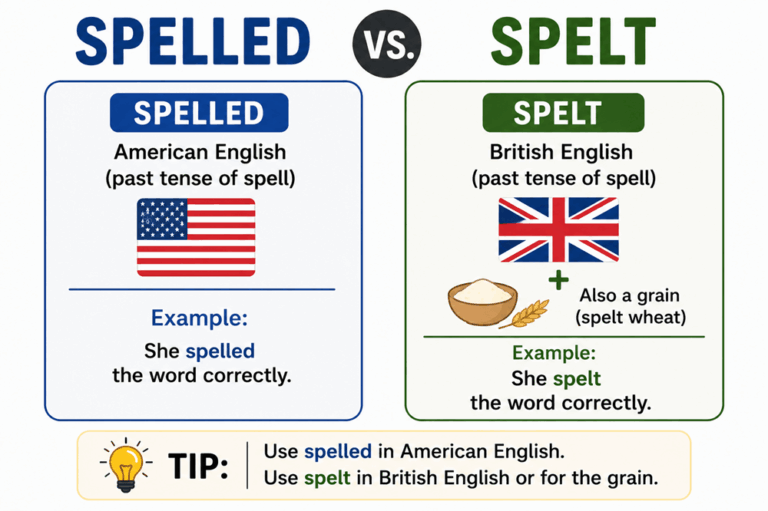
    Spelt or Spelled: Correct Past Tense, Regional Usage, and Examples Explained Clearly

    ByJeremy Howard June 11, 2026

    Spelled and spelt can both be correct as the past tense of spell, but the best choice depends on your audience. Spelled is the standard choice in American English. Spelt is common in British English. However, spelt is also the name of an ancient grain, so context matters. Quick Answer Use spelled in American English….

    Read More Spelt or Spelled: Correct Past Tense, Regional Usage, and Examples Explained ClearlyContinue

  • Greatful or grateful
    Spelling

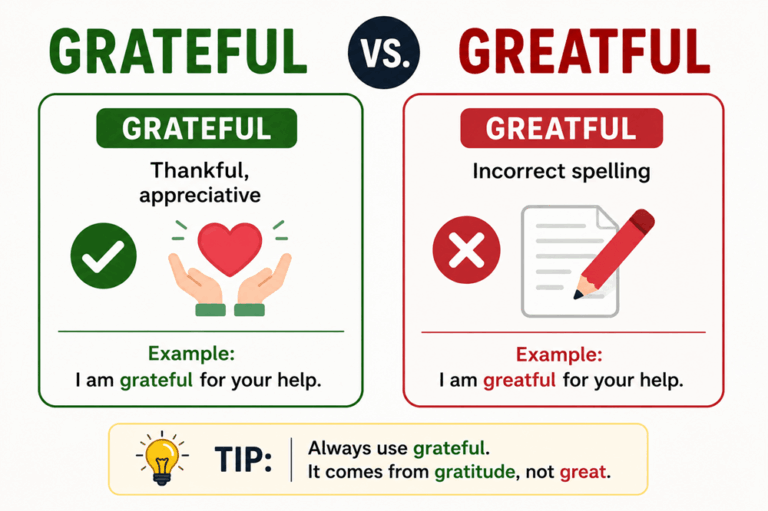
    Greatful or Grateful: Correct Spelling, Meaning, Usage, and Easy Examples Explained Clearly

    ByJeremy Howard June 11, 2026

    The correct spelling is grateful. Greatful is a common misspelling and should not be used in standard English. Even though grateful sounds a little like it could come from great, it is spelled with grat, not great. Use grateful when you mean thankful, appreciative, or pleased because someone helped you or something good happened. Quick…

    Read More Greatful or Grateful: Correct Spelling, Meaning, Usage, and Easy Examples Explained ClearlyContinue

  • Chose or choose
    Confusing Words

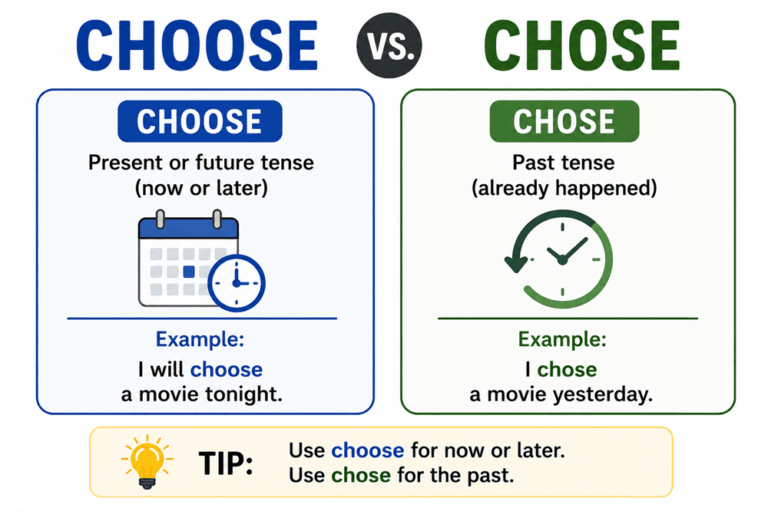
    Chose or Choose: Correct Tense Difference, Meaning, Usage, and Examples Explained Clearly

    ByJeremy Howard June 11, 2026

    Choose and chose are both correct words, but they are used in different tenses. Use choose for the present tense, future tense, or base form of the verb. Use chose for the simple past tense. The easiest rule is: you choose now, but you chose before. Quick Answer Use choose when the action is happening…

    Read More Chose or Choose: Correct Tense Difference, Meaning, Usage, and Examples Explained ClearlyContinue

  • Confusing Words

    Carmel or Caramel: Correct Spelling, Meaning Difference, Pronunciation, and Examples Explained

    ByJeremy Howard June 11, 2026

    Caramel is the correct spelling when you mean the sweet brown candy, sauce, flavor, or cooked sugar. Carmel is usually a place name or personal name, not the standard spelling for the food word. If you are writing about caramel sauce, caramel candy, caramel apples, caramel coffee, or caramel color, use caramel. Quick Answer Use…

    Read More Carmel or Caramel: Correct Spelling, Meaning Difference, Pronunciation, and Examples ExplainedContinue

  • Whether or wether
    Confusing Words

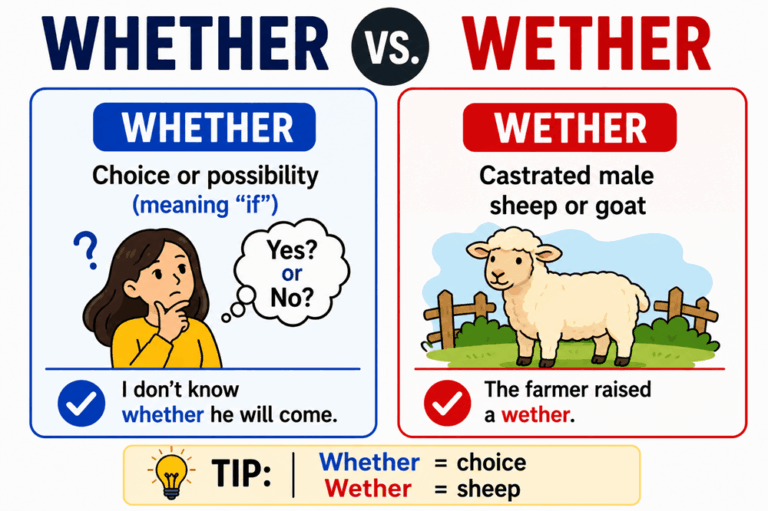
    Whether or Wether: Correct Spelling, Meaning Difference, Grammar Usage, and Examples Explained Clearly

    ByJeremy Howard June 11, 2026

    Whether and wether are both real words, but they mean very different things. In almost all everyday writing, the correct word is whether. Use whether when you are talking about a choice, possibility, doubt, or condition. Wether is a rare noun that means a castrated male sheep or goat. Quick Answer Use whether when you…

    Read More Whether or Wether: Correct Spelling, Meaning Difference, Grammar Usage, and Examples Explained ClearlyContinue

  • Whomever or whoever
    Confusing Words

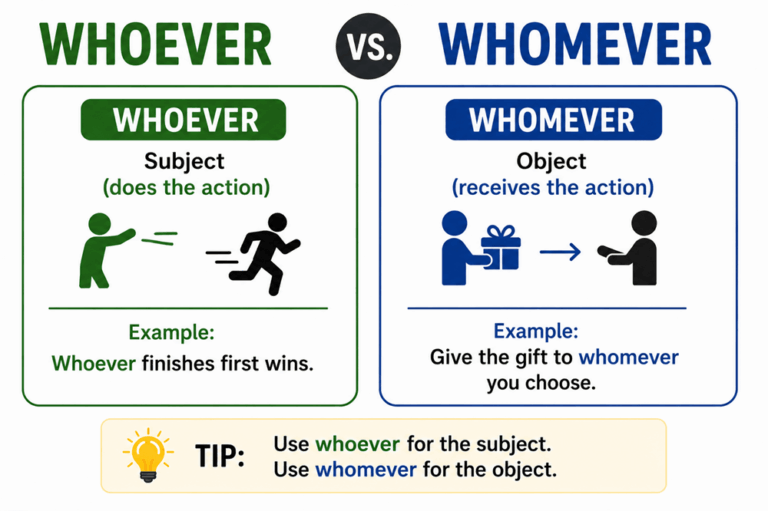
    Whomever or Whoever: Correct Grammar, Meaning, Object Rule, and Examples Explained Clearly

    ByJeremy Howard June 11, 2026

    Whoever and whomever are both correct words, but they are used differently. Use whoever when the word is the subject of its own clause. Use whomever when the word is the object of a verb or preposition inside its own clause. In everyday writing, whoever is more common, while whomever sounds more formal. Quick Answer…

    Read More Whomever or Whoever: Correct Grammar, Meaning, Object Rule, and Examples Explained ClearlyContinue

  • Quite or quiet
    Confusing Words

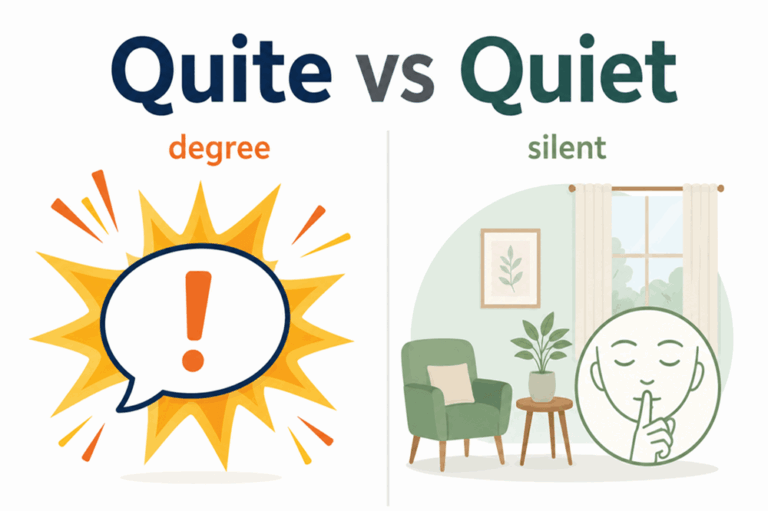
    Quite or Quiet: Correct Meaning, Spelling Difference, Usage, and Easy Examples Explained

    ByJeremy Howard June 11, 2026

    Quite and quiet are both correct words, but they mean different things. Use quite when you mean fairly, very, completely, or to a noticeable degree. Use quiet when you mean silent, calm, low in noise, or not loud. The easiest rule is: quite adds emphasis, while quiet means not noisy. Quick Answer Use quite when…

    Read More Quite or Quiet: Correct Meaning, Spelling Difference, Usage, and Easy Examples ExplainedContinue

  • Swifty or swiftie
    Confusing Words

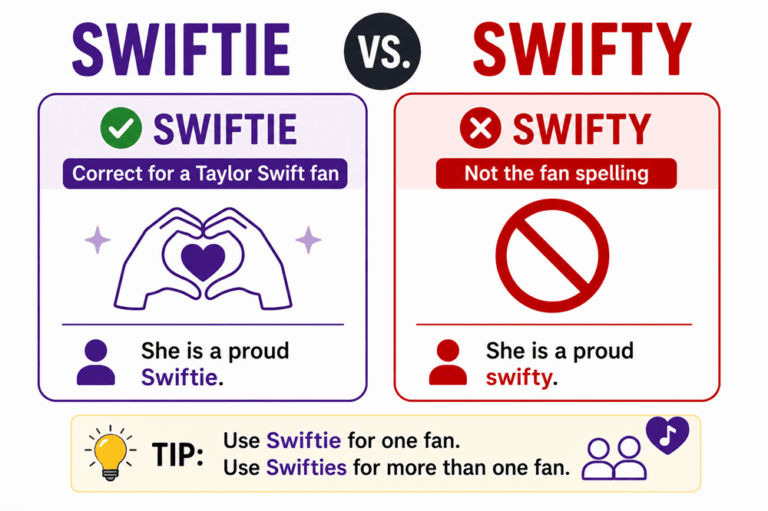
    Swifty or Swiftie: Correct Spelling, Fan Meaning, Usage, and Examples Explained Clearly

    ByJeremy Howard June 10, 2026

    Swiftie is the correct spelling when you mean a fan of Taylor Swift. Swifty may appear as an informal word or nickname in other contexts, but it is not the usual spelling for the fan name. If you are talking about someone who loves Taylor Swift’s music, concerts, albums, lyrics, or fandom, use Swiftie. Quick…

    Read More Swifty or Swiftie: Correct Spelling, Fan Meaning, Usage, and Examples Explained ClearlyContinue

Page navigation

Previous PagePrevious 1 … 37 38 39 40 41 … 44 Next PageNext
  • Disclaimer
  • Terms of Use
  • Privacy Policy

© 2026 Word Briefs

  • About
  • Contact
Search