Skip to content
Word Briefs
  • About
  • Contact
Word Briefs
  • Whoa or woah
    Spelling

    Whoa or Woah: Which Spelling Is Correct When You Express Sudden Surprise?

    ByJeremy Howard June 12, 2026

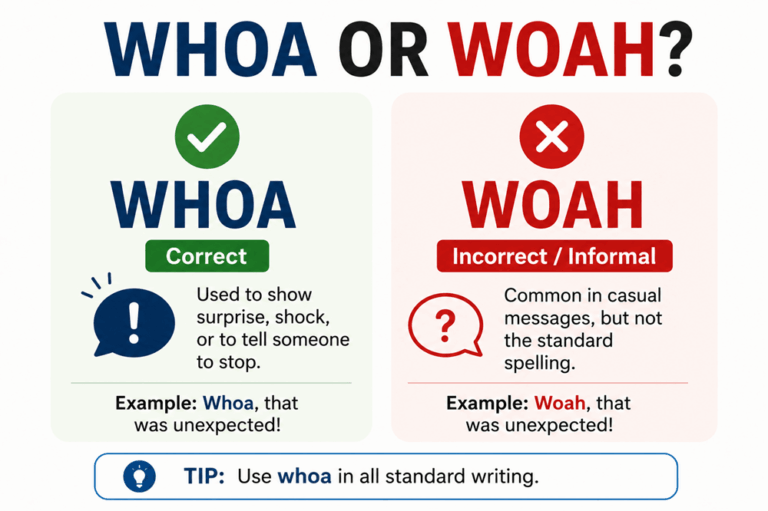
    Whoa and woah are both used to show surprise, shock, amazement, or a sudden pause, but only whoa is the standard spelling. Woah is common online and in casual messages, but it is usually treated as a misspelling or informal variant. If you want the spelling that looks correct in polished writing, use whoa. Quick…
    Read More Whoa or Woah: Which Spelling Is Correct When You Express Sudden Surprise?Continue

  • Nosy or nosey
    Spelling

    Nosy or Nosey: Which Spelling Is Correct When Someone Is Too Curious?

    ByJeremy Howard June 12, 2026

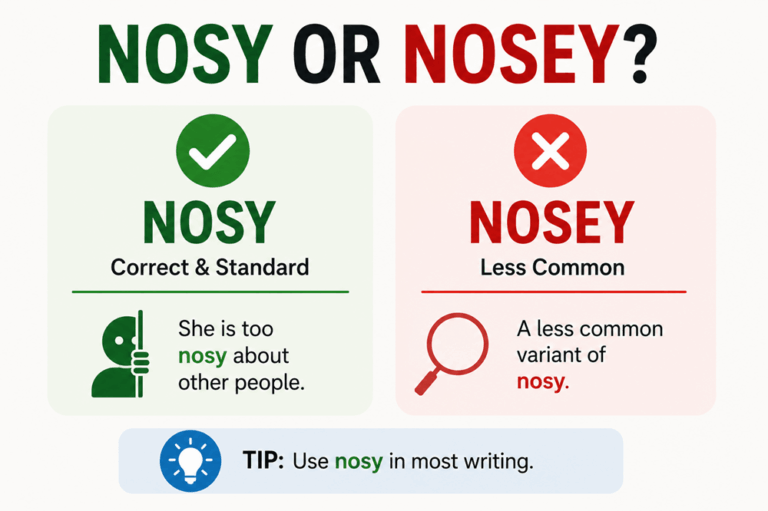
    Nosy and nosey both describe someone who is overly curious about other people’s private business. The preferred spelling is nosy, especially in standard American English and polished writing. Nosey is a less common variant, and it may appear in informal writing or certain British expressions. If you want the safer choice, use nosy. Quick Answer…

    Read More Nosy or Nosey: Which Spelling Is Correct When Someone Is Too Curious?Continue

  • Anyway or anyways
    Confusing Words

    Anyway or Anyways: Correct Usage, Meaning, Formality, and Everyday Examples Explained Clearly

    ByJeremy Howard June 12, 2026

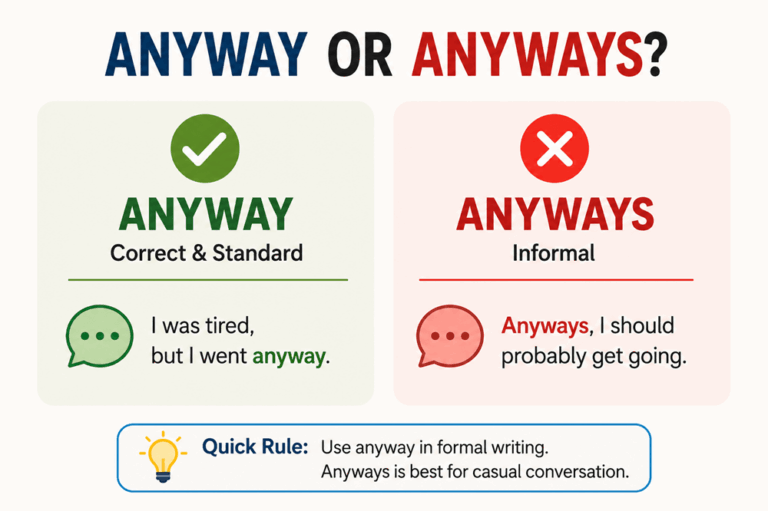
    Anyway and anyways are often used to mean the same thing, but they are not equally accepted in standard writing. Use anyway in formal, professional, academic, or polished everyday writing. Anyways is informal and conversational, and many readers consider it nonstandard. The easiest rule is: when you want the safe choice, write anyway. Quick Answer…

    Read More Anyway or Anyways: Correct Usage, Meaning, Formality, and Everyday Examples Explained ClearlyContinue

  • Dreamt or dreamed
    Confusing Words

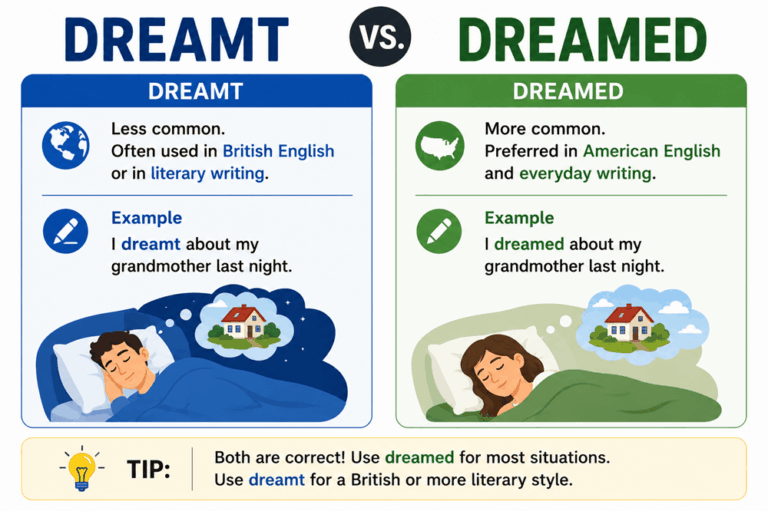
    Dreamt or Dreamed: Correct Past Tense, Meaning, Usage, and Examples Explained Clearly

    ByJeremy Howard June 11, 2026

    Dreamed and dreamt are both correct past-tense forms of the verb dream. Use dreamed if you want the most common and straightforward spelling, especially in American English. Use dreamt if you prefer a more British, literary, or traditional sound. Both words can mean had a dream while sleeping or imagined something while awake. Quick Answer…

    Read More Dreamt or Dreamed: Correct Past Tense, Meaning, Usage, and Examples Explained ClearlyContinue

  • Laying or lying
    Confusing Words

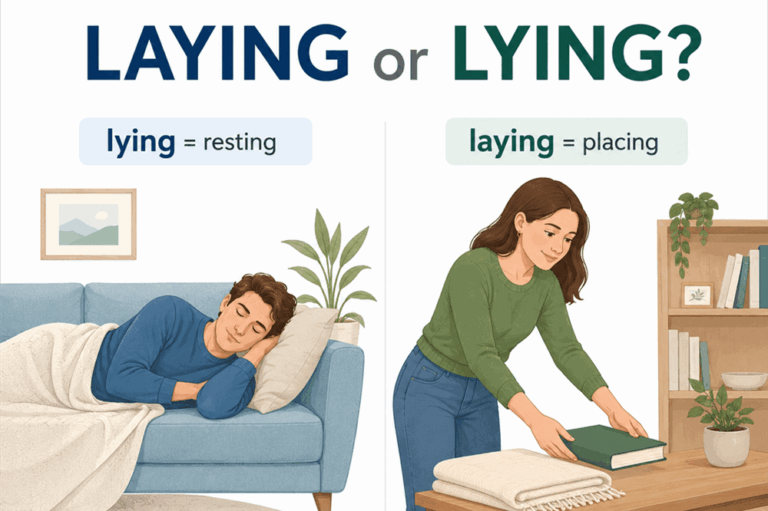
    Laying or Lying: Correct Meaning, Grammar Difference, Verb Forms, and Examples Explained

    ByJeremy Howard June 11, 2026June 11, 2026

    Laying and lying are both correct words, but they are used differently. Use lying when someone or something is resting in a flat position, or when someone is telling an untruth. Use laying when someone is putting something down or when an animal is producing eggs. The easiest rule is: you lie down yourself, but…

    Read More Laying or Lying: Correct Meaning, Grammar Difference, Verb Forms, and Examples ExplainedContinue

  • Seperate or separate
    Spelling

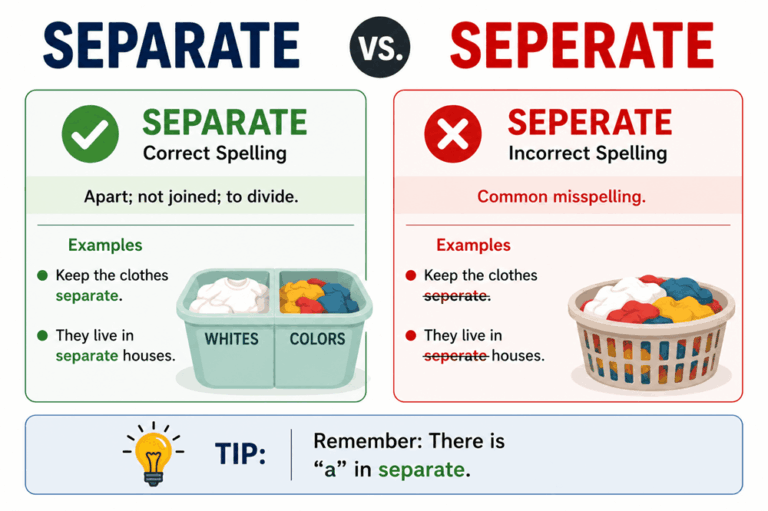
    Seperate or Separate: Correct Spelling, Meaning, Usage, and Easy Examples Explained Clearly

    ByJeremy Howard June 11, 2026

    The correct spelling is separate. Seperate is a common misspelling and should not be used in standard English. Use separate when you mean apart, not joined, different, individual, or to move things away from each other. The easiest way to remember it is that separate has a after the p, not e. Quick Answer Use…

    Read More Seperate or Separate: Correct Spelling, Meaning, Usage, and Easy Examples Explained ClearlyContinue

  • Ageing or aging
    Confusing Words

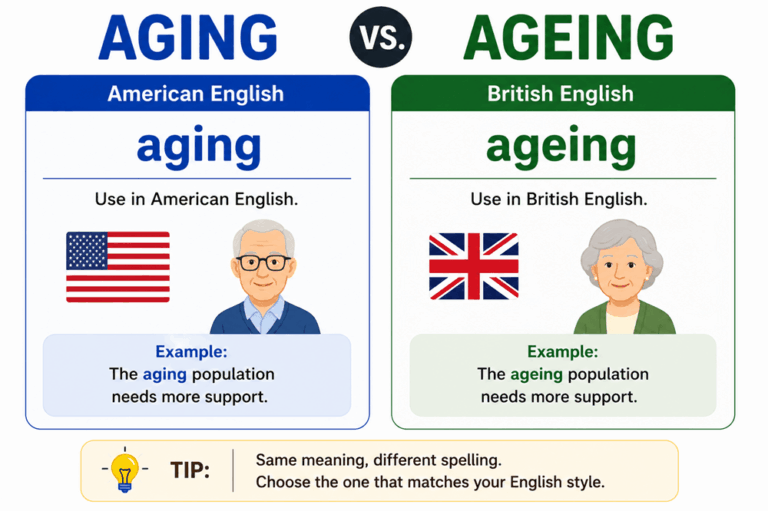
    Ageing or Aging: Correct Spelling, Meaning, American and British English Usage Explained

    ByJeremy Howard June 11, 2026

    Aging and ageing are both correct spellings. The difference is regional. Aging is the standard spelling in American English, while ageing is common in British English. Both words refer to growing older, becoming older, or the process of change that happens over time. Quick Answer Use aging if you are writing in American English. The…

    Read More Ageing or Aging: Correct Spelling, Meaning, American and British English Usage ExplainedContinue

  • Blond or blonde
    Confusing Words

    Blond or Blonde: Correct Spelling, Meaning, Hair Color Usage, and Examples for Writers

    ByJeremy Howard June 11, 2026June 11, 2026

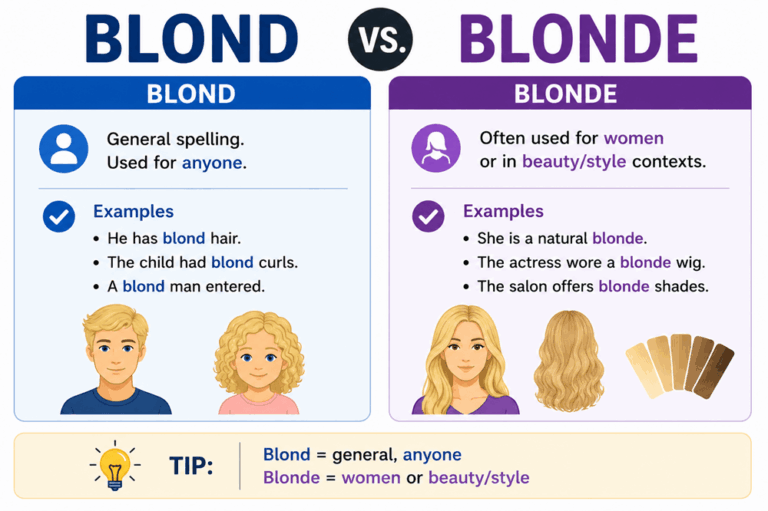
    Blond and blonde are both correct spellings. They usually refer to pale yellow or light-colored hair. In modern English, blond is often the more general spelling, especially as an adjective. Blonde is still common when referring to a woman or girl with blond hair, and it is also widely used in beauty, fashion, and hair-color…

    Read More Blond or Blonde: Correct Spelling, Meaning, Hair Color Usage, and Examples for WritersContinue

  • Aluminum or aluminium
    Confusing Words

    Aluminum or Aluminium: Correct Spelling, Meaning, American and British English Usage Explained

    ByJeremy Howard June 11, 2026June 12, 2026

    Aluminum and aluminium are both correct spellings for the same lightweight metal element. The difference is regional. Aluminum is the standard spelling in American English, while aluminium is standard in British English and many other English-speaking regions. Both words refer to the same element, with the chemical symbol Al. Quick Answer Use aluminum if you…

    Read More Aluminum or Aluminium: Correct Spelling, Meaning, American and British English Usage ExplainedContinue

  • Tomatos or tomatoes
    Spelling

    Tomatos or Tomatoes: Correct Plural Spelling, Meaning, Usage, and Examples Explained Clearly

    ByJeremy Howard June 11, 2026

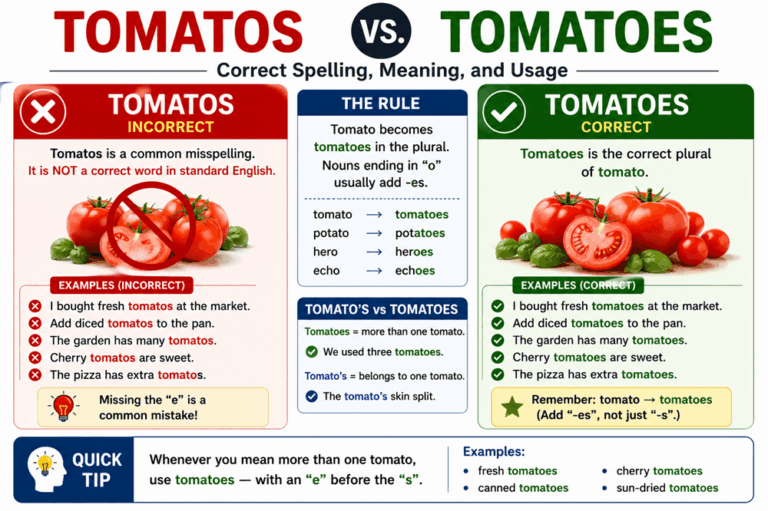
    The correct plural spelling is tomatoes. Tomatos is a common misspelling and should not be used in standard English. Use tomatoes when you mean more than one tomato, whether you are writing about fresh tomatoes, cherry tomatoes, canned tomatoes, tomato plants, or tomato recipes. Quick Answer Use tomatoes, not tomatos. Correct: I bought fresh tomatoes…

    Read More Tomatos or Tomatoes: Correct Plural Spelling, Meaning, Usage, and Examples Explained ClearlyContinue

Page navigation

Previous PagePrevious 1 … 35 36 37 38 39 … 44 Next PageNext
  • Disclaimer
  • Terms of Use
  • Privacy Policy

© 2026 Word Briefs

  • About
  • Contact
Search