Skip to content
Word Briefs
  • About
  • Contact
Word Briefs
  • Natzi or nazi
    Spelling

    Natzi or Nazi: Correct Spelling, Meaning, Capitalization, and Usage Examples Explained Clearly

    ByJeremy Howard June 12, 2026

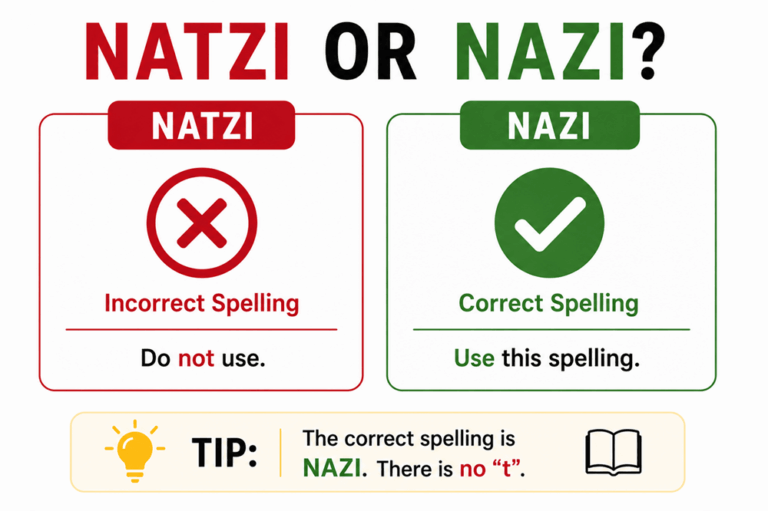
    Nazi is the correct spelling. Natzi is a misspelling and should not be used in standard English. The word Nazi refers to a member or supporter of the National Socialist German Workers’ Party, the political party led by Adolf Hitler in Germany. It can also describe something connected to Nazi Germany, Nazi ideology, or the…
    Read More Natzi or Nazi: Correct Spelling, Meaning, Capitalization, and Usage Examples Explained ClearlyContinue

  • Acknowledgement or acknowledgment
    Confusing Words

    Acknowledgement or Acknowledgment: Correct Spelling, Regional Difference, Usage, and Examples Clearly Explained

    ByJeremy Howard June 12, 2026

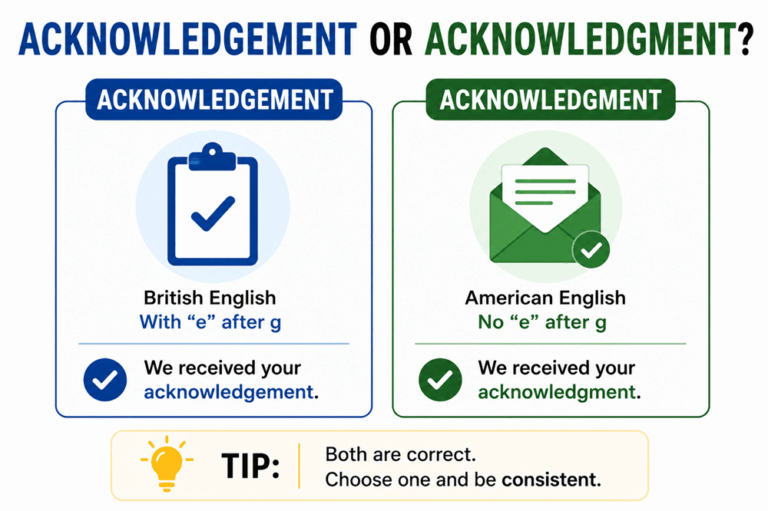
    Acknowledgement and acknowledgment are both correct spellings, but they are not equally common everywhere. Acknowledgment is the preferred spelling in American English, while acknowledgement is more common in British English and many other varieties of English. If you are writing for a U.S. audience, use acknowledgment. If you are writing in British English, acknowledgement is…

    Read More Acknowledgement or Acknowledgment: Correct Spelling, Regional Difference, Usage, and Examples Clearly ExplainedContinue

  • Further or farther
    Confusing Words

    Further or Farther: Correct Meaning, Difference, Usage, and Examples for Clear Writing

    ByJeremy Howard June 12, 2026

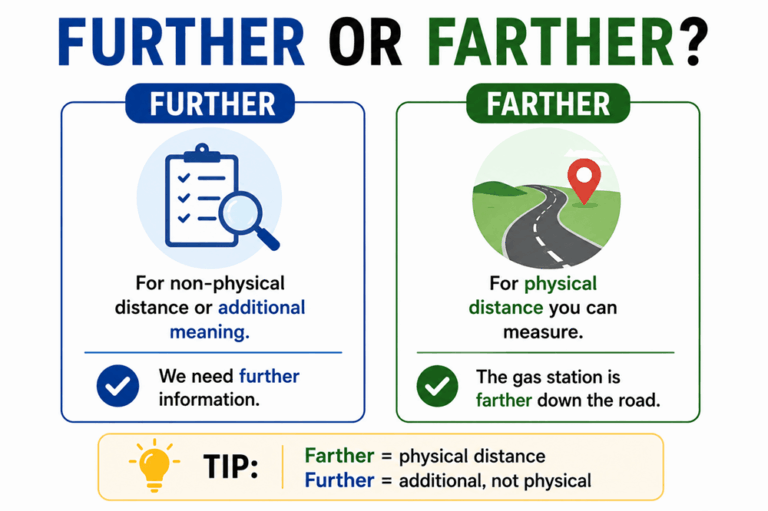
    Further and farther both relate to distance, but they are not always used the same way. Use farther for physical distance that can be measured. Use further for figurative distance, progress, degree, or additional information. The easiest rule is this: farther is for real distance, while further is for everything else. Quick Answer Use farther…

    Read More Further or Farther: Correct Meaning, Difference, Usage, and Examples for Clear WritingContinue

  • Aid or aide
    Confusing Words

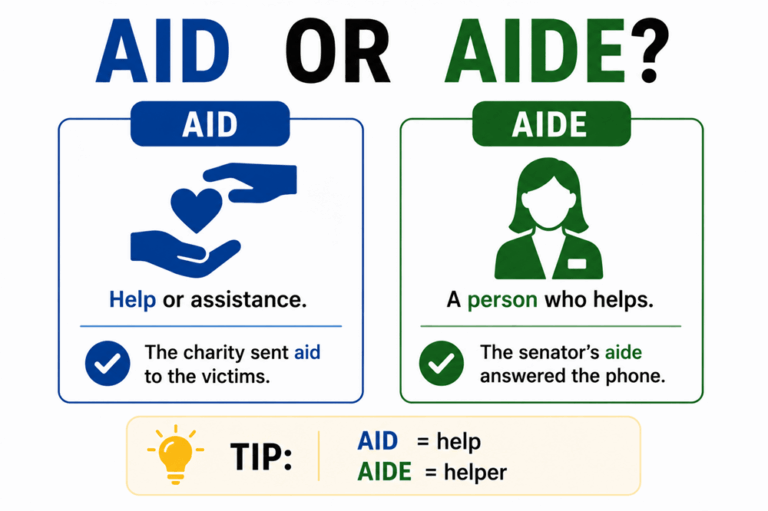
    Aid or Aide: Correct Meaning, Spelling, Difference, and Examples for Clear Writing

    ByJeremy Howard June 12, 2026

    Aid and aide sound the same, but they do not mean the same thing. Use aid when you mean help, support, assistance, or the act of helping. Use aide when you mean a person who helps someone, especially in a job or official role. The easiest rule is this: aid is help, and an aide…

    Read More Aid or Aide: Correct Meaning, Spelling, Difference, and Examples for Clear WritingContinue

  • Girlie or girly
    Confusing Words

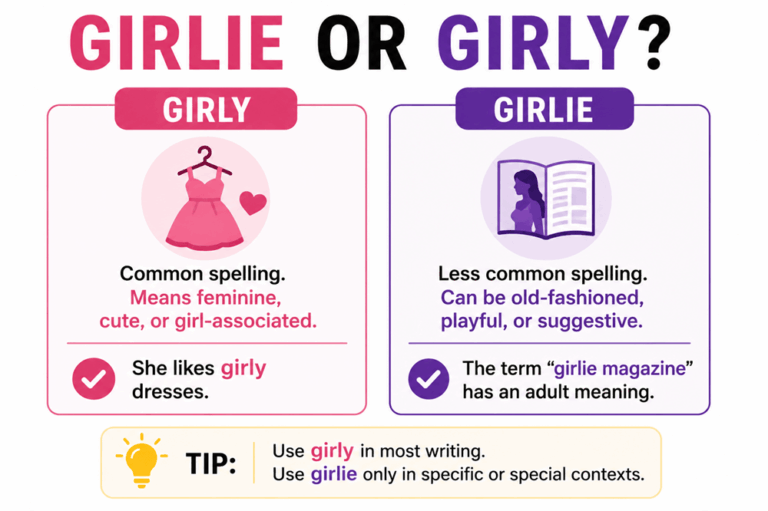
    Girlie or Girly: Correct Spelling, Meaning, Difference, and Examples for Clear Writing

    ByJeremy Howard June 12, 2026

    Girly and girlie are both real spellings, but they are not always used the same way. Use girly as the more common modern spelling when you mean traditionally feminine, playful, pretty, or associated with girls. Girlie is a less common variant and can sometimes sound old-fashioned, childish, or connected to adult entertainment. The safest spelling…

    Read More Girlie or Girly: Correct Spelling, Meaning, Difference, and Examples for Clear WritingContinue

  • Preform or perform
    Confusing Words

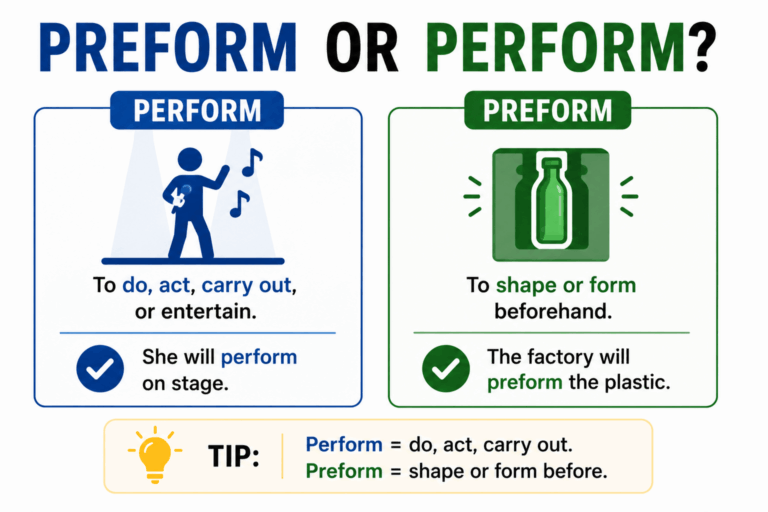
    Preform or Perform: Correct Meaning, Spelling, Difference, and Examples for Clear Writing

    ByJeremy Howard June 12, 2026

    Preform and perform are both real words, but they mean very different things. Use perform when you mean to do, carry out, act, play music, complete a task, or entertain an audience. Use preform only when you mean to shape, form, or prepare something beforehand. The easiest rule is this: perform means do; preform means…

    Read More Preform or Perform: Correct Meaning, Spelling, Difference, and Examples for Clear WritingContinue

  • Thru or through
    Confusing Words

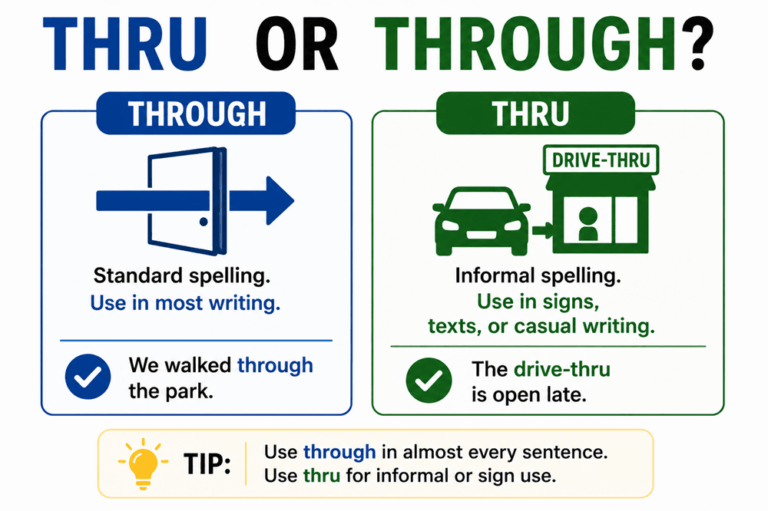
    Thru or Through: Correct Spelling, Meaning, Usage, and Examples for Clear Writing

    ByJeremy Howard June 12, 2026

    Through and thru mean the same thing in many contexts, but they are not equally appropriate. Through is the standard spelling for formal, professional, academic, and everyday writing. Thru is an informal shortened spelling, mostly used in signs, texting, branding, and casual messages. If you want your writing to look correct and polished, use through….

    Read More Thru or Through: Correct Spelling, Meaning, Usage, and Examples for Clear WritingContinue

  • Requestor or requester
    Confusing Words

    Requestor or Requester: Correct Spelling, Meaning, Difference, and Examples for Clear Writing

    ByJeremy Howard June 12, 2026

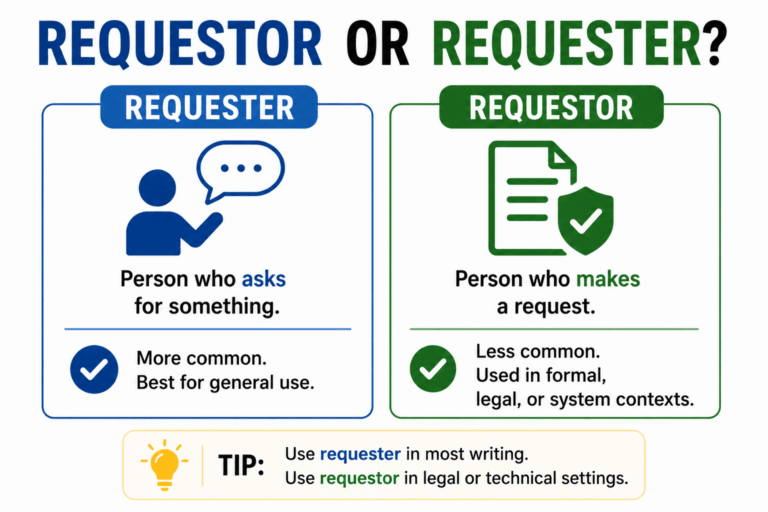
    Requester and requestor both refer to someone who makes a request, but requester is the more common and standard spelling in everyday English. Requestor is a valid variant, often used in legal, technical, business, or administrative contexts. If you want the safest choice for most writing, use requester. Quick Answer Use requester when you mean…

    Read More Requestor or Requester: Correct Spelling, Meaning, Difference, and Examples for Clear WritingContinue

  • Ensure or insure
    Confusing Words

    Ensure or Insure: Correct Meaning, Difference, Usage, and Examples for Clear Writing

    ByJeremy Howard June 12, 2026

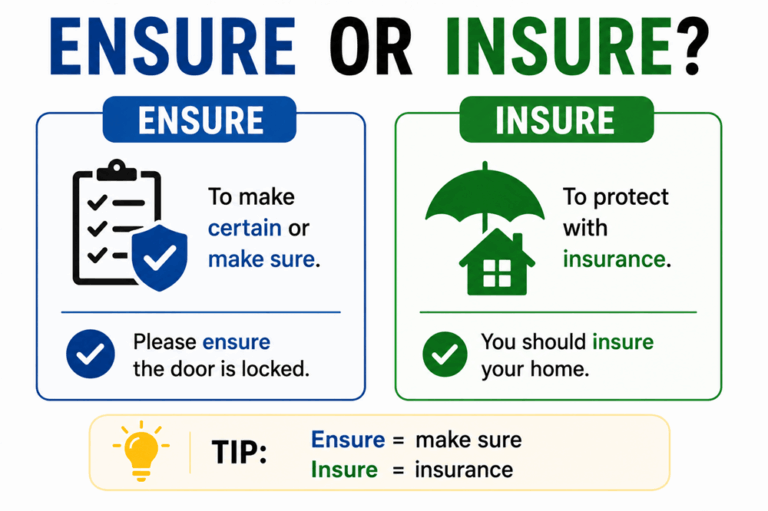
    Ensure and insure are easy to mix up because they look similar and both can suggest protection or certainty. Use ensure when you mean to make certain that something happens. Use insure when you mean to protect someone or something with insurance. The easiest rule is this: ensure means make sure, while insure means cover…

    Read More Ensure or Insure: Correct Meaning, Difference, Usage, and Examples for Clear WritingContinue

  • Recurring or reoccurring
    Confusing Words

    Recurring or Reoccurring: Correct Meaning, Difference, Usage, and Examples Explained Clearly

    ByJeremy Howard June 12, 2026

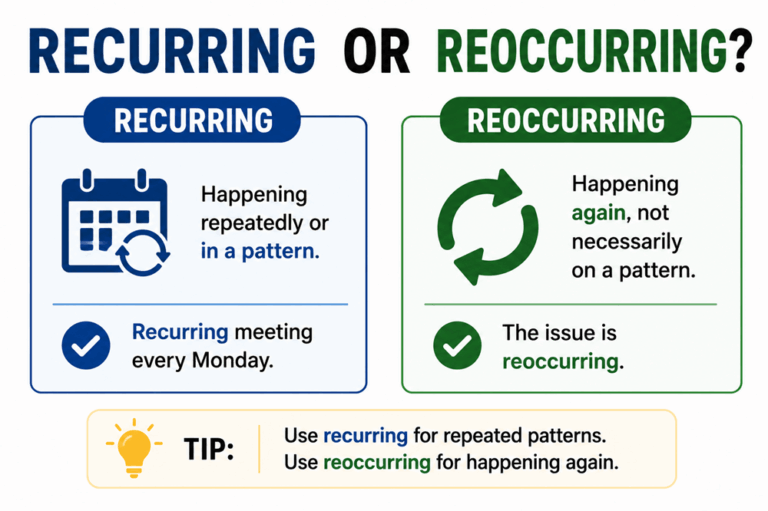
    Recurring and reoccurring both describe something that happens again, but they are not always used in the same way. Use recurring when something happens repeatedly, regularly, or as part of a pattern. Use reoccurring when something happens again, especially without a clear schedule. The easiest rule is this: recurring suggests repetition, while reoccurring simply means…

    Read More Recurring or Reoccurring: Correct Meaning, Difference, Usage, and Examples Explained ClearlyContinue

Page navigation

Previous PagePrevious 1 … 33 34 35 36 37 … 44 Next PageNext
  • Disclaimer
  • Terms of Use
  • Privacy Policy

© 2026 Word Briefs

  • About
  • Contact
Search