Skip to content
Word Briefs
  • About
  • Contact
Word Briefs
  • Sneaked or snuck
    Confusing Words

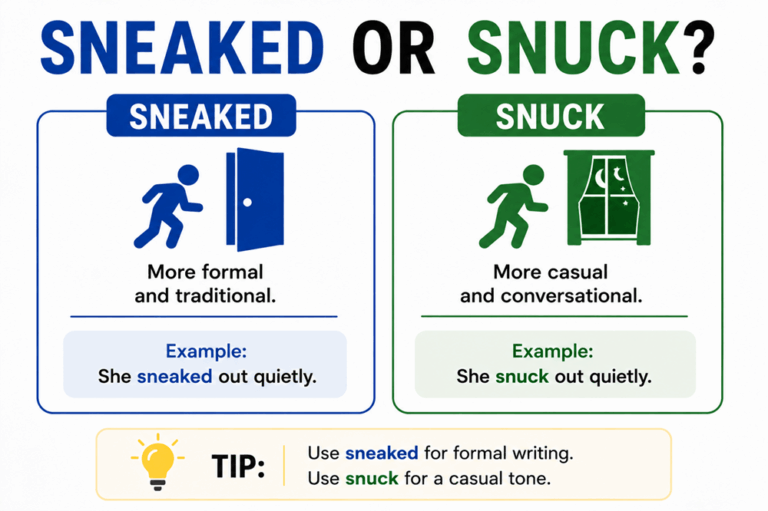
    Sneaked or Snuck: Correct Past Tense, Difference, Usage, and Examples Explained Clearly

    ByJeremy Howard June 16, 2026

    Sneaked and snuck are both used as the past tense of sneak, but they do not have exactly the same tone. Sneaked is the older, more traditional form and is usually safer in formal writing. Snuck is common in modern American English and sounds natural in casual speech. The easiest rule is this: use sneaked…
    Read More Sneaked or Snuck: Correct Past Tense, Difference, Usage, and Examples Explained ClearlyContinue

  • Til or till
    Confusing Words

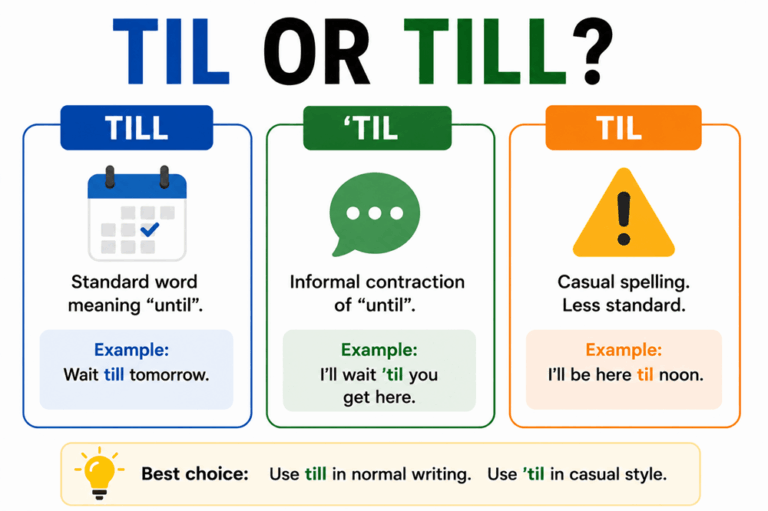
    Til or Till: Correct Spelling, Meaning, Usage, and Everyday Examples Clearly Explained

    ByJeremy Howard June 16, 2026

    Till is the safest standard spelling when you mean “until.” ’Til with an apostrophe is also used as a shortened form of until, especially in casual writing, song titles, dialogue, and informal phrases. Til without an apostrophe is common online and in casual text, but it is less standard. The easiest rule is this: use…

    Read More Til or Till: Correct Spelling, Meaning, Usage, and Everyday Examples Clearly ExplainedContinue

  • Coozie or koozie
    Confusing Words

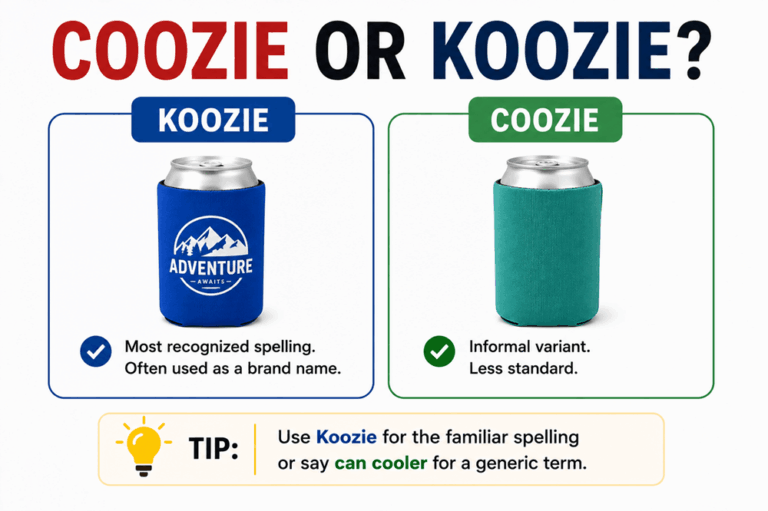
    Coozie or Koozie: Correct Spelling, Meaning, Brand Usage, and Examples Explained Clearly

    ByJeremy Howard June 15, 2026

    Koozie is the spelling most commonly recognized when referring to the insulated sleeve that keeps a canned or bottled drink cold. Coozie is often used informally as a generic spelling, but it is less standard and may look incorrect to some readers. The safest choice depends on context: use Koozie if you are referring to…

    Read More Coozie or Koozie: Correct Spelling, Meaning, Brand Usage, and Examples Explained ClearlyContinue

  • Color or colour
    Confusing Words

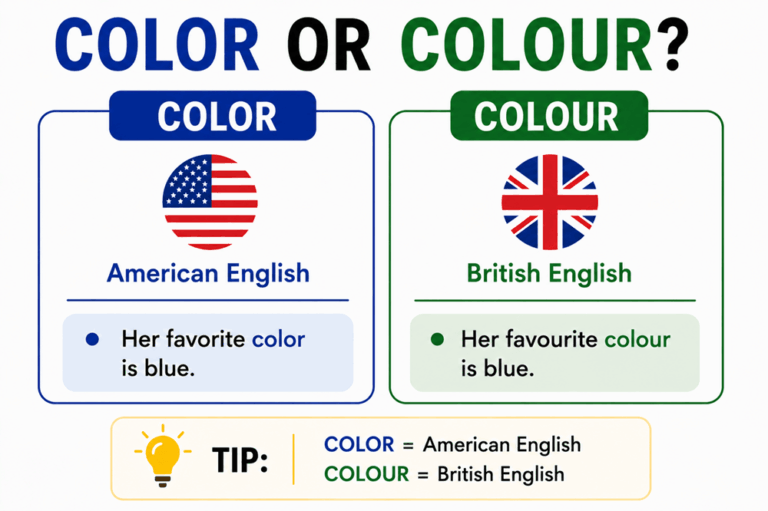
    Color or Colour: Correct Spelling, Regional Difference, Usage, and Examples Clearly Explained

    ByJeremy Howard June 15, 2026

    Color and colour are both correct spellings, but they belong to different forms of English. Color is the standard spelling in American English, while colour is the standard spelling in British English and many other English varieties. The meaning is the same. The easiest rule is this: use color for U.S. writing and colour for…

    Read More Color or Colour: Correct Spelling, Regional Difference, Usage, and Examples Clearly ExplainedContinue

  • Gasses or gases
    Confusing Words

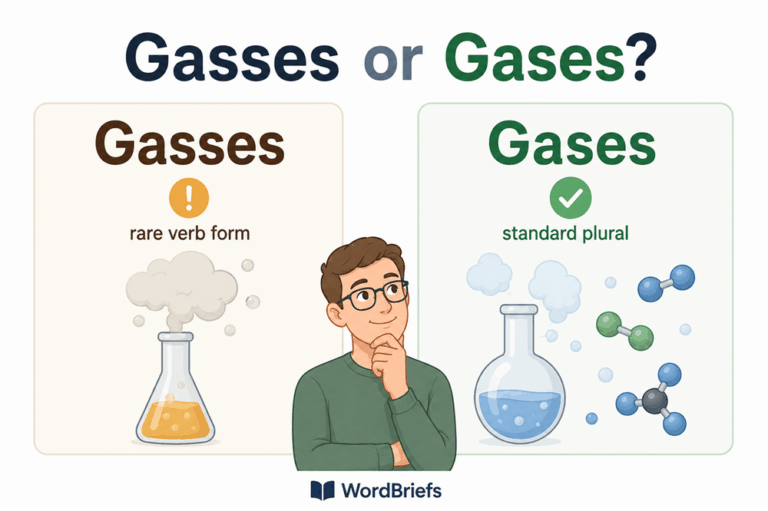
    Gasses or Gases: Correct Plural Spelling, Meaning, Usage, and Examples Explained

    ByJeremy Howard June 15, 2026

    Gases is the standard plural form of gas. Use gases when you are talking about more than one type or amount of gas, such as oxygen, nitrogen, carbon dioxide, or natural gas. Gasses is sometimes seen, but it is much less common and is usually considered nonstandard as a plural noun. The easiest rule is…

    Read More Gasses or Gases: Correct Plural Spelling, Meaning, Usage, and Examples ExplainedContinue

  • Wether or whether
    Confusing Words

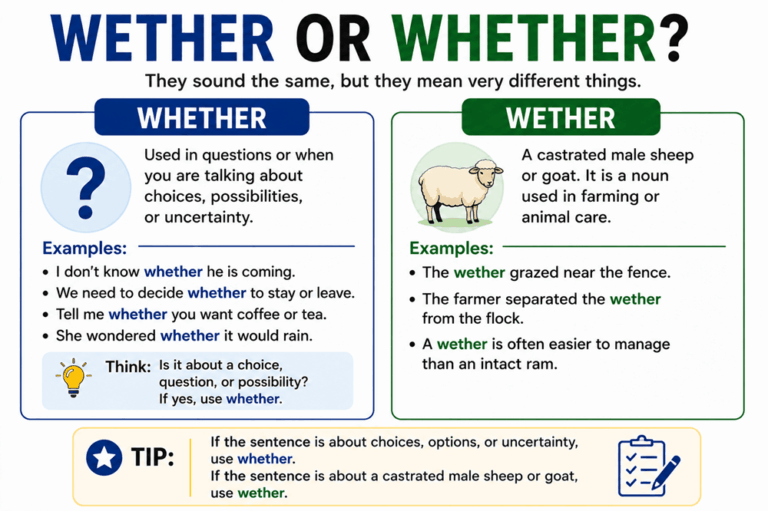
    Wether or Whether: Correct Spelling, Meaning, Difference, and Examples for Clear Writing

    ByJeremy Howard June 15, 2026

    Whether is the correct word when you are talking about choices, possibilities, uncertainty, or alternatives. Wether is a real word, but it has a very specific meaning: a castrated male sheep or goat. In almost every everyday sentence, the word you want is whether. The easiest rule is this: whether is about choices, while wether…

    Read More Wether or Whether: Correct Spelling, Meaning, Difference, and Examples for Clear WritingContinue

  • Whisky or whiskey
    Confusing Words

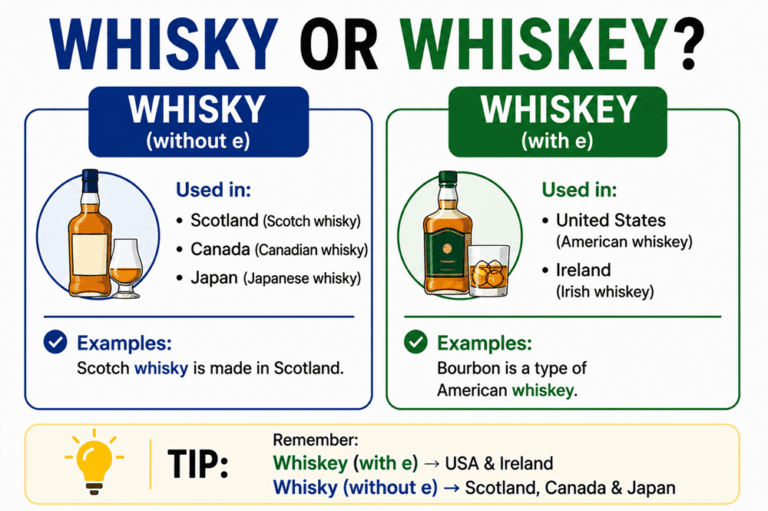
    Whisky or Whiskey: Correct Spelling, Regional Difference, Usage, and Examples Explained Clearly

    ByJeremy Howard June 15, 2026

    Whisky and whiskey are both correct spellings, but they are used in different regions and traditions. Use whiskey when talking about American or Irish whiskey. Use whisky when talking about Scotch, Canadian, or Japanese whisky. The easiest rule is this: whiskey usually has an e in the United States and Ireland, while whisky usually has…

    Read More Whisky or Whiskey: Correct Spelling, Regional Difference, Usage, and Examples Explained ClearlyContinue

  • Realise or realize
    Confusing Words

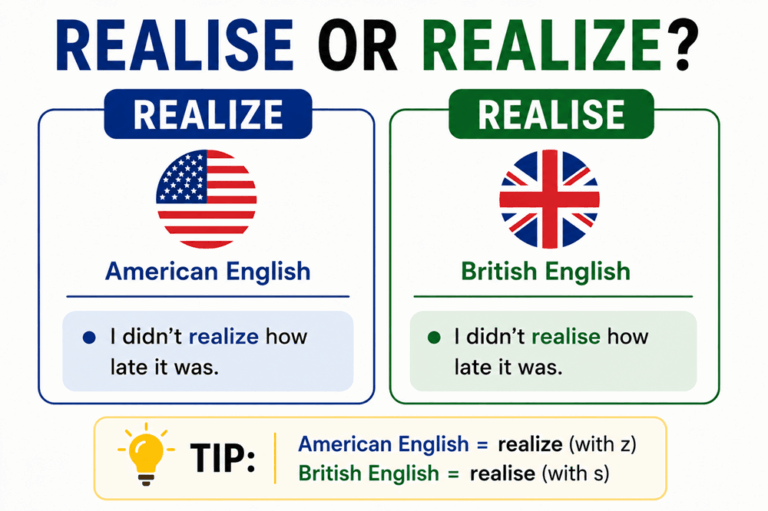
    Realise or Realize: Correct Spelling, Regional Difference, Usage, and Examples Explained Clearly

    ByJeremy Howard June 15, 2026

    Realize and realise are both correct spellings, but they belong to different forms of English. Realize is the preferred spelling in American English, while realise is more common in British English and many other English varieties. The meaning is the same. The easiest rule is this: use realize for U.S. writing and realise for British-style…

    Read More Realise or Realize: Correct Spelling, Regional Difference, Usage, and Examples Explained ClearlyContinue

  • Traveling or travelling
    Confusing Words

    Traveling or Travelling: Correct Spelling, Regional Difference, Usage, and Examples Clearly Explained

    ByJeremy Howard June 15, 2026

    Traveling and travelling are both correct spellings, but they belong to different forms of English. Traveling is the preferred spelling in American English, while travelling is the preferred spelling in British English and many other varieties of English. The meaning is the same. The easiest rule is this: use traveling for U.S. writing and travelling…

    Read More Traveling or Travelling: Correct Spelling, Regional Difference, Usage, and Examples Clearly ExplainedContinue

  • Either or neither
    Confusing Words

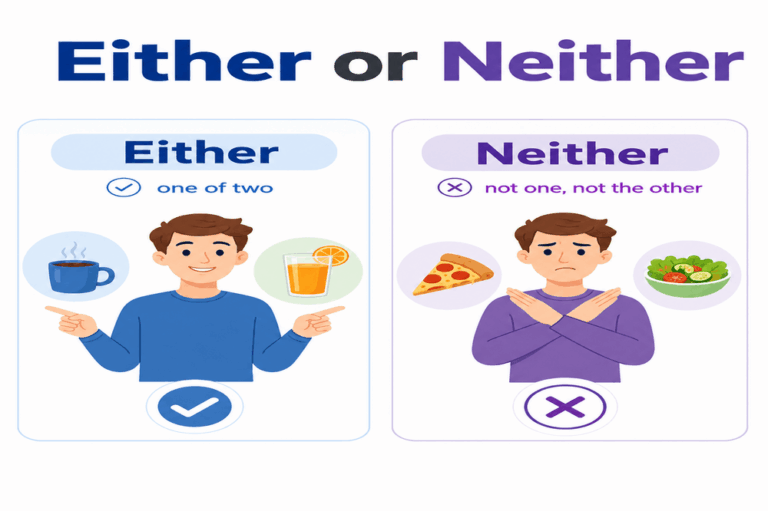
    Either or Neither: Correct Meaning, Difference, Grammar, and Examples for Clear Writing

    ByJeremy Howard June 15, 2026

    Either and neither are both used when comparing two choices, but they have opposite meanings. Use either when one of two options is possible, acceptable, or being offered. Use neither when both options are rejected, unavailable, or not true. The easiest rule is this: either means one or the other, while neither means not one…

    Read More Either or Neither: Correct Meaning, Difference, Grammar, and Examples for Clear WritingContinue

Page navigation

Previous PagePrevious 1 … 31 32 33 34 35 … 44 Next PageNext
  • Disclaimer
  • Terms of Use
  • Privacy Policy

© 2026 Word Briefs

  • About
  • Contact
Search