Skip to content
Word Briefs
  • About
  • Contact
Word Briefs
  • Paid or payed
    Spelling

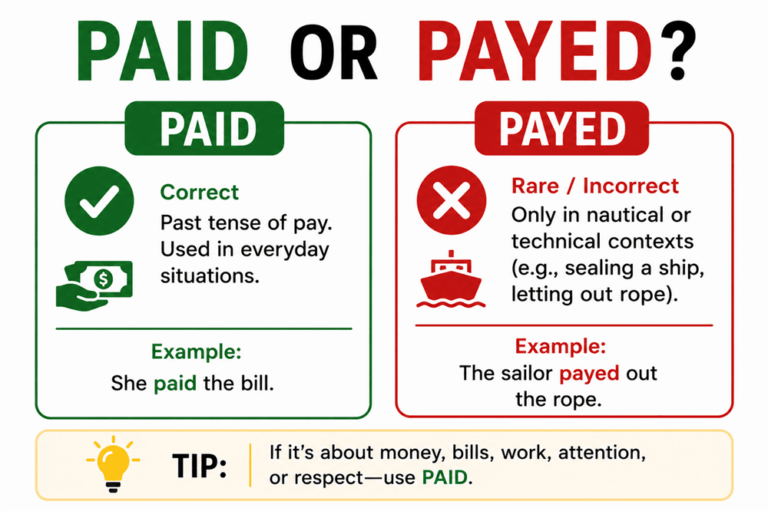
    Paid or Payed: Correct Past Tense, Meaning, Usage, and Examples Explained Clearly

    ByJeremy Howard June 16, 2026

    Paid is the correct past tense and past participle of pay in almost every everyday sentence. Use paid when talking about money, bills, wages, attention, respect, visits, debts, or consequences. Payed is a rare technical spelling used in a few nautical or specialized contexts, such as sealing a ship with tar or letting out rope….
    Read More Paid or Payed: Correct Past Tense, Meaning, Usage, and Examples Explained ClearlyContinue

  • Whoever or whomever
    Confusing Words

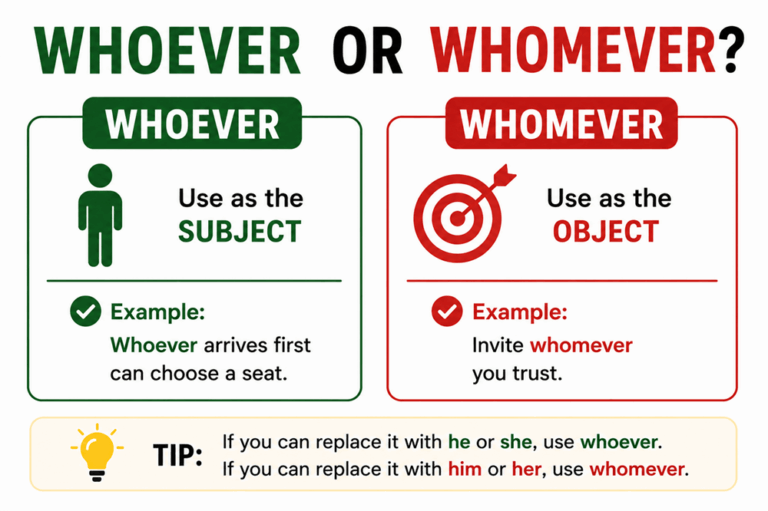
    Whoever or Whomever: Correct Meaning, Grammar Rule, Usage, and Examples Clearly Explained

    ByJeremy Howard June 16, 2026

    Whoever and whomever are both correct words, but they are used in different grammatical roles. Use whoever when the word is acting like a subject. Use whomever when the word is acting like an object. In everyday writing, whoever is much more common, while whomever sounds more formal and is used less often. The easiest…

    Read More Whoever or Whomever: Correct Meaning, Grammar Rule, Usage, and Examples Clearly ExplainedContinue

  • Losing or loosing
    Spelling

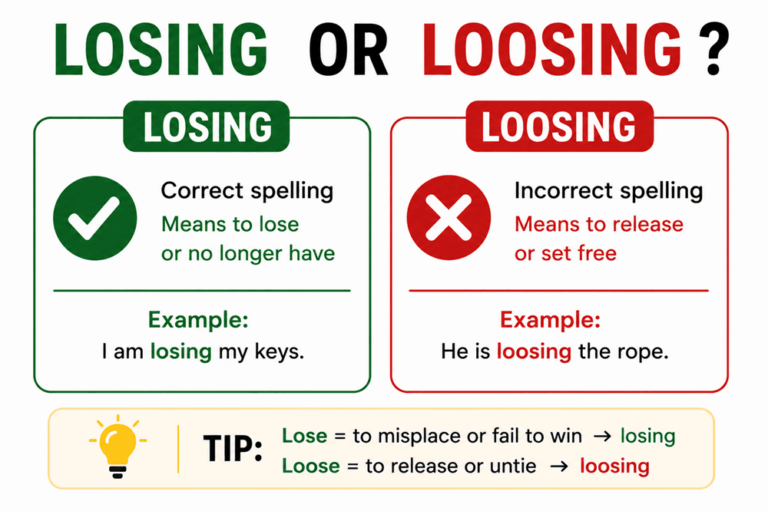
    Losing or Loosing: Correct Spelling, Meaning, Difference, and Examples for Better Writing

    ByJeremy Howard June 16, 2026

    Losing and loosing are both real words, but they mean very different things. Use losing when you mean failing to win, misplacing something, becoming less successful, or no longer having something. Use loosing only when you mean releasing, untying, or setting something free. In everyday writing, the word most people need is usually losing. Quick…

    Read More Losing or Loosing: Correct Spelling, Meaning, Difference, and Examples for Better WritingContinue

  • Grateful or greatful
    Spelling

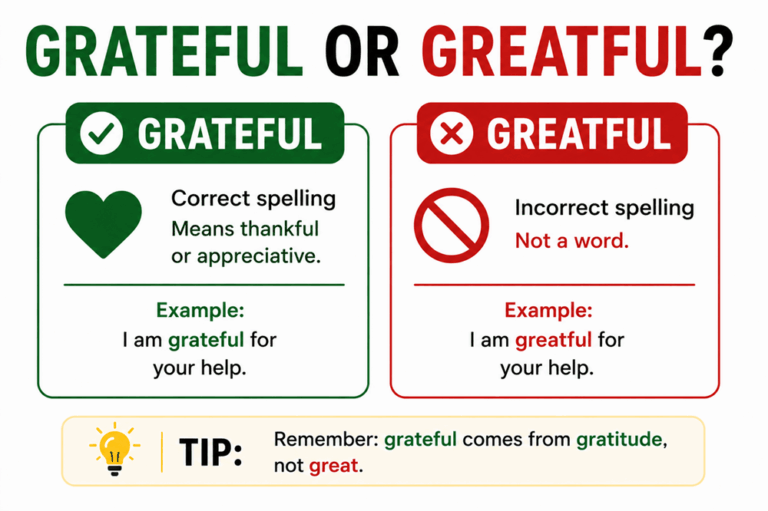
    Grateful or Greatful: Correct Spelling, Meaning, Usage, and Examples for Clear Writing

    ByJeremy Howard June 16, 2026

    Grateful is the correct spelling when you mean thankful or appreciative. Greatful is a common misspelling and should not be used in standard English. The confusion usually happens because grateful sounds like it should be connected to great, but the correct word is spelled with grate, not great. The easiest rule is simple: if you…

    Read More Grateful or Greatful: Correct Spelling, Meaning, Usage, and Examples for Clear WritingContinue

  • Aunty or auntie
    Confusing Words

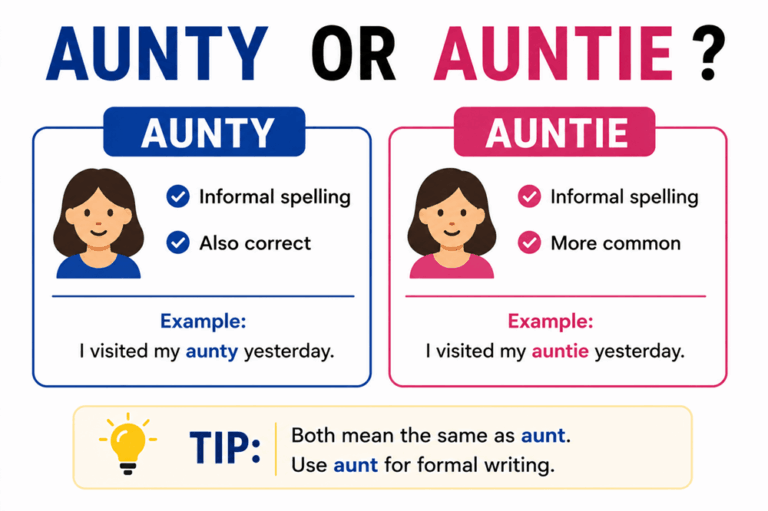
    Aunty or Auntie: Correct Spelling, Meaning, Regional Difference, and Examples Explained Clearly

    ByJeremy Howard June 16, 2026

    Auntie and aunty are both correct informal words for aunt. They usually mean a woman who is your parent’s sister, your uncle’s wife, or a close family friend treated like an aunt. Auntie is the more common and widely recognized spelling in many contexts, while aunty is also used, especially in casual, affectionate, and regional…

    Read More Aunty or Auntie: Correct Spelling, Meaning, Regional Difference, and Examples Explained ClearlyContinue

  • Theatre or theater
    Confusing Words

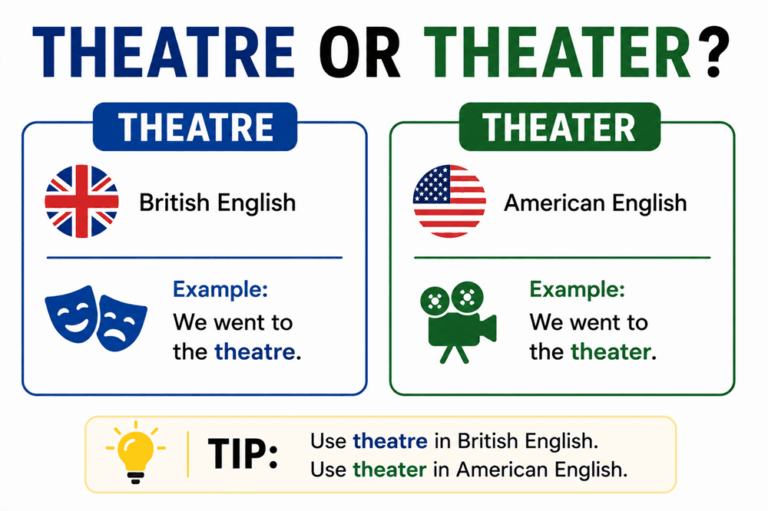
    Theatre or Theater: Correct Spelling, Regional Difference, Usage, and Examples Clearly Explained

    ByJeremy Howard June 16, 2026

    Theater and theatre are both correct spellings, but they are used differently depending on region and context. Theater is the standard spelling in American English. Theatre is the standard spelling in British English and many other English varieties. The meaning is usually the same. The easiest rule is this: use theater for U.S. writing and…

    Read More Theatre or Theater: Correct Spelling, Regional Difference, Usage, and Examples Clearly ExplainedContinue

  • Upmost or utmost
    Spelling

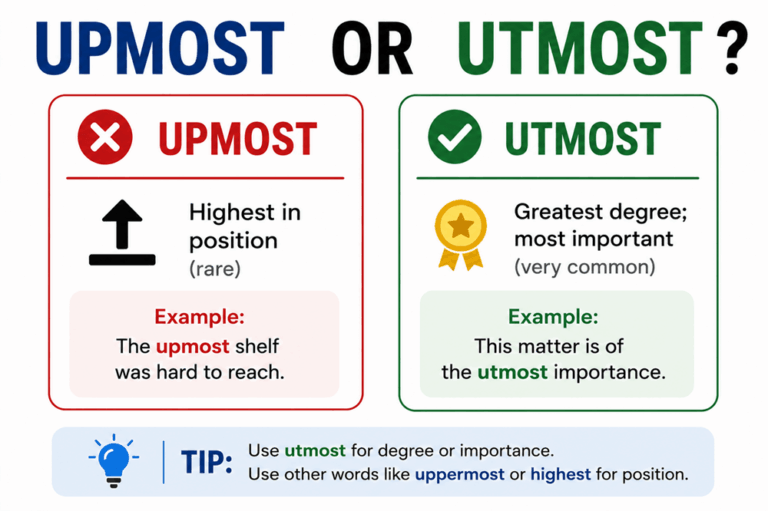
    Upmost or Utmost: Correct Spelling, Meaning, Difference, and Examples for Better Writing

    ByJeremy Howard June 16, 2026

    Utmost is the correct word when you mean the greatest, highest, most extreme, or most important degree of something. Upmost is a rare word that can mean highest in position, but it is almost never the word people need in everyday writing. In most sentences, especially phrases like utmost importance, utmost respect, and utmost care,…

    Read More Upmost or Utmost: Correct Spelling, Meaning, Difference, and Examples for Better WritingContinue

  • Realize or realise
    Confusing Words

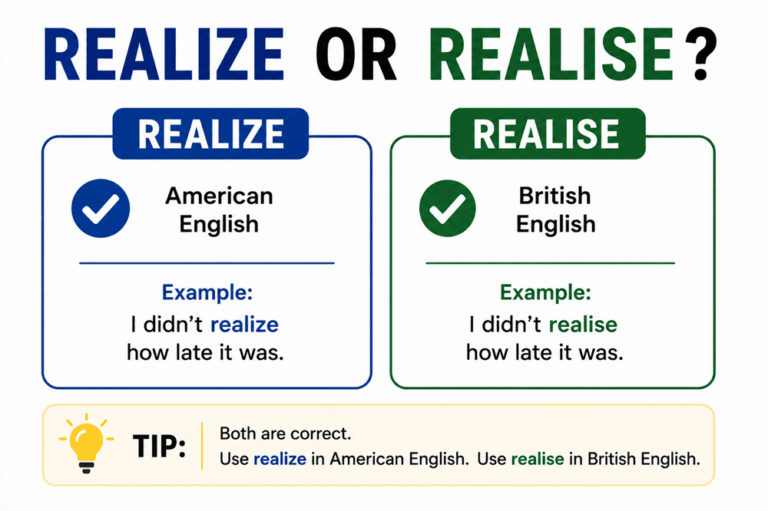
    Realize or Realise: Correct Spelling, Meaning, Regional Difference, and Examples Explained Clearly

    ByJeremy Howard June 16, 2026

    Realize and realise are both correct spellings, but they belong to different forms of English. Realize is the standard spelling in American English, while realise is common in British English and many other English varieties. The meaning is the same. The easiest rule is this: use realize for U.S. writing and realise for British-style writing….

    Read More Realize or Realise: Correct Spelling, Meaning, Regional Difference, and Examples Explained ClearlyContinue

  • Ninety or ninty
    Spelling

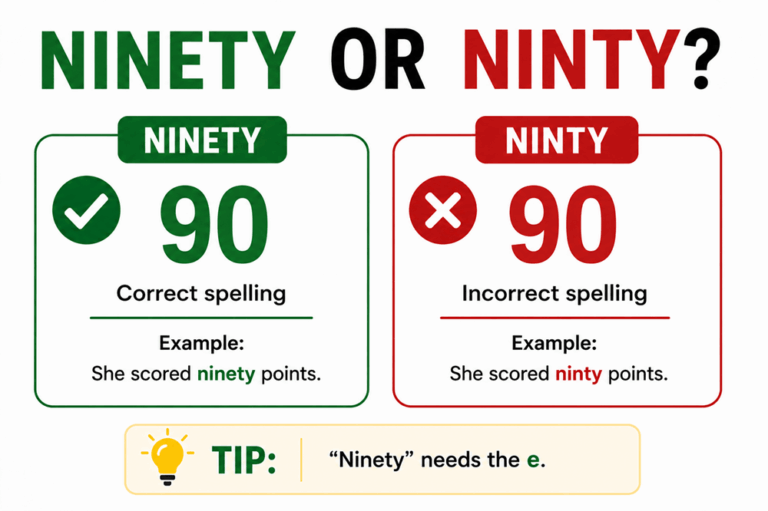
    Ninety or Ninty: Correct Spelling, Number Meaning, Usage, and Examples Explained Clearly

    ByJeremy Howard June 16, 2026

    Ninety is the correct spelling of the number 90. Ninty is a common misspelling and should not be used in standard English. The confusion usually happens because nine has an e, but that e disappears when the word becomes ninety. The easiest rule is simple: write nine, but write ninety for 90. Quick Answer Use…

    Read More Ninety or Ninty: Correct Spelling, Number Meaning, Usage, and Examples Explained ClearlyContinue

  • Monkies or monkeys
    Spelling

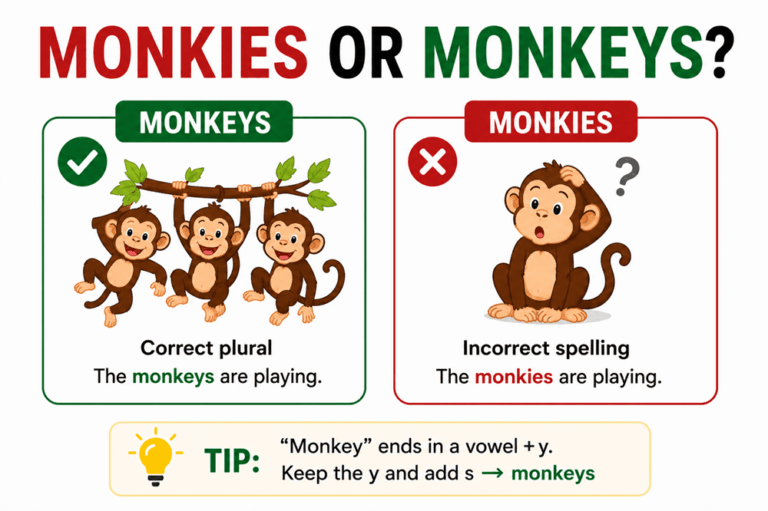
    Monkies or Monkeys: Correct Plural Spelling, Meaning, Rule, and Examples Explained

    ByJeremy Howard June 16, 2026

    Monkeys is the correct plural form of monkey. Use monkeys when you are talking about more than one monkey. Monkies is a common misspelling and should be avoided in standard English. The easiest rule is this: when a word ends in a vowel plus y, you usually just add s. That is why one monkey…

    Read More Monkies or Monkeys: Correct Plural Spelling, Meaning, Rule, and Examples ExplainedContinue

Page navigation

Previous PagePrevious 1 … 30 31 32 33 34 … 44 Next PageNext
  • Disclaimer
  • Terms of Use
  • Privacy Policy

© 2026 Word Briefs

  • About
  • Contact
Search