Skip to content
Word Briefs
  • About
  • Contact
Word Briefs
  • Spelled or spelt
    Confusing Words

    Spelled or Spelt: Correct Past Tense, Regional Difference, Usage, and Examples Explained Clearly

    ByJeremy Howard June 12, 2026

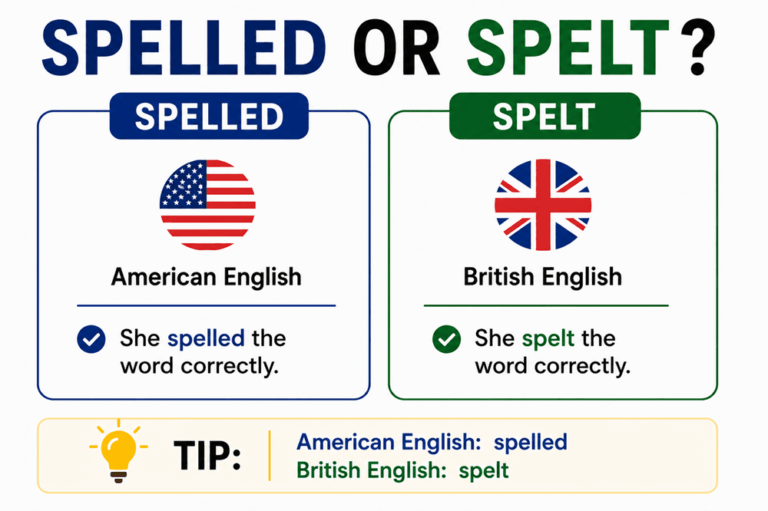
    Spelled and spelt can both be correct past-tense forms of spell, but they are not used the same way everywhere. Spelled is the standard choice in American English. Spelt is more common in British English, especially as a past tense or past participle. The easiest rule is this: use spelled for American writing and spelt…
    Read More Spelled or Spelt: Correct Past Tense, Regional Difference, Usage, and Examples Explained ClearlyContinue

  • Worshipping or worshiping
    Confusing Words

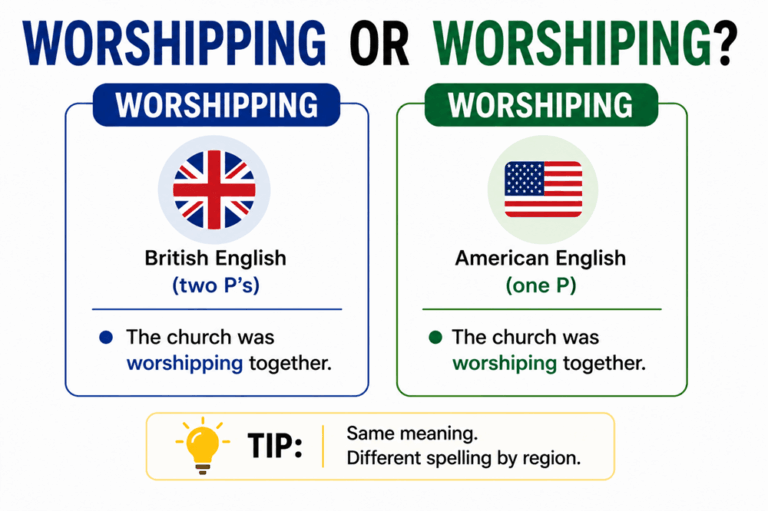
    Worshipping or Worshiping: Correct Spelling, Regional Difference, Usage, and Examples Clearly Explained

    ByJeremy Howard June 12, 2026

    Worshiping and worshipping are both correct spellings, but they are used differently depending on the form of English you follow. Worshiping is more common in American English, while worshipping is more common in British English. Both mean showing deep religious devotion, admiration, or reverence. The easiest rule is this: use worshiping for American writing and…

    Read More Worshipping or Worshiping: Correct Spelling, Regional Difference, Usage, and Examples Clearly ExplainedContinue

  • Sell or sale
    Confusing Words

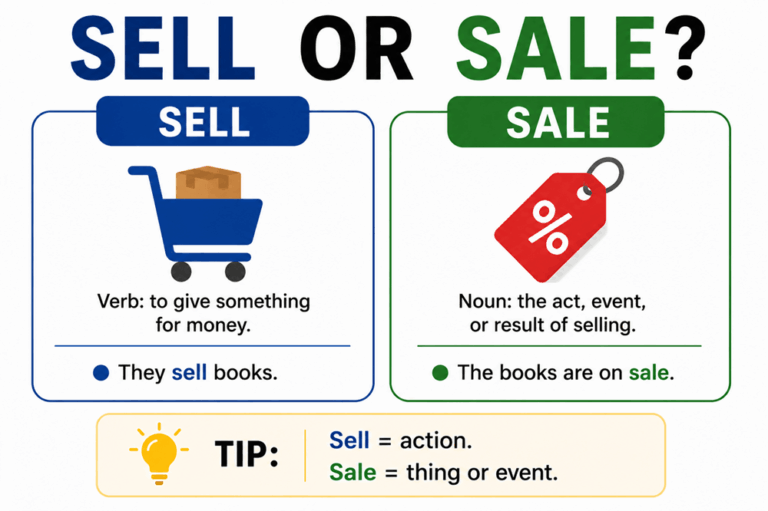
    Sell or Sale: Correct Meaning, Difference, Grammar, and Examples for Clear Writing

    ByJeremy Howard June 12, 2026

    Sell and sale are closely related, but they are not the same kind of word. Use sell when you mean the action of giving something to someone in exchange for money. Use sale when you mean the event, deal, act, or result of selling something. The easiest rule is this: sell is a verb, and…

    Read More Sell or Sale: Correct Meaning, Difference, Grammar, and Examples for Clear WritingContinue

  • Masters or master's
    Confusing Words

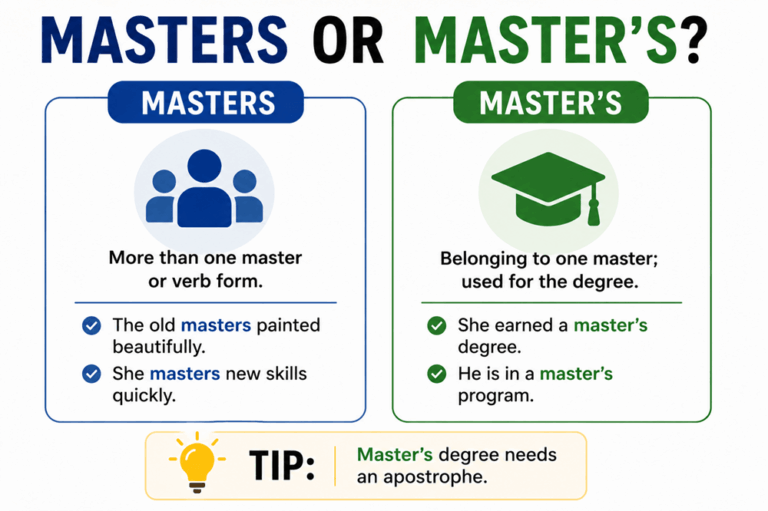
    Masters or Master’s: Correct Spelling, Apostrophe Rules, Degree Usage, and Examples Explained

    ByJeremy Howard June 12, 2026

    Master’s and masters are both correct words, but they are used differently. Use master’s with an apostrophe when talking about a master’s degree, a master’s program, or something belonging to one master. Use masters without an apostrophe when you mean more than one master, the verb form of master, or a proper name like the…

    Read More Masters or Master’s: Correct Spelling, Apostrophe Rules, Degree Usage, and Examples ExplainedContinue

  • Neither or either
    Confusing Words

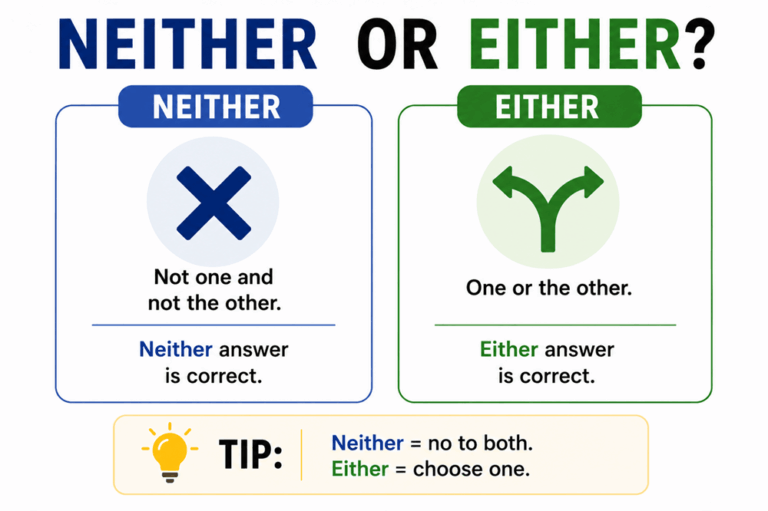
    Neither or Either: Correct Meaning, Difference, Usage, and Examples for Clear Writing

    ByJeremy Howard June 12, 2026

    Neither and either are both used when you are talking about two choices, but they do not mean the same thing. Use neither when you mean “not one and not the other.” Use either when you mean “one or the other,” “any one of two,” or sometimes “also” in a negative sentence. The easiest rule…

    Read More Neither or Either: Correct Meaning, Difference, Usage, and Examples for Clear WritingContinue

  • Payed or paid
    Spelling

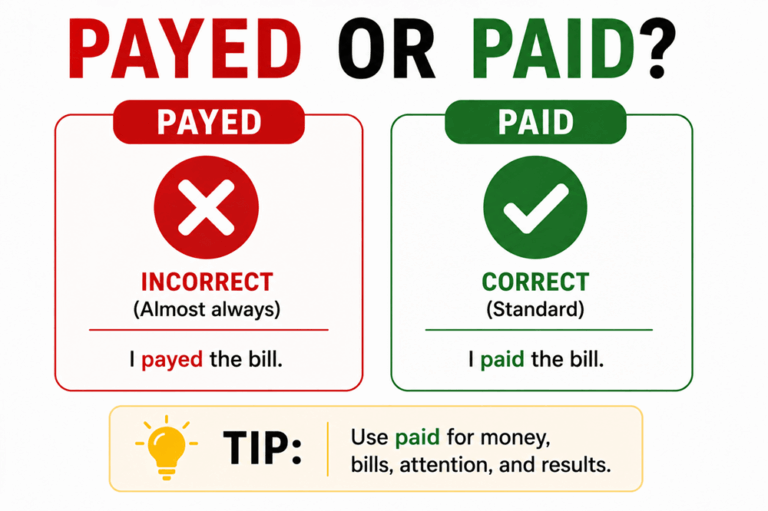
    Payed or Paid: Correct Spelling, Meaning, Difference, and Examples for Clear Writing

    ByJeremy Howard June 12, 2026

    Paid is the correct past tense of pay in almost every everyday situation. Use paid when you mean someone gave money, received money, settled a bill, paid attention, or experienced a result. Payed is a real word, but it is extremely rare and mostly used in nautical contexts. For normal writing, the correct choice is…

    Read More Payed or Paid: Correct Spelling, Meaning, Difference, and Examples for Clear WritingContinue

  • Potatos or potatoes
    Spelling

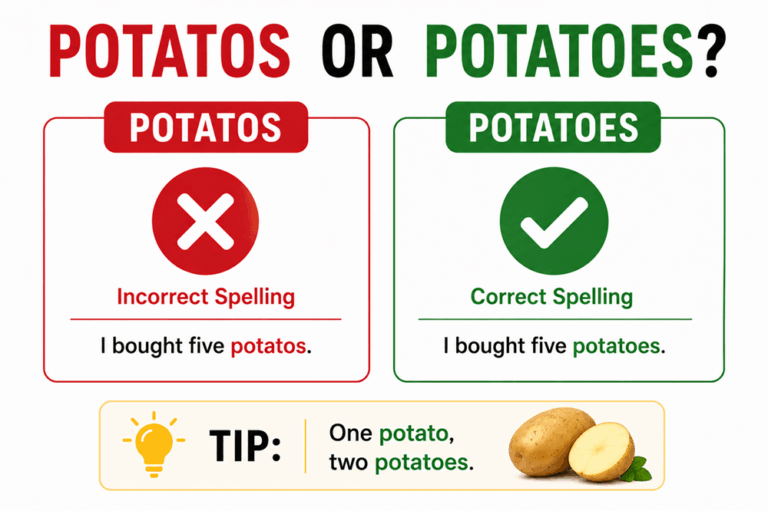
    Potatos or Potatoes: Correct Plural Spelling, Meaning, and Examples for Clear Writing

    ByJeremy Howard June 12, 2026

    Potatoes is the correct plural spelling of potato. Use potatoes when you mean more than one potato. Potatos is a common misspelling and should usually be avoided in standard writing. The easiest rule is simple: one potato, two potatoes. Quick Answer Use potatoes as the plural form of potato. Correct: She bought five potatoes at…

    Read More Potatos or Potatoes: Correct Plural Spelling, Meaning, and Examples for Clear WritingContinue

  • Lier or liar
    Confusing Words

    Lier or Liar: Correct Spelling, Meaning, Difference, and Examples for Clear Writing

    ByJeremy Howard June 12, 2026

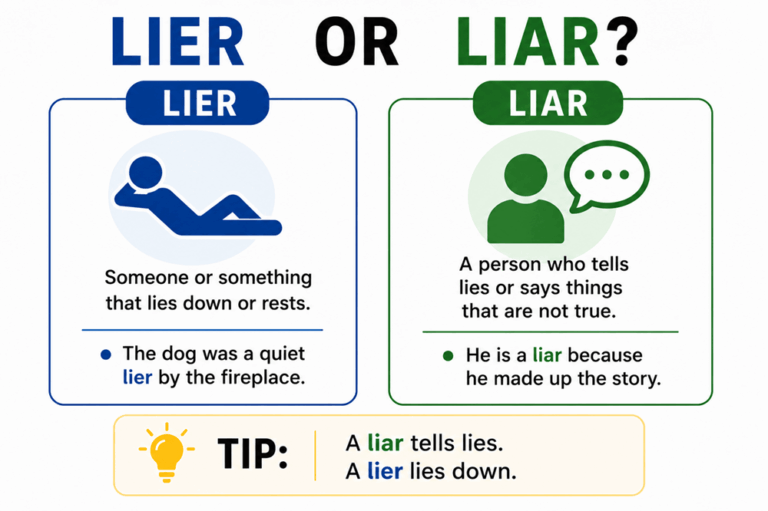
    Liar and lier look similar, but they do not mean the same thing. Use liar when you mean a person who tells lies or says things that are not true. Lier is rare and usually means someone or something that lies down or rests in a position. In almost every everyday sentence, the word you…

    Read More Lier or Liar: Correct Spelling, Meaning, Difference, and Examples for Clear WritingContinue

  • Snuck or sneaked
    Confusing Words

    Snuck or Sneaked: Correct Past Tense, Usage, Difference, and Examples Explained Clearly

    ByJeremy Howard June 12, 2026

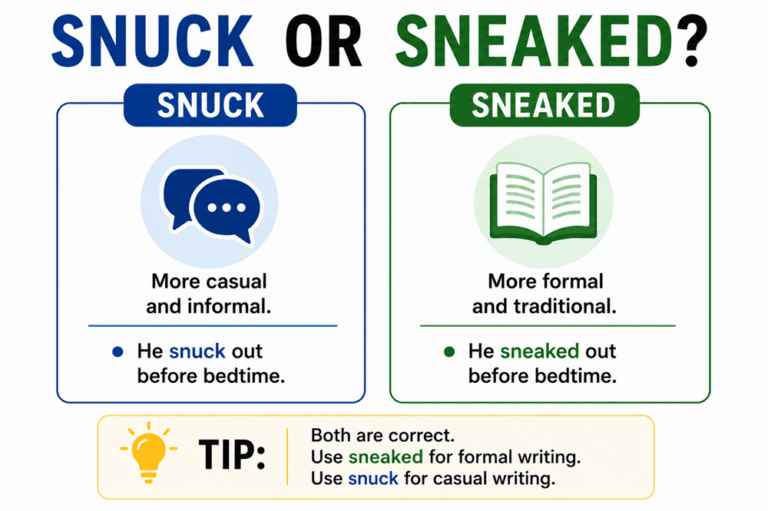
    Snuck and sneaked are both used as the past tense of sneak, but they do not always sound the same in every setting. Sneaked is the older and more traditional form. Snuck is common in modern American English and widely accepted in casual writing. For formal or polished writing, sneaked is usually the safer choice….

    Read More Snuck or Sneaked: Correct Past Tense, Usage, Difference, and Examples Explained ClearlyContinue

  • Benefitting or benefiting
    Confusing Words

    Benefitting or Benefiting: Correct Spelling, Regional Difference, Usage, and Examples Clearly Explained

    ByJeremy Howard June 12, 2026

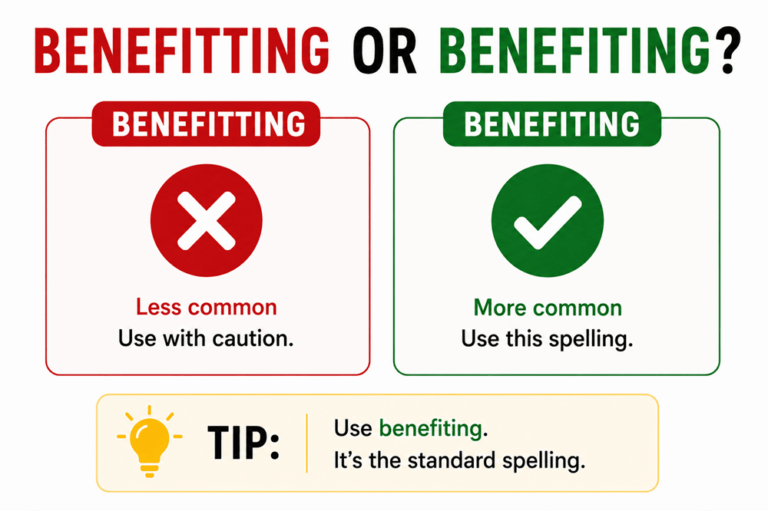
    Benefiting and benefitting are both used as forms of the verb benefit, but benefiting is the more common and widely preferred spelling, especially in American English. Benefitting is a less common variant, often seen more in British English or in writing that follows a doubled-consonant style. If you want the safest choice for most modern…

    Read More Benefitting or Benefiting: Correct Spelling, Regional Difference, Usage, and Examples Clearly ExplainedContinue

Page navigation

Previous PagePrevious 1 … 32 33 34 35 36 … 44 Next PageNext
  • Disclaimer
  • Terms of Use
  • Privacy Policy

© 2026 Word Briefs

  • About
  • Contact
Search