Skip to content
Word Briefs
  • About
  • Contact
Word Briefs
  • Breath or breathe
    Confusing Words

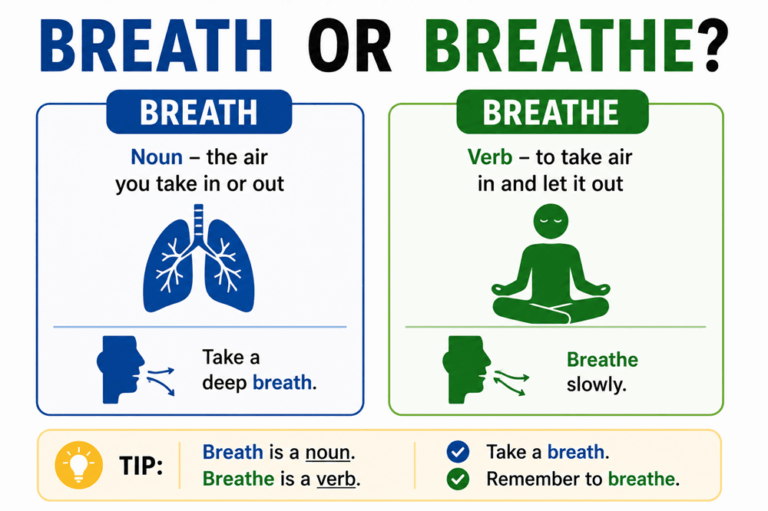
    Breath or Breathe: Correct Meaning, Spelling, Difference, and Examples for Clear Writing

    ByJeremy Howard June 12, 2026

    Breath and breathe are closely related, but they are not used the same way. Breath is a noun. It means the air you take into or push out of your lungs. Breathe is a verb. It means to take air in and let it out. The easiest rule is this: you take a breath, but…

    Read More Breath or Breathe: Correct Meaning, Spelling, Difference, and Examples for Clear WritingContinue

  • Lay or lie
    Confusing Words

    Lay or Lie: Correct Meaning, Grammar, Tense, and Examples for Clear Writing

    ByJeremy Howard June 12, 2026

    Lay and lie are easy to confuse because their forms overlap in a frustrating way. Use lay when someone puts or places something down. Use lie when someone or something reclines, rests, or is already in a flat position. The easiest rule is this: lay needs an object, but lie does not. Quick Answer Use…

    Read More Lay or Lie: Correct Meaning, Grammar, Tense, and Examples for Clear WritingContinue

  • Heros or heroes
    Spelling

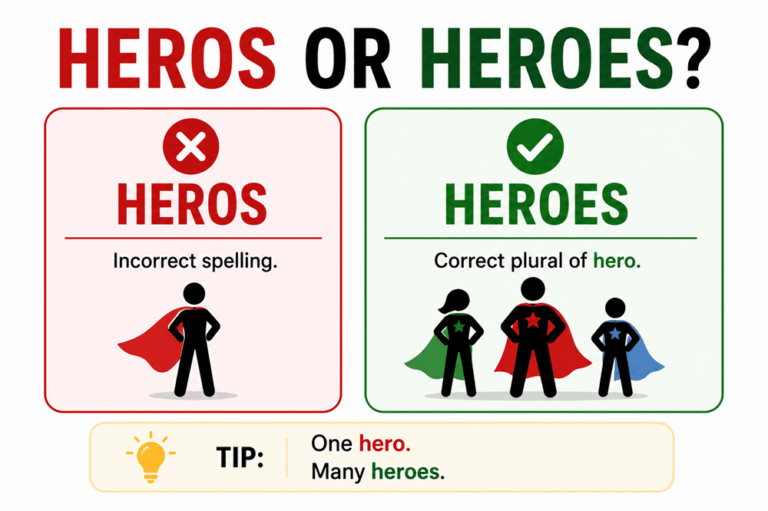
    Heros or Heroes: Correct Plural Spelling, Meaning, and Examples for Clear Writing

    ByJeremy Howard June 12, 2026

    Heroes is the correct plural spelling of hero. Use heroes when you mean more than one brave person, admired figure, main character, or hero sandwich. Heros is a common misspelling and should usually be avoided in standard writing. The easiest rule is simple: one hero, two heroes. Quick Answer Use heroes as the plural form…

    Read More Heros or Heroes: Correct Plural Spelling, Meaning, and Examples for Clear WritingContinue

  • Patient or patience
    Confusing Words

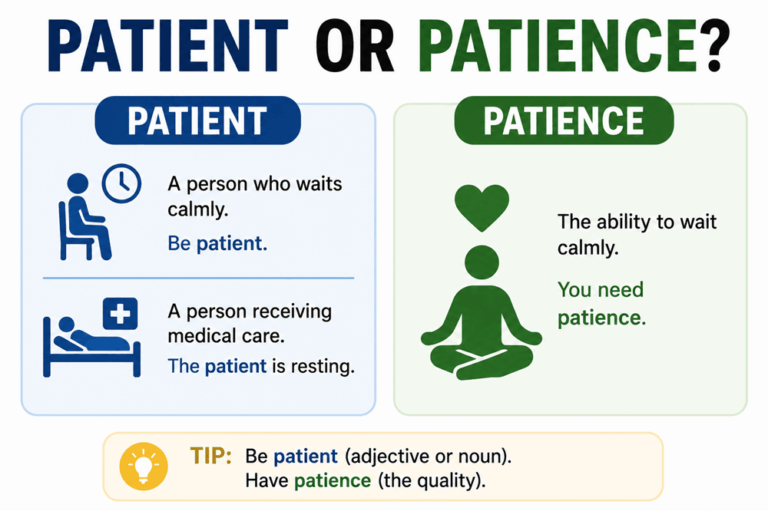
    Patient or Patience: Correct Meaning, Spelling, Difference, and Examples for Clear Writing

    ByJeremy Howard June 12, 2026

    Patient and patience are closely related, but they are not the same kind of word. Patient can describe a person who waits calmly, or it can mean someone receiving medical care. Patience is the noun for the ability to wait calmly without becoming annoyed. If you mean the quality, use patience. If you mean the…

    Read More Patient or Patience: Correct Meaning, Spelling, Difference, and Examples for Clear WritingContinue

  • Mangoes or mangos
    Confusing Words

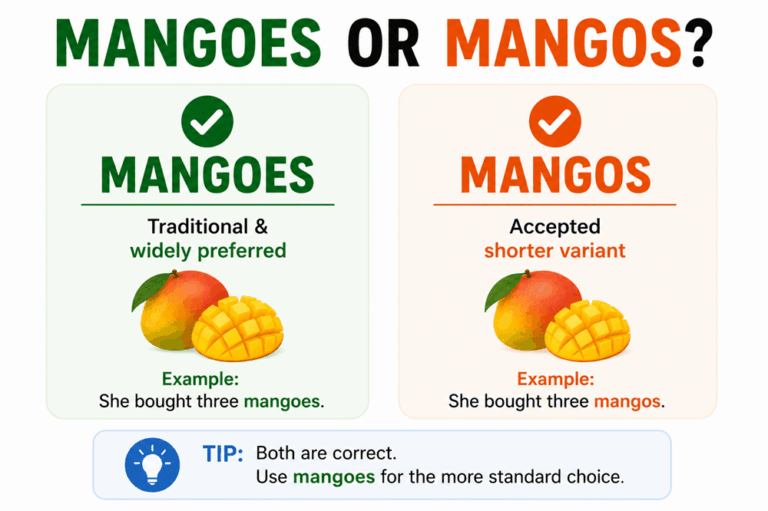
    Mangoes or Mangos: Correct Plural Spelling, Usage, and Examples for Clear Writing

    ByJeremy Howard June 12, 2026

    Mangoes and mangos are both used as the plural of mango, and both spellings are accepted. The more traditional and widely preferred spelling is mangoes. Mangos is a shorter variant that is also correct, especially in American English and food-related writing. If you want the safest choice for polished writing, use mangoes. Quick Answer Use…

    Read More Mangoes or Mangos: Correct Plural Spelling, Usage, and Examples for Clear WritingContinue

  • Vender or vendor
    Spelling

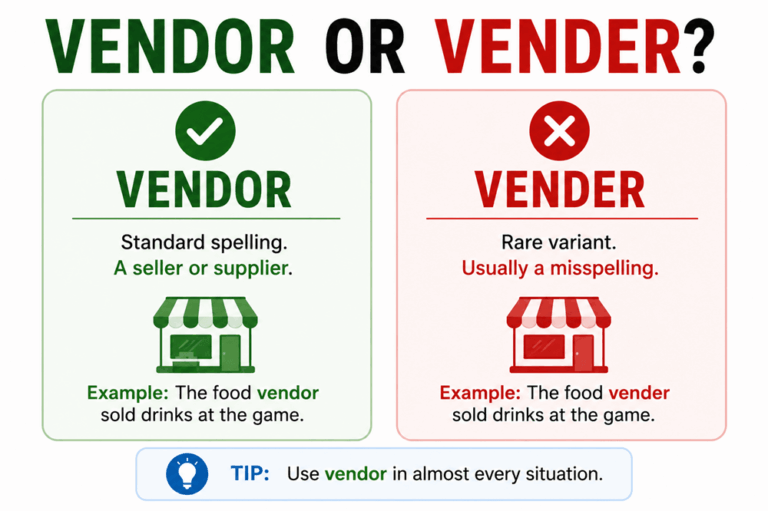
    Vender or Vendor: Correct Spelling, Meaning, Difference, and Examples for Clear Writing

    ByJeremy Howard June 12, 2026

    Vendor and vender both refer to someone who sells something, but vendor is the standard spelling in modern English. Use vendor when you mean a seller, supplier, company, or person who provides goods or services. Vender is rare and usually looks like a misspelling. If you want the safe choice, write vendor. Quick Answer Use…

    Read More Vender or Vendor: Correct Spelling, Meaning, Difference, and Examples for Clear WritingContinue

  • Capital or capitol
    Confusing Words

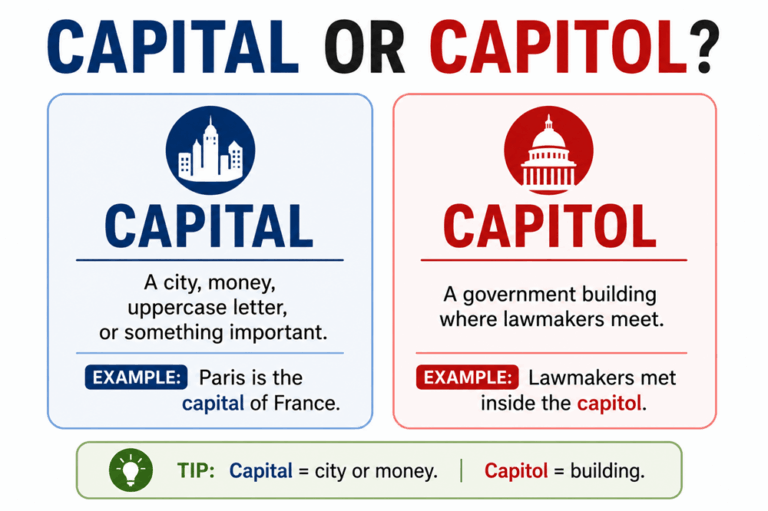
    Capital or Capitol: Correct Meaning, Spelling, Difference, and Examples for Clear Writing

    ByJeremy Howard June 12, 2026

    Capital and capitol sound the same, but they do not mean the same thing. Use capital for a city, money, uppercase letters, importance, or resources. Use capitol for a government building where lawmakers meet. The easiest rule is this: capital is used in most situations, while capitol is mainly about a building. Quick Answer Use…

    Read More Capital or Capitol: Correct Meaning, Spelling, Difference, and Examples for Clear WritingContinue

  • Discrete or discreet
    Confusing Words

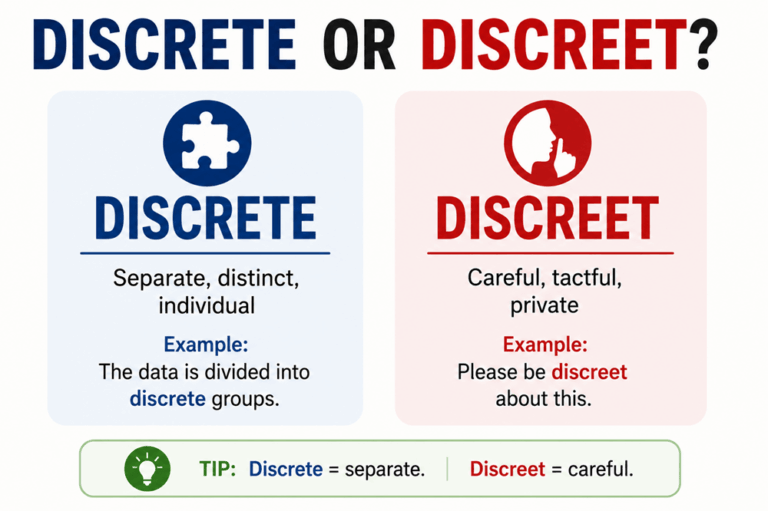
    Discrete or Discreet: Correct Meaning, Spelling, Difference, and Examples for Clear Writing

    ByJeremy Howard June 12, 2026

    Discrete and discreet sound exactly the same, but they do not mean the same thing. Use discrete when you mean separate, distinct, or individually different. Use discreet when you mean careful, tactful, private, or not drawing attention. The easiest shortcut is this: discrete means separate, while discreet means careful. Quick Answer Use discrete when you…

    Read More Discrete or Discreet: Correct Meaning, Spelling, Difference, and Examples for Clear WritingContinue

  • Afterward or afterwards
    Confusing Words

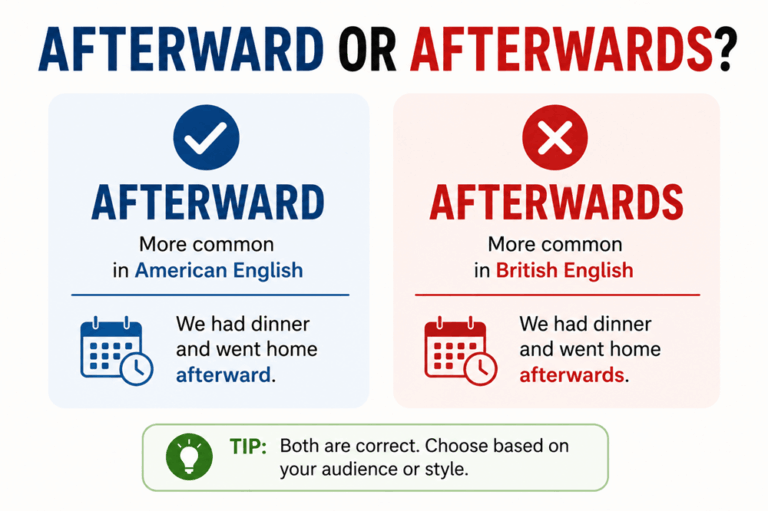
    Afterward or Afterwards: Correct Usage, Regional Differences, and Examples for Clear Writing

    ByJeremy Howard June 12, 2026

    Afterward and afterwards both mean “later” or “after something has happened.” The main difference is regional preference. Afterward is more common in American English, while afterwards is more common in British English. Both are correct, but if you are writing for an American audience, afterward is usually the cleaner choice. Quick Answer Use afterward or…

    Read More Afterward or Afterwards: Correct Usage, Regional Differences, and Examples for Clear WritingContinue

  • Laid or Layed
    Spelling

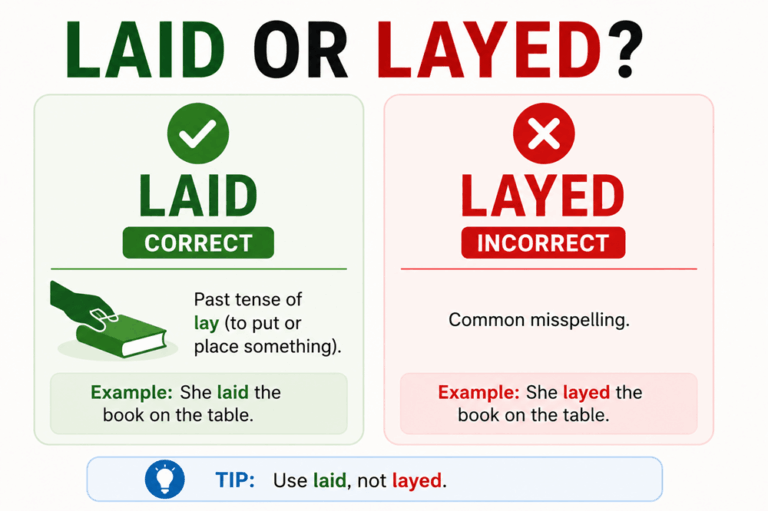
    Laid or Layed: Which Spelling Is Correct for Past Tense of Lay?

    ByJeremy Howard June 12, 2026

    Laid and layed may look like two possible past-tense forms of lay, but only one is standard in modern English. The correct spelling is laid. Use it when you mean something was placed, arranged, prepared, or set down in the past. Layed looks logical because many verbs take -ed, but it is not the accepted…

    Read More Laid or Layed: Which Spelling Is Correct for Past Tense of Lay?Continue

Page navigation

Previous PagePrevious 1 … 34 35 36 37 38 … 44 Next PageNext
  • Disclaimer
  • Terms of Use
  • Privacy Policy

© 2026 Word Briefs

  • About
  • Contact
Search