Snuck or Sneaked: Correct Past Tense, Usage, Difference, and Examples Explained Clearly
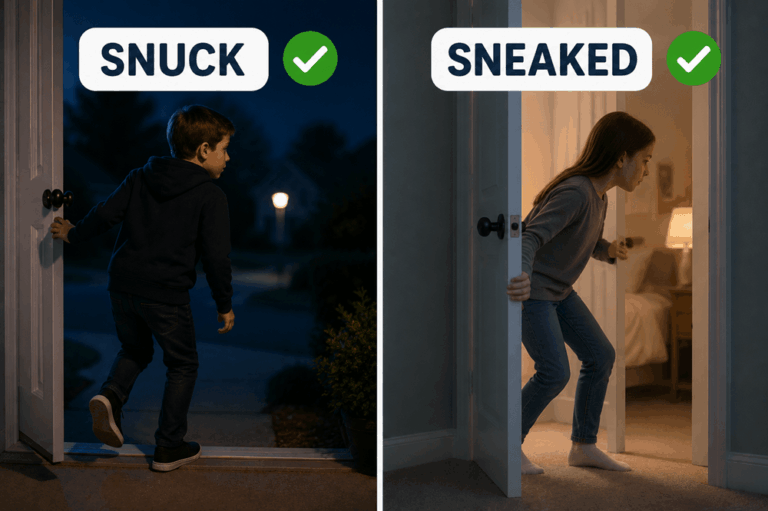
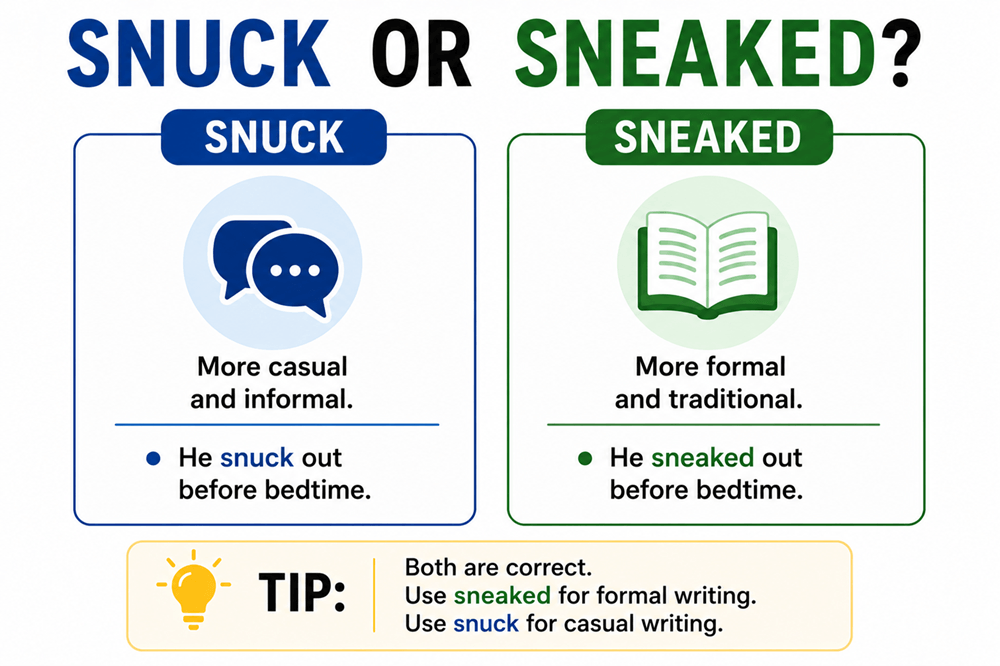
Snuck and sneaked are both used as the past tense of sneak, but they do not always sound the same in every setting. Sneaked is the older and more traditional form. Snuck is common in modern American English and widely accepted in casual writing. For formal or polished writing, sneaked is usually the safer choice.
Quick Answer
Use sneaked when you want the more traditional and formal past tense of sneak.
- Correct: She sneaked out of the room quietly.
- Correct: The cat sneaked under the table.
- Correct: He sneaked a look at the answer sheet.
Use snuck in casual or conversational writing, especially in American English.
- Correct: She snuck out of the room quietly.
- Correct: The cat snuck under the table.
- Correct: He snuck a look at the answer sheet.
The simple rule is this: sneaked is more traditional and formal. Snuck is more casual and common in everyday speech.
Snuck or Sneaked: What Is the Difference?
The difference between snuck and sneaked is mostly style, formality, and regional preference. Both words mean that someone moved quietly, secretly, or without being noticed. Both can also mean that someone did something in a hidden or slightly dishonest way.
Sneaked is the regular past-tense form of sneak. It follows the normal English pattern of adding -ed to a verb.
- sneak → sneaked
- walk → walked
- look → looked
Snuck is an irregular past-tense form. It does not follow the regular -ed pattern, but it has become common, especially in American English.
| Word | Status | Best Use | Example |
|---|---|---|---|
| Sneaked | Traditional past tense | Formal, edited, or careful writing | He sneaked into the room. |
| Snuck | Common informal past tense | Casual speech and informal writing | He snuck into the room. |
If your writing needs to sound formal, choose sneaked. If your writing is casual, conversational, or character-driven, snuck can sound natural.
What Does Sneaked Mean?
Sneaked means moved quietly, secretly, or carefully to avoid being noticed. It is the traditional past tense and past participle of sneak.
Examples:
- The child sneaked into the kitchen for a cookie.
- The dog sneaked onto the couch while nobody was looking.
- She sneaked past the sleeping guard.
- He sneaked away before the meeting ended.
In each sentence, sneaked suggests quiet movement or secret behavior. The person or animal is trying not to be noticed.
Sneaked can also be used when someone does something secretly, even if physical movement is not the main idea.
- He sneaked a glance at the message.
- She sneaked a piece of chocolate before dinner.
- The student sneaked a note into his backpack.
This spelling is especially useful when the tone is careful, formal, or edited. It is the safer choice for school writing, professional writing, grammar-focused articles, and formal storytelling.
What Does Snuck Mean?
Snuck also means moved or acted secretly. It is an informal irregular past-tense form of sneak. It is very common in everyday American speech.
Examples:
- The kids snuck into the backyard after dark.
- He snuck out before anyone could stop him.
- The cat snuck behind the curtain.
- She snuck a peek at the surprise gift.
These sentences sound natural in casual conversation. Many people would say snuck without thinking twice. It has a quick, informal sound that fits storytelling, dialogue, social media, and relaxed writing.
However, snuck can still sound too casual in formal writing. Some teachers, editors, or style-conscious readers may prefer sneaked, especially in academic or professional contexts.
Is Snuck Wrong?
Snuck is not simply wrong. It is widely used and understood, especially in American English. Many modern readers accept it as a normal past-tense form of sneak.
The issue is formality. Snuck may sound casual, while sneaked sounds more traditional. That means the best choice depends on the writing context.
Compare these examples:
- Casual: He snuck out of the party early.
- More formal: He sneaked out of the party early.
- Casual: The dog snuck into the bedroom.
- More formal: The dog sneaked into the bedroom.
Both versions are understandable. The difference is tone. Snuck sounds more conversational. Sneaked sounds more polished.
Is Sneaked Wrong?
Sneaked is not wrong. In fact, it is the older and more traditional past tense of sneak. It is accepted in all kinds of English and works in both American and British writing.
Some people may think sneaked sounds stiff because they are used to hearing snuck in everyday speech. Still, sneaked remains correct and often preferred in careful writing.
Examples:
- The reporter sneaked into the back of the room.
- The thief sneaked through the open window.
- The child sneaked a toy into his backpack.
These sentences are grammatically correct and natural in polished writing. When the goal is clarity and correctness, sneaked is always a safe option.
When to Use Sneaked
Use sneaked when you want the most traditional and formal past tense of sneak. It is a good choice for school essays, professional writing, published articles, formal stories, business writing, and grammar-focused explanations.
Examples:
- The student sneaked into class after the bell.
- The fox sneaked through the tall grass.
- She sneaked a look at the final page of the book.
- The burglar sneaked into the house through a side door.
Sneaked is also useful when you want to avoid any possible argument about correctness. Even readers who commonly use snuck will understand and accept sneaked.
For polished writing, the safest rule is simple: choose sneaked.
When to Use Snuck
Use snuck when the tone is informal, conversational, or casual. It works well in dialogue, personal stories, relaxed blog writing, social media captions, and everyday speech.
Examples:
- I snuck downstairs for a snack.
- She snuck out before the boring speech started.
- The puppy snuck under the blanket.
- He snuck a quick photo before the show began.
Snuck can make a sentence sound more natural if the speaker is casual. In fiction, it may fit a character’s voice better than sneaked. In a relaxed personal essay, it can also feel smoother.
Still, snuck is not the best choice for every context. In formal writing, sneaked is usually stronger.
Snuck Out or Sneaked Out?
Both snuck out and sneaked out can be correct. The difference is tone.
Snuck out sounds casual and conversational.
- She snuck out after everyone fell asleep.
- The teenagers snuck out through the back door.
Sneaked out sounds more traditional and formal.
- She sneaked out after everyone fell asleep.
- The teenagers sneaked out through the back door.
For dialogue or casual writing, snuck out may sound natural. For school writing or polished articles, sneaked out is usually safer.
Snuck In or Sneaked In?
Both snuck in and sneaked in are used when someone enters quietly or secretly.
- Casual: He snuck in through the side entrance.
- Formal: He sneaked in through the side entrance.
- Casual: The cat snuck in when the door opened.
- Formal: The cat sneaked in when the door opened.
The meaning is the same. The spelling choice depends on whether you want a casual or more formal tone.
Sneaked a Peek or Snuck a Peek?
Both sneaked a peek and snuck a peek are common. The phrase means someone looked at something secretly or quickly.
- Casual: She snuck a peek at the birthday present.
- More formal: She sneaked a peek at the birthday present.
- Casual: He snuck a peek at the answer key.
- More formal: He sneaked a peek at the answer key.
Snuck a peek is very natural in everyday speech. Sneaked a peek is better when you want the sentence to sound more edited.
Common Mistakes With Snuck and Sneaked
The most common mistake is treating one word as always correct and the other as always wrong. The truth is more flexible. Sneaked is traditional and formal. Snuck is common and informal.
Another mistake is mixing the two forms in the same piece without a reason.
- Inconsistent: He snuck into the room and then sneaked behind the curtain.
A cleaner version uses one style:
- Casual consistency: He snuck into the room and then snuck behind the curtain.
- Formal consistency: He sneaked into the room and then sneaked behind the curtain.
Consistency helps the writing feel intentional. In an article or essay, sneaked is often the better consistent choice. In dialogue, snuck may better match natural speech.
Examples of Sneaked in Sentences
Here are examples of sneaked used correctly:
- The child sneaked into the pantry for a cookie.
- The cat sneaked through the open window.
- The thief sneaked past the sleeping guard.
- She sneaked a glance at the clock.
- He sneaked away before the argument started.
- The mouse sneaked behind the cabinet.
- The student sneaked a note into the textbook.
- The reporter sneaked into the back row of the meeting.
These examples sound clear and standard. They work well in formal and edited writing.
Examples of Snuck in Sentences
Here are examples of snuck used naturally in casual writing:
- The kids snuck into the kitchen after bedtime.
- He snuck out before anyone noticed.
- The dog snuck onto the sofa again.
- She snuck a look at the surprise invitation.
- They snuck through the back gate.
- The cat snuck under the bed during the storm.
- I snuck a snack into the movie theater.
- He snuck away from the crowd for a quiet minute.
These examples sound more relaxed and conversational. They are especially natural in American English.
Sneak, Sneaked, Snuck, and Sneaking
Here is the basic verb pattern:
| Form | Traditional | Common Informal Variant |
|---|---|---|
| Present | sneak | sneak |
| Past tense | sneaked | snuck |
| Past participle | sneaked | snuck |
| Present participle | sneaking | sneaking |
Examples:
- Present: They sneak into the garden.
- Past, traditional: They sneaked into the garden.
- Past, casual: They snuck into the garden.
- Present participle: They are sneaking into the garden.
This pattern shows why both sneaked and snuck appear in modern English. They do the same job, but they carry different levels of formality.
How to Remember Snuck or Sneaked
A simple way to remember the difference is this:
- Sneaked = traditional and formal
- Snuck = casual and conversational
You can also remember that sneaked follows the regular past-tense pattern. Since many formal readers prefer regular forms, sneaked is the safer choice when correctness matters most.
Try this quick guide:
- School essay: sneaked
- Formal article: sneaked
- Business writing: sneaked
- Dialogue: snuck or sneaked, depending on the speaker
- Casual story: snuck
- Text message: snuck
When in doubt, choose sneaked. It is accepted everywhere and works in every style.
Final Answer
Snuck and sneaked are both used as the past tense and past participle of sneak. Sneaked is the older, more traditional, and more formal spelling. Snuck is common in modern American English and sounds natural in casual speech and informal writing.
The easiest rule is simple: use sneaked for formal or polished writing, and use snuck when a casual tone feels natural. If you need the safest choice for a grammar article, school paper, or professional sentence, choose sneaked.