Wether or Whether: Correct Spelling, Meaning, Difference, and Examples for Clear Writing
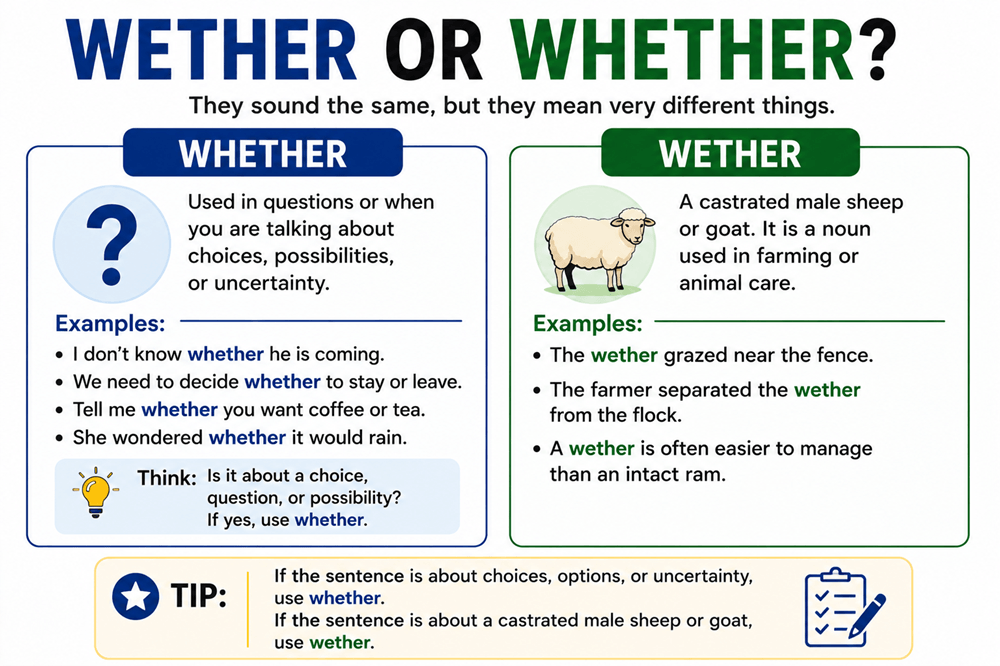
Whether is the correct word when you are talking about choices, possibilities, uncertainty, or alternatives. Wether is a real word, but it has a very specific meaning: a castrated male sheep or goat. In almost every everyday sentence, the word you want is whether. The easiest rule is this: whether is about choices, while wether is an animal term.
Quick Answer
Use whether when you mean “if,” “regardless of which option,” or “one possibility or another.”
- Correct: I do not know whether she is coming.
- Correct: We need to decide whether to stay or leave.
- Correct: Tell me whether you want coffee or tea.
Wether is not the correct spelling for this meaning. It refers to a castrated male sheep or goat, so it is rarely used outside farming, animal care, or livestock writing.
- Incorrect: I do not know wether she is coming.
- Incorrect: We need to decide wether to stay or leave.
- Incorrect: Tell me wether you want coffee or tea.
The simple rule is this: if the sentence is about a choice or uncertainty, use whether.
Wether or Whether: What Is the Difference?
The difference between wether and whether is meaning. These two words sound the same, but they are not interchangeable. Whether is a common conjunction used when discussing options, possibilities, doubts, or conditions. Wether is a rare noun used in livestock terminology.
| Word | Meaning | Example |
|---|---|---|
| Whether | Used for choices, possibilities, or uncertainty | I wonder whether it will rain. |
| Wether | A castrated male sheep or goat | The farmer separated the wether from the flock. |
Most people who search for wether or whether are trying to spell the choice-related word. In that case, the answer is almost always whether, with wh at the beginning.
What Does Whether Mean?
Whether is used when there is uncertainty, a question, a choice, or more than one possible outcome. It often introduces two options, but it can also introduce a single uncertain possibility.
Examples:
- I am not sure whether he received the message.
- She asked whether the store was still open.
- They debated whether to buy or rent.
- We need to know whether the plan will work.
In each sentence, whether points to uncertainty. Something may or may not be true. Someone may choose one option or another. A result may happen, or it may not.
Whether is especially common before phrases like:
- whether or not
- whether to
- whether it is
- whether he can
- whether she should
- whether they will
Whenever your sentence involves doubt, choice, possibility, or alternatives, whether is probably the word you need.
What Does Wether Mean?
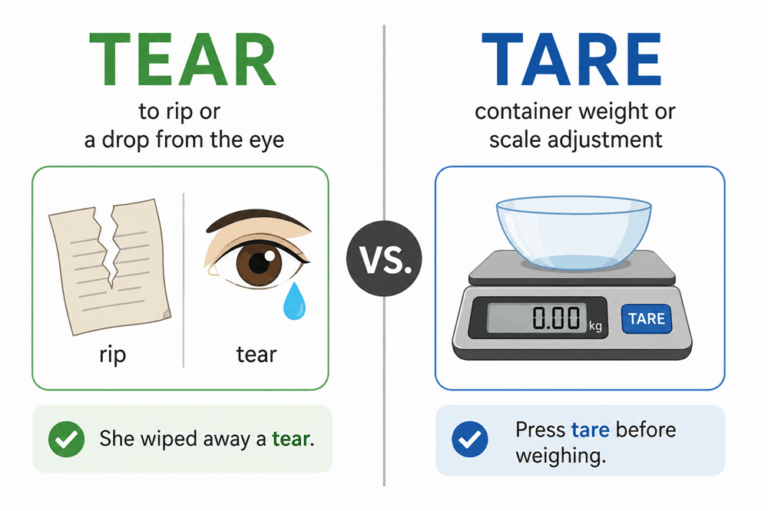
Wether is a noun. It means a castrated male sheep or goat. This word belongs mostly to farming, livestock, veterinary, and agricultural contexts.
Examples:
- The wether grazed near the fence.
- The farmer marked the wether for sale.
- A wether is often easier to manage than an intact ram.
- The goat wether stayed with the rest of the herd.
These sentences are correct because they are about animals. However, wether is not common in everyday writing. Unless you are writing about sheep, goats, farms, or livestock, you probably do not need this word.
This is why wether is usually a spelling mistake when it appears in ordinary sentences. If someone writes “I do not know wether to go,” they almost certainly mean whether.
Why Whether Is Often Misspelled as Wether
Whether is often misspelled as wether because the extra h is silent in many accents. When spoken aloud, whether sounds like weather and wether. Since the pronunciation does not clearly show the spelling, the mistake is easy to make.
The word is also confusing because English has several similar-looking words:
- whether
- weather
- wether
These words sound alike for many speakers, but they mean different things. Whether is about choices. Weather is about conditions outside, such as rain, wind, heat, or snow. Wether is an animal term.
Because whether is common and wether is rare, readers will usually assume wether is a typo unless the sentence is clearly about livestock.
When to Use Whether
Use whether when the sentence includes a choice, possibility, question, doubt, or uncertainty.
Examples:
- I do not know whether the meeting is still happening.
- She asked whether I needed help.
- We must decide whether to continue.
- The teacher wondered whether the students understood.
Use whether before or when comparing two options.
- Tell me whether you want soup or salad.
- We need to decide whether to drive or fly.
- He could not choose whether to accept or decline.
Use whether in the phrase whether or not.
- She will attend whether or not it rains.
- We are leaving whether or not they are ready.
- You should check the document whether or not you think it is finished.
In all of these examples, whether is the correct spelling because the sentence is about possibility or choice.
When to Use Wether
Use wether only when you mean a castrated male sheep or goat. This spelling is correct in agricultural or animal-related writing.
Examples:
- The wether was calm around the other sheep.
- The farmer raised several wethers for wool.
- The goat wether was kept as a companion animal.
- The vet examined the wether before the auction.
Outside this livestock meaning, wether is almost always the wrong spelling. You should not use it when talking about choices, doubts, questions, decisions, or possibilities.
Whether or Not
Whether or not means “regardless of whether something happens” or “if something happens or if it does not.” It is a common phrase, but sometimes the words or not are optional.
Examples where or not is useful:
- We are going whether or not it rains.
- She will speak honestly whether or not people agree.
- The rule applies whether or not you knew about it.
In these examples, or not adds the idea of “either way.” The meaning is that the result will be the same no matter what happens.
Sometimes or not is unnecessary:
- Wordy: I do not know whether or not he called.
- Cleaner: I do not know whether he called.
Both sentences are understandable, but the shorter version is usually smoother when you are simply expressing uncertainty.
Whether To or Wether To?
The correct phrase is whether to, not wether to.
Correct:
- I cannot decide whether to go.
- She wondered whether to accept the job.
- They discussed whether to sell the house.
Incorrect:
- I cannot decide wether to go.
- She wondered wether to accept the job.
- They discussed wether to sell the house.
Whether to is used before an action or decision. Since the sentence involves a choice, the correct word is whether.
Whether vs Weather
Whether and weather are also commonly confused. They sound alike, but they have different meanings.
Whether is about choices or possibilities.
- I do not know whether I should leave.
- We need to decide whether the plan is safe.
Weather is about outdoor conditions.
- The weather is cold today.
- Bad weather delayed the flight.
Compare the difference:
- Correct: I wonder whether it will rain.
- Correct: The weather looks rainy.
The first sentence is about uncertainty. The second sentence is about the sky, temperature, and conditions outside.
Common Mistakes With Wether and Whether
The most common mistake is using wether when the sentence needs whether.
Incorrect:
- I do not know wether she is home.
- We need to decide wether this is worth it.
- Ask him wether he wants to join us.
- She wondered wether the answer was correct.
Correct:
- I do not know whether she is home.
- We need to decide whether this is worth it.
- Ask him whether he wants to join us.
- She wondered whether the answer was correct.
Another mistake is using weather when the sentence needs whether.
Incorrect:
- I am not sure weather I can come.
Correct:
- I am not sure whether I can come.
If the sentence is not about outdoor conditions, weather is probably wrong. If the sentence is not about sheep or goats, wether is probably wrong. For choices and uncertainty, use whether.
Examples of Whether in Sentences
Here are examples of whether used correctly:
- I do not know whether the answer is right.
- She asked whether the train had already left.
- We need to decide whether to paint the room blue or green.
- He wondered whether he had locked the door.
- The manager will decide whether the project continues.
- Tell me whether you prefer morning or afternoon.
- Whether you agree or not, the rule still applies.
- The question is whether we have enough time.
In each sentence, whether introduces a choice, question, uncertainty, or possibility.
Examples of Wether in Sentences
Here are examples of wether used correctly in its rare livestock meaning:
- The wether stayed near the rest of the flock.
- The farmer bought a young wether at the livestock auction.
- The goat wether was gentle and easy to handle.
- The wether was raised for wool rather than breeding.
These examples show why wether is not useful in most everyday writing. It has a real meaning, but that meaning is narrow and agricultural.
How to Remember Wether or Whether
A simple way to remember the difference is this:
- Whether = choices, questions, or possibilities
- Wether = a sheep or goat
You can also remember that whether begins with wh, just like many question-related words:
- what
- when
- where
- why
- whether
Since whether often introduces a question or uncertainty, the wh can remind you that it belongs with question words.
Another quick memory trick is this:
Whether asks which possibility. Wether is livestock.
If your sentence has nothing to do with sheep or goats, you almost certainly need whether.
Final Answer
Whether is the correct spelling when you are talking about choices, uncertainty, possibilities, questions, or alternatives. Use it in phrases like whether or not, whether to, and whether you want this or that. Wether is a rare noun that means a castrated male sheep or goat.
The easiest rule is simple: whether is for choices, and wether is for livestock. In almost every ordinary sentence, especially when you mean “if” or “which option,” choose whether.