Totalling or Totaling: Which Spelling Is Correct?
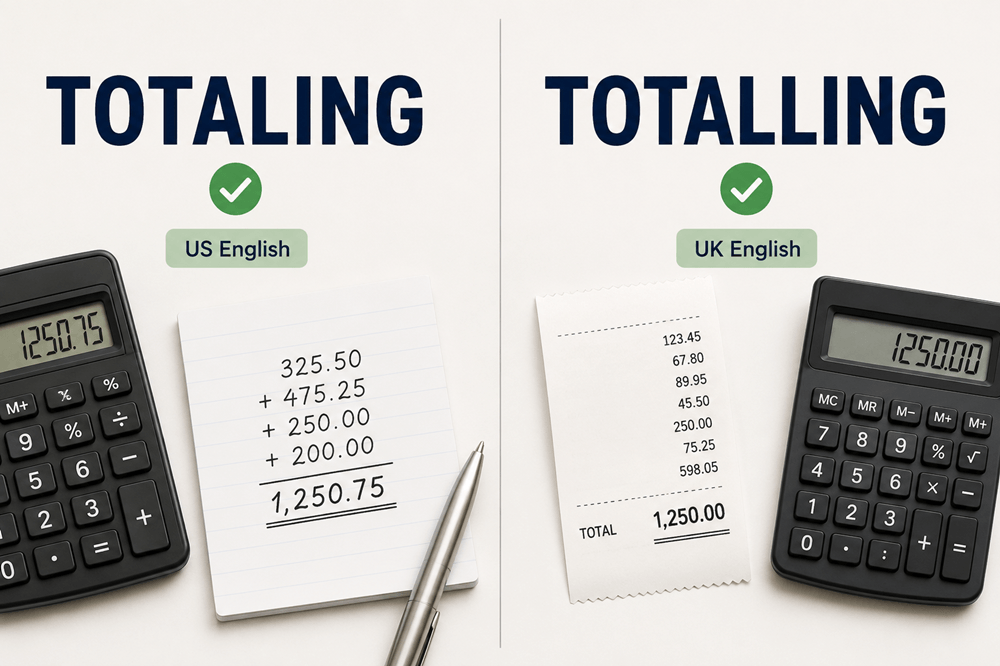
Totalling and totaling are both correct spellings. The difference is mainly regional.
In American English, the usual spelling is totaling.
In British English, the usual spelling is totalling.
They mean the same thing: adding up to a total or amounting to a certain number.
Examples:
- American English: The repairs are totaling more than $2,000.
- British English: The repairs are totalling more than £2,000.
- American English: The bills are totaling $500.
- British English: The bills are totalling £500.
Neither spelling is wrong. The better choice depends on your audience.
Quick Answer
Use totaling in American English.
Use totalling in British English.
Correct in the U.S.:
- The donations are totaling $10,000.
Correct in the U.K.:
- The donations are totalling £10,000.
The only difference is the double l.
Totaling has one l before -ing.
Totalling has double l before -ing.
What Does Totaling or Totalling Mean?
Totaling or totalling is the present participle form of the verb total.
It can mean adding numbers together.
Examples:
- She is totaling the receipts.
- He is totalling the sales from last week.
- The accountant is totaling the expenses.
It can also mean amounting to a certain number or value.
Examples:
- The damage is totaling thousands of dollars.
- The costs are totalling more than expected.
- The team scored five goals, totaling 20 for the season.
In both cases, the meaning is the same. Only the spelling changes.
Totaling vs. Totalling: The Main Difference
The main difference is spelling style:
Totaling = American English
Totalling = British English
American English usually writes:
- totaling
- totaled
British English usually writes:
- totalling
- totalled
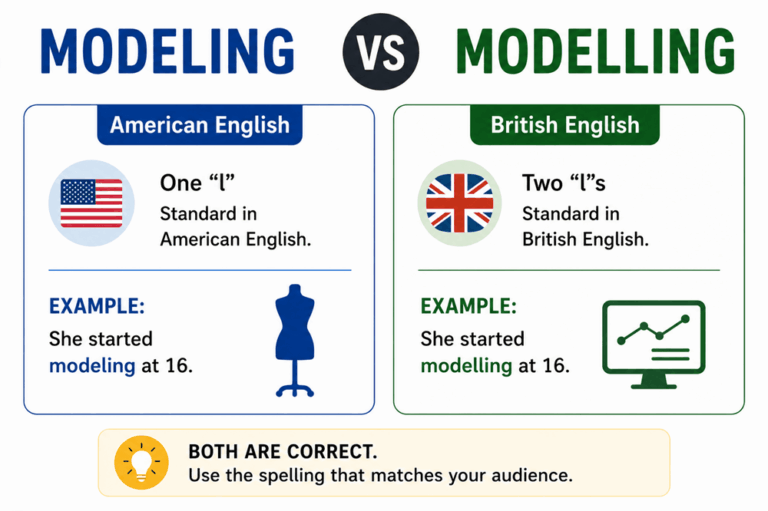
This pattern happens because British English often doubles the final l when adding endings like -ing or -ed, while American English often does not.
So the spelling difference is not about meaning. It is about American and British spelling rules.
Why Does British English Use Double L?
British English often doubles a final l when adding a suffix.
That is why British English commonly writes:
- travelling
- modelling
- labelling
- totalling
American English usually keeps only one l in these words:
- traveling
- modeling
- labeling
- totaling
This is one of the most common spelling differences between American and British English.
The base word is the same:
total
But when -ing is added, the spelling changes by region:
total + ing = totaling in American English
total + ling = totalling in British English
Is Totalling Wrong in American English?
No, totalling is not completely wrong, but it will look British to many American readers.
If you are writing for a U.S. audience, totaling is the standard choice.
Examples:
- The project costs are totaling $8,500.
- She spent the afternoon totaling the invoices.
- The company reported losses totaling millions.
Using totalling in American writing may make the text look inconsistent or foreign, especially if the rest of the article uses American spelling.
For U.S. writing, choose totaling.
Is Totaling Wrong in British English?
Totaling is understandable in British English, but totalling is the usual British spelling.
For British readers, these sentences look more natural:
- The expenses are totalling £1,200.
- The charity received donations totalling £50,000.
- She is totalling the figures now.
British readers will understand totaling, but it may look like American spelling.
For U.K. writing, choose totalling.
Totaled or Totalled?
The same rule applies to the past tense.
In American English, use totaled.
Examples:
- The repairs totaled $3,000.
- The car was totaled in the accident.
- The expenses totaled more than expected.
In British English, use totalled.
Examples:
- The repairs totalled £3,000.
- The car was totalled in the accident.
- The expenses totalled more than expected.
Again, both spellings are correct. The difference is regional.
How to Remember the Difference
A simple memory trick:
Totaling is shorter, and American English often prefers shorter spellings.
Totalling has an extra l, and British English often keeps the extra l.
You can remember it this way:
American English = one L
British English = two L’s
Examples:
- US: totaling
- UK: totalling
- US: totaled
- UK: totalled
Another trick:
British spelling likes extra letters.
This is not always true, but it works for many common spelling pairs:
- traveling / travelling
- modeling / modelling
- labeling / labelling
- totaling / totalling
Spelling Structure
The American spelling is:
t-o-t-a-l-i-n-g
The British spelling is:
t-o-t-a-l-l-i-n-g
The only difference is the number of l’s before ing.
American English:
total + ing = totaling
British English:
total + ling = totalling
If your audience is American, use the simpler form with one l.
If your audience is British, use the form with double l.
Common Mistakes
Mistake 1: Thinking one spelling is always wrong
Incorrect idea:
- Totalling is wrong because totaling is shorter.
Correct idea:
- Totaling is American English.
- Totalling is British English.
Both are correct in the right context.
Mistake 2: Mixing both spellings in one article
Inconsistent:
- The costs are totaling $4,000, with fees totalling another $500.
Better for American English:
- The costs are totaling $4,000, with fees totaling another $500.
Better for British English:
- The costs are totalling £4,000, with fees totalling another £500.
Choose one spelling style and stay consistent.
Mistake 3: Forgetting the related forms
If you use totaling, you should also use totaled.
If you use totalling, you should also use totalled.
American English:
- totaling
- totaled
British English:
- totalling
- totalled
This keeps your writing consistent.
Example Sentences
American English:
- The bills are totaling more than $900.
- The accountant is totaling the receipts.
- The storm caused damage totaling millions of dollars.
- The team’s points are totaling 85 for the season.
British English:
- The bills are totalling more than £900.
- The accountant is totalling the receipts.
- The storm caused damage totalling millions of pounds.
- The team’s points are totalling 85 for the season.
Both forms are correct. The spelling depends on the English variety you are using.
Final Answer: Totalling or Totaling?
Totalling and totaling are both correct.
Use totaling in American English.
Use totalling in British English.
They have the same meaning: adding up to a total or amounting to a number.
The easiest way to remember the difference is:
US English = totaling, one L
UK English = totalling, double L
For most American writing, choose totaling. For British writing, choose totalling.