Pleaded or Pled: Which Word Is Correct?
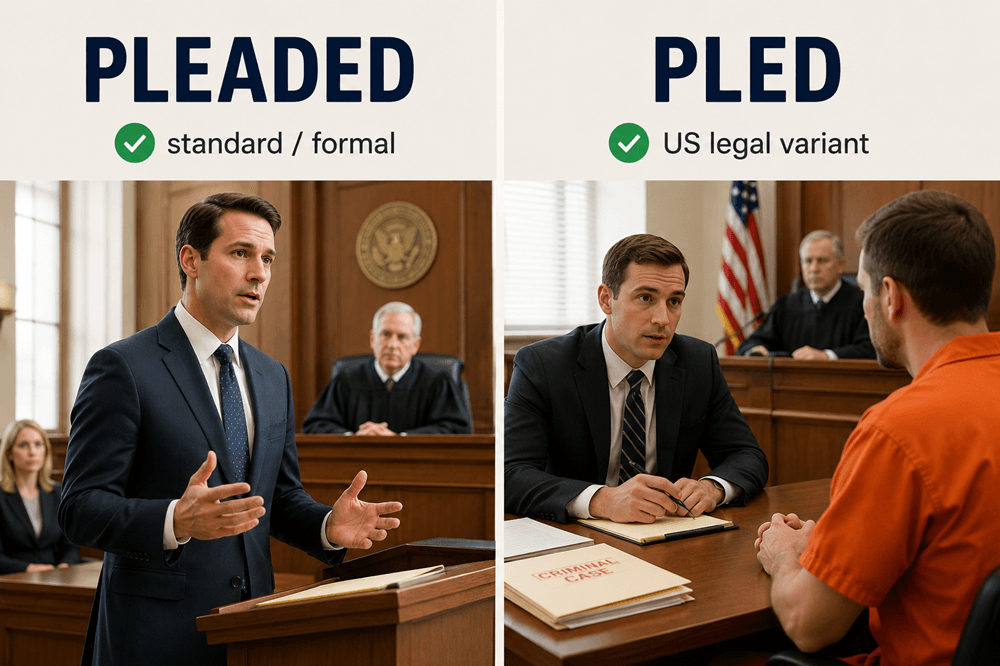
Pleaded and pled can both be used as the past tense of plead, but pleaded is the safer and more widely accepted choice.
Use pleaded in formal writing, legal writing, academic writing, and international English.
Use pled mainly in American English, especially in legal or journalistic contexts.
Examples:
- The defendant pleaded guilty.
- The defendant pled guilty.
- She pleaded for another chance.
- He pled no contest to the charge.
Both forms are understandable, but they do not always feel equally formal. If you are unsure which one to use, choose pleaded.
Quick Answer
Use pleaded as the standard past tense and past participle of plead.
Use pled only when a shorter, mostly American legal style fits the context.
Most standard:
- He pleaded guilty.
Also common in American English:
- He pled guilty.
Safer in formal writing:
- The lawyer said her client pleaded not guilty.
For a global audience, pleaded is usually the better choice.
What Does Pleaded Mean?
Pleaded is the regular past tense of plead.
The verb plead can mean to make an emotional request, to argue a case, or to answer a legal charge.
Examples:
- She pleaded with him to stay.
- The child pleaded for one more story.
- The lawyer pleaded his client’s case.
- The defendant pleaded guilty in court.
In each sentence, pleaded means that the action happened in the past.
Because pleaded follows the normal pattern of adding -ed, it is easy to recognize and widely accepted.
Plead → pleaded
That makes pleaded the safest spelling in most writing.
What Does Pled Mean?
Pled is a shorter past-tense form of plead.
It is especially common in American English in legal reporting.
Examples:
- The defendant pled guilty to the charge.
- She pled no contest.
- He pled not guilty during the hearing.
In these examples, pled means the same thing as pleaded.
However, pled is less common in British English and can sound more informal or journalistic. Some readers may prefer pleaded, especially in careful legal or formal writing.
So pled is not usually a spelling mistake, but it is more limited in style and region.
Pleaded vs Pled: The Main Difference
The main difference is usage.
Pleaded is the standard, regular form.
Pled is a shorter variant, common in American legal contexts.
Examples:
- She pleaded for forgiveness.
- She pled for forgiveness.
The first sentence sounds more natural to most readers. The second may sound unusual because pled is more strongly associated with legal phrases like pled guilty.
That is why pleaded works well in many contexts, while pled works best in legal language.
Pleaded Guilty or Pled Guilty?
Both pleaded guilty and pled guilty are used.
Pleaded guilty is more formal and widely accepted.
Example:
- The defendant pleaded guilty to fraud.
Pled guilty is common in American news and legal writing.
Example:
- The defendant pled guilty to fraud.
If you are writing for a general audience, pleaded guilty is the safer choice. If you are writing in a concise American news style, pled guilty may sound natural.
For British or international readers, pleaded guilty will usually look better.
Pleaded Not Guilty or Pled Not Guilty?
The same rule applies.
Both can appear:
- He pleaded not guilty.
- He pled not guilty.
The more standard form is:
- He pleaded not guilty.
The shorter American form is:
- He pled not guilty.
In formal legal writing, pleaded is often the better option because it is less likely to distract readers.
Pleaded With or Pled With?
When the meaning is emotional begging or asking strongly, pleaded with is usually better.
Examples:
- She pleaded with her parents to let her go.
- He pleaded with the teacher for more time.
- They pleaded with the mayor to save the park.
In this emotional sense, pled with sounds less natural.
Less common:
- She pled with her parents to let her go.
Better:
- She pleaded with her parents to let her go.
So use pleaded when the meaning is begging, asking, or appealing emotionally.
Pleaded His Case or Pled His Case?
Again, pleaded his case is usually more natural.
Examples:
- The lawyer pleaded his case before the judge.
- She pleaded her case calmly.
- He pleaded his case to the committee.
The phrase pled his case may appear sometimes, but pleaded his case is the smoother and more standard choice.
Is Pled Wrong?
No, pled is not always wrong.
It is a real past-tense form, especially in American English. You may see it in newspapers, legal updates, and court reporting.
Examples:
- The suspect pled guilty.
- The company pled no contest.
- He pled guilty in federal court.
However, pled can sound less formal or less universal than pleaded. It may also look odd to readers who are more familiar with British English or traditional grammar.
So the safest advice is:
Use pleaded unless you have a reason to use pled.
Is Pleaded Wrong?
No. Pleaded is never wrong when you need the standard past tense of plead.
Examples:
- She pleaded for help.
- He pleaded guilty.
- They pleaded with the council.
- The attorney pleaded the case carefully.
Because pleaded is accepted in all major varieties of English, it is the best default choice.
How to Remember the Difference
A simple memory trick:
Pleaded is the regular form.
Think:
plead + ed = pleaded
That makes it easy:
- plead today
- pleaded yesterday
- have pleaded before
For pled, remember that it is shorter and often used in short legal headlines.
Example:
- “Defendant Pled Guilty”
So:
pleaded = standard and safe
pled = shorter American legal style
When in doubt, use pleaded.
Spelling Structure
Pleaded is spelled:
p-l-e-a-d-e-d
It keeps the full word plead and adds -ed.
Pled is spelled:
p-l-e-d
It is shorter and does not keep the full spelling of plead.
This is why pled can look surprising. It changes the spelling more than a regular past-tense verb usually would.
Compare:
- plead → pleaded
- plead → pled
Both can be used, but pleaded is clearer and more predictable.
Common Mistakes
Mistake 1: Thinking pled is always incorrect
Incorrect idea:
- Pled is never a word.
Correct idea:
- Pled is a real variant, especially in American legal writing.
Example:
- He pled guilty.
Mistake 2: Using pled in every context
Less natural:
- She pled with him to stay.
Better:
- She pleaded with him to stay.
Use pleaded for emotional requests.
Mistake 3: Mixing pleaded and pled in one article
Inconsistent:
- He pled guilty, but later said he had pleaded under pressure.
Better:
- He pleaded guilty, but later said he had pleaded under pressure.
Or:
- He pled guilty, but later said he had pled under pressure.
Choose one style and stay consistent.
Example Sentences With Pleaded
- She pleaded for more time.
- He pleaded guilty to the charge.
- The lawyer pleaded the case in court.
- They pleaded with officials to reconsider.
- The defendant pleaded not guilty.
- He pleaded for mercy.
Example Sentences With Pled
- The defendant pled guilty.
- She pled no contest.
- He pled not guilty at the hearing.
- The company pled guilty to the violation.
These examples show why pled is most common in legal contexts.
Final Answer: Pleaded or Pled?
Pleaded and pled can both be correct past-tense forms of plead.
Use pleaded as the standard and safest form.
Use pled mainly in American legal or journalistic writing.
The easiest way to remember the difference is:
Pleaded = standard form
Pled = shorter American legal variant
For most writing, especially formal or international writing, choose pleaded.