Another Word for Also: Best Synonyms and Examples
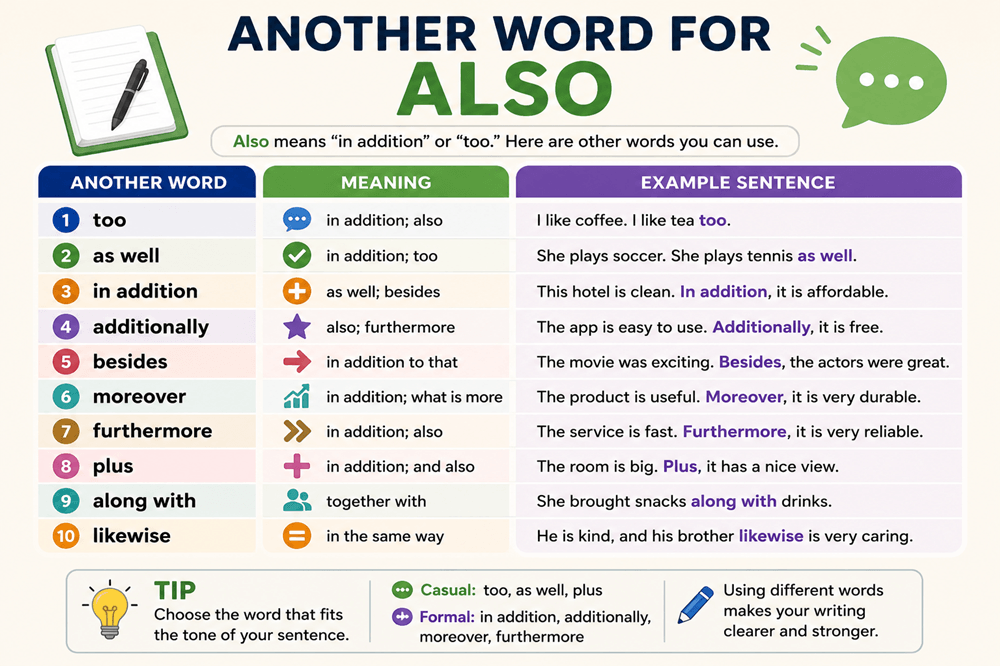
Another word for also is too. You can also use as well, in addition, additionally, besides, moreover, furthermore, or plus, depending on the sentence.
Also means “in addition” or “too.” It is used when you want to add one more idea, fact, item, or action.
Examples:
I like coffee. I also like tea.
I like coffee. I like tea too.
I like coffee. I like tea as well.
The best replacement depends on tone. Some synonyms sound casual, while others sound more formal.
Best Synonyms for Also
Here are some of the most useful words and phrases you can use instead of also:
| Word or Phrase | Best For |
|---|---|
| too | Casual everyday writing |
| as well | Natural and slightly softer |
| in addition | Clear formal writing |
| additionally | Essays and professional writing |
| besides | Adding another reason |
| moreover | Strong formal addition |
| furthermore | Formal writing and arguments |
| plus | Casual speech or informal writing |
| along with | Adding people or things |
| likewise | Showing similarity |
Each word has a slightly different feeling, so it is important to choose the one that fits your sentence.
Too
Too is one of the simplest replacements for also. It usually comes at the end of a sentence.
Examples:
She plays soccer. She plays tennis too.
I want some cake too.
He is smart and kind too.
Use too in casual, natural, everyday English. It sounds friendly and simple.
Compare:
I also enjoyed the movie.
I enjoyed the movie too.
Both are correct, but the second sentence sounds a little more conversational.
As Well
As well means the same thing as also or too. It often comes at the end of a sentence.
Examples:
She speaks French. She speaks Spanish as well.
We sell shoes and bags as well.
He helped with the project as well.
As well is useful when you want a smooth, natural phrase. It is not too casual and not too formal.
Compare:
The store also sells jackets.
The store sells jackets as well.
Both are correct.
In Addition
In addition is a more formal way to say also. It is often used at the beginning of a sentence.
Examples:
The hotel has free breakfast. In addition, it has a swimming pool.
The course teaches grammar. In addition, it covers pronunciation.
She has experience in sales. In addition, she has strong writing skills.
Use in addition in essays, reports, business writing, and explanations.
Additionally
Additionally is another formal synonym for also. It works well when adding another point.
Examples:
The app is easy to use. Additionally, it is free.
The plan saves time. Additionally, it reduces costs.
The teacher gave examples. Additionally, she explained the rules.
Additionally sounds polished, but it can feel too formal in casual conversation. In everyday speech, also, too, or as well usually sound more natural.
Besides
Besides can mean also, but it often adds another reason or extra point.
Examples:
I do not want to go out. Besides, it is raining.
The job pays well. Besides, it is close to home.
She is talented. Besides, she works very hard.
Use besides when the second point gives extra support to the first idea.
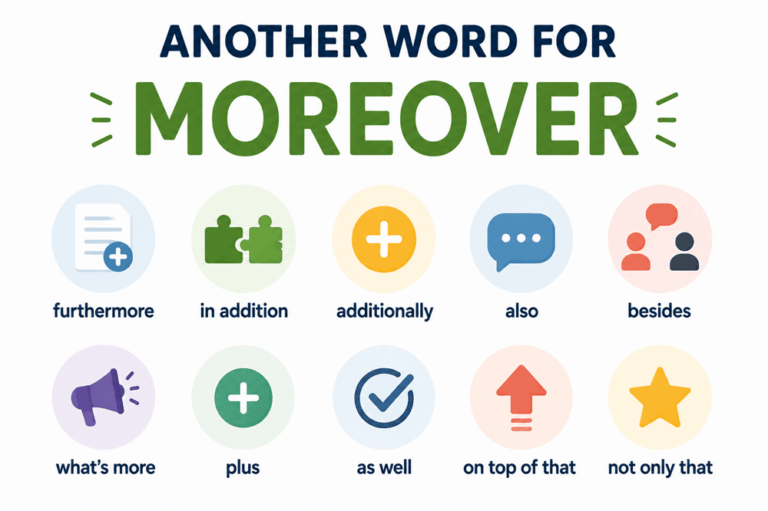
Moreover
Moreover is a formal synonym for also. It is often used when adding a stronger or more serious point.
Examples:
The product is affordable. Moreover, it is very durable.
The policy is unfair. Moreover, it may create more problems.
The book is well written. Moreover, it gives practical advice.
Moreover is common in essays, articles, reports, and formal arguments. It is not usually used in casual speech.
Furthermore
Furthermore is similar to moreover. It means “also” or “in addition,” especially when adding another point in an argument.
Examples:
The rule is confusing. Furthermore, it is hard to enforce.
The plan is expensive. Furthermore, it may not solve the problem.
The study was small. Furthermore, the results were limited.
Use furthermore in formal writing. It is especially useful when building a logical argument.
Plus
Plus is an informal way to say also or in addition.
Examples:
The room is clean. Plus, it has a great view.
I like the color. Plus, it is on sale.
She is funny. Plus, she is easy to talk to.
Use plus in casual writing, conversations, blog posts, and relaxed explanations. Avoid it in very formal essays or business reports.
Along With
Along with is useful when adding people, things, or items.
Examples:
She brought cookies along with drinks.
The package includes a charger along with a case.
He attended the meeting along with his manager.
Use along with when you want to show that something comes together with something else.
Likewise
Likewise can mean also, but it usually shows that two things are similar.
Examples:
She enjoys reading. Her brother likewise enjoys books.
The first answer was correct. The second was likewise correct.
He thanked the team, and she did likewise.
Use likewise when the added idea follows the same pattern as the first idea.
Also vs Too vs As Well
Also, too, and as well are very close in meaning. The main difference is sentence position and tone.
Also often comes before the main verb:
She also likes music.
I also need help.
They also visited Paris.
Too usually comes at the end:
She likes music too.
I need help too.
They visited Paris too.
As well also usually comes at the end:
She likes music as well.
I need help as well.
They visited Paris as well.
A simple rule:
Use also for standard writing.
Use too for casual writing.
Use as well for a smooth, natural tone.
Formal Synonyms for Also
If you are writing an essay, report, article, or professional email, these are good formal alternatives:
- in addition
- additionally
- moreover
- furthermore
- likewise
- along with
- coupled with
Examples:
In addition, the results support the main argument.
Additionally, the team reviewed the data.
Moreover, the evidence suggests a clear pattern.
Furthermore, the issue affects many users.
Formal synonyms can make your writing sound more polished, but do not overuse them. Too many formal transition words can make writing feel stiff.
Casual Synonyms for Also
For everyday writing, use simpler words and phrases:
- too
- as well
- plus
- and
- on top of that
Examples:
I want fries too.
She came with us as well.
The food was good. Plus, it was cheap.
He is kind, and he is funny.
On top of that, we got a discount.
These choices sound more natural in texts, conversations, personal blogs, and simple explanations.
Common Mistakes
One common mistake is putting too in the wrong place.
Awkward: I too like this song.
Natural: I like this song too.
The first sentence is grammatically possible, but it sounds formal or old-fashioned. In everyday English, too usually sounds better at the end.
Another mistake is using a very formal synonym in a casual sentence.
Too formal: I love pizza. Furthermore, I love fries.
Better: I love pizza. I love fries too.
Better: I love pizza. Plus, I love fries.
Choose the synonym that matches the tone.
Final Answer
Another word for also is too.
Other good synonyms include as well, in addition, additionally, besides, moreover, furthermore, plus, along with, and likewise.
Use too or as well for casual everyday writing.
Use in addition, additionally, moreover, or furthermore for formal writing.
Use plus for a relaxed, conversational tone.
The best choice depends on where the word appears in the sentence and how formal you want the writing to sound.