Fiending or Feening: Which Spelling Is Correct?
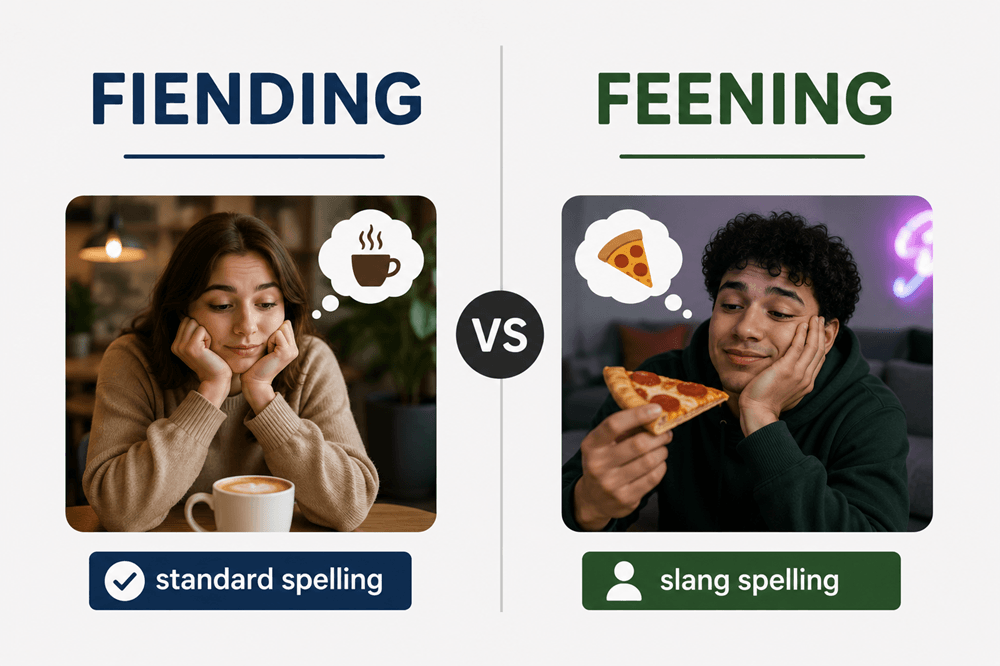
Fiending is the more standard spelling. Feening is a slang spelling that means the same thing in casual use, but it is less standard.
Both words are usually used to mean craving something strongly, wanting something badly, or feeling almost obsessed with getting something.
Examples:
Correct: I’m fiending for coffee right now.
Casual slang: I’m feening for coffee right now.
Correct: He was fiending for attention.
Casual slang: He was feening for attention.
If you are writing for school, work, an article, or any polished setting, use fiending. If you are writing casual dialogue, lyrics, texts, or slang-style content, feening may fit the tone.
What Does Fiending Mean?
Fiending means craving something intensely. It comes from the word fiend, which can describe someone who is extremely eager, obsessed, or addicted to something.
Examples:
She was fiending for chocolate after dinner.
He is always fiending for praise.
They were fiending to hear the new album.
I’m fiending for a vacation.
In casual speech, fiending does not always have to be serious. People may use it jokingly to mean they really want food, sleep, attention, music, money, or a certain experience.
However, the word can also have a serious meaning in drug-related contexts. In that setting, fiending can refer to an intense craving for a substance.
What Does Feening Mean?
Feening is a slang spelling of fiending. It is based on how the word sounds when spoken.
Examples:
I’m feening for some fries.
She’s feening for his attention.
He was feening to go out.
This spelling is common in informal online writing, texting, music, and slang-heavy speech. But it is not the best choice for formal writing.
Think of feening as a casual or phonetic version. It may be understood, but fiending is the safer spelling when correctness matters.
Fiending vs Feening: The Main Difference
The main difference is spelling and tone.
Fiending is the more standard spelling.
Feening is the informal slang spelling.
They usually mean the same thing: craving or wanting something badly.
Examples:
Standard: I’m fiending for caffeine.
Slang: I’m feening for caffeine.
Standard: She was fiending for a chance to perform.
Slang: She was feening for a chance to perform.
If you want your writing to look correct and polished, choose fiending.
Is Feening a Real Word?
Feening is a real slang term, but it is not the standard spelling in formal English. It appears mostly in casual writing, speech, song lyrics, social media, and online conversations.
That means feening is not exactly “wrong” in every context. It depends on your purpose.
Use feening if you are writing:
dialogue
texts
casual captions
lyrics
informal slang
a character’s voice
Use fiending if you are writing:
school assignments
articles
professional messages
formal explanations
standard English sentences
For most WordBriefs-style writing, fiending is the better answer.
Why Do People Spell It Feening?
People spell it feening because that spelling matches the sound of the word. When people say fiending quickly, it can sound like feening.
This happens often with slang. A word starts with a standard spelling, then people create a phonetic version based on pronunciation.
The original idea comes from fiend.
Fiend → fiending
But in slang, people may write:
feening
fiening
feenin’
Of these, fiending is the most standard spelling.
Examples With Fiending
Use fiending when you want the clearer, more correct spelling.
Examples:
I’m fiending for a slice of pizza.
He was fiending for his phone after losing it.
She is fiending for a break after a long week.
They were fiending to see the final episode.
The fans were fiending for new music.
In each sentence, fiending means strongly wanting or craving something.
Examples With Feening
Use feening mainly when you want a casual slang tone.
Examples:
I’m feening for some tacos.
He’s feening for attention.
She’s been feening to go shopping.
They’re feening for the weekend.
These sentences sound informal. They may fit texts, jokes, social media posts, or dialogue, but they are not ideal for formal writing.
Fiending and Feigning Are Not the Same
Be careful not to confuse fiending with feigning.
Fiending means craving something.
Feigning means pretending or faking something.
Examples:
Correct: He was fiending for coffee.
Meaning: He really wanted coffee.
Correct: He was feigning interest.
Meaning: He was pretending to be interested.
More examples:
She was fiending for dessert.
She was feigning surprise.
The words sound somewhat similar, but their meanings are completely different.
Common Mistakes
A common mistake is using feening in formal writing.
Less standard:
The customers were feening for the new product.
Better:
The customers were fiending for the new product.
Another mistake is spelling it fiening.
Incorrect:
I’m fiening for coffee.
Better:
I’m fiending for coffee.
Casual slang:
I’m feening for coffee.
The safest spelling is always fiending.
Which One Should You Use?
Use fiending when you want the standard spelling.
Use feening when you want a casual, slang, or conversational style.
Examples:
Formal: Many fans were fiending for the next season.
Casual: Fans were feening for the next season.
Formal: She was fiending for a chance to prove herself.
Casual: She was feening for a chance to prove herself.
If you are not sure which one to choose, use fiending.
Memory Trick
Here is an easy way to remember the difference:
Fiending comes from fiend.
So keep the spelling:
fiend → fiending
The word feening may sound the same, but it does not show the original word as clearly.
Think:
A fiend is obsessed with something.
Someone fiending is craving something.
That connection makes fiending easier to remember.
Final Answer
Fiending is the more correct and standard spelling. Feening is a slang spelling that means the same thing in casual use.
Use fiending in standard writing.
Use feening only when you want an informal slang tone.
Correct: I’m fiending for coffee.
Casual: I’m feening for coffee.
Also remember that fiending and feigning are different words. Fiending means craving something, while feigning means pretending or faking something.