Color or Colour: Correct Spelling, Regional Difference, Usage, and Examples Clearly Explained
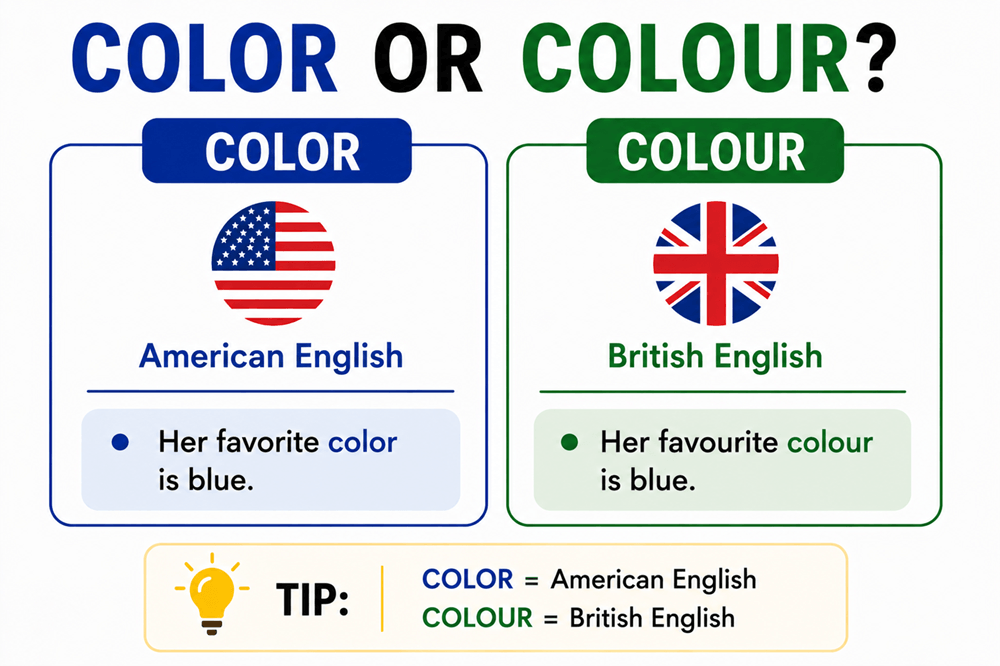
Color and colour are both correct spellings, but they belong to different forms of English. Color is the standard spelling in American English, while colour is the standard spelling in British English and many other English varieties. The meaning is the same. The easiest rule is this: use color for U.S. writing and colour for British-style writing.
Quick Answer
Use color without the u in American English.
- Correct: Her favorite color is blue.
- Correct: The room needs more color.
- Correct: He used a bright color for the logo.
Use colour with the u in British English.
- Correct: Her favourite colour is blue.
- Correct: The room needs more colour.
- Correct: He used a bright colour for the logo.
The simple rule is this: color is American, and colour is British. Both spellings are correct, but you should choose one spelling style and stay consistent.
Color or Colour: What Is the Difference?
The difference between color and colour is spelling, not meaning. Both words refer to the appearance of something as seen through light, such as red, blue, green, yellow, black, white, purple, or orange. Both can also be used as verbs, meaning to add color to something.
In American English, the word is spelled color. This shorter spelling is used in U.S. schools, newspapers, websites, product descriptions, business writing, and everyday communication.
In British English, the word is spelled colour. This spelling is also common in Australian English, Canadian English, New Zealand English, and other English varieties influenced by British spelling.
| Word | Best Use | Example |
|---|---|---|
| Color | American English | The color of the sky changed at sunset. |
| Colour | British English | The colour of the sky changed at sunset. |
If you are writing for a U.S.-focused audience, color is usually the better choice. If you are writing for a British-style audience, colour may look more natural.
What Does Color Mean?
Color is the American spelling of the word that describes the visual quality of something. It can refer to a shade, hue, tint, pigment, or general appearance. A color may be bright, dark, pale, bold, soft, warm, cool, natural, or artificial.
Examples:
- The color of the dress looked beautiful in sunlight.
- She painted the wall a warm color.
- The artist mixed several colors on the palette.
- The website uses color to make important buttons stand out.
Color can also be a verb. When you color something, you add color to it, fill it in, dye it, paint it, tint it, or influence its appearance.
- The child likes to color pictures with crayons.
- She decided to color her hair brown.
- The sunset colored the clouds pink.
- His personal experience colored the way he saw the issue.
In the final example, colored is used figuratively. It means his experience influenced his opinion or perception.
What Does Colour Mean?
Colour means the same thing as color. It can refer to a shade, hue, pigment, appearance, or visual quality. The only difference is that colour includes the extra u, which is the British-style spelling.
Examples:
- The colour of the dress looked beautiful in sunlight.
- She painted the wall a warm colour.
- The artist mixed several colours on the palette.
- The website uses colour to make important buttons stand out.
Colour can also be used as a verb in British English.
- The child likes to colour pictures with crayons.
- She decided to colour her hair brown.
- The sunset coloured the clouds pink.
- His personal experience coloured the way he saw the issue.
The meaning does not change. The spelling simply follows a different English tradition.
Is Colour Wrong?
Colour is not wrong. It is the standard spelling in British English and is widely used in many countries. You will often see colour in British books, newspapers, school materials, government documents, product labels, and websites.
However, colour may look unusual to American readers. In the United States, the spelling without the u is normally expected.
Compare these examples:
- American style: The color of the car is silver.
- British style: The colour of the car is silver.
Both sentences are correct. The better choice depends on the spelling style of the article, website, or document.
Is Color Wrong?
Color is not wrong. It is the standard spelling in American English. If you are writing for a U.S. audience, color is the safest and most natural spelling.
Examples:
- The color looks different under bright light.
- Choose a color that matches the furniture.
- The designer changed the color of the logo.
Some British readers may expect colour, but color is still understandable. It simply follows American spelling rules. For a U.S.-focused website like WordBriefs, color is usually the better default.
When to Use Color
Use color when writing in American English. This spelling is best for U.S. websites, school assignments, business emails, product pages, resumes, articles, social media captions, and general communication aimed at American readers.
Examples:
- What color should we paint the kitchen?
- The color red often feels bold and energetic.
- The printer can produce full-color images.
- She added more color to the drawing.
Use color if the rest of your writing uses American spellings like:
- favorite
- honor
- neighbor
- center
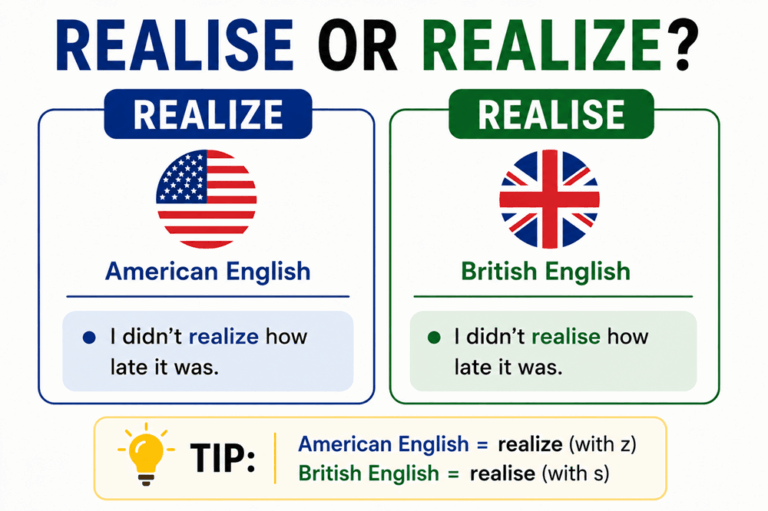
- realize
This keeps your writing consistent. If one sentence uses color and another uses favourite, the spelling style may feel mixed unless the shift is intentional.
When to Use Colour
Use colour when writing in British English or following a British-style spelling guide. This spelling is common in the United Kingdom, Australia, New Zealand, and many other English-speaking regions.
Examples:
- What colour should we paint the kitchen?
- The colour red often feels bold and energetic.
- The printer can produce full-colour images.
- She added more colour to the drawing.
Use colour if the rest of your writing uses British-style spellings like:
- favourite
- honour
- neighbour
- centre
- realise
The key is consistency. Do not switch between color and colour in the same article unless you are quoting someone or comparing the spellings directly.
Colored or Coloured?
The same regional difference appears in the past tense and adjective forms: colored and coloured.
Use colored in American English.
- The sky was colored orange at sunset.
- She used colored pencils for the drawing.
- The map had colored labels for each region.
Use coloured in British English.
- The sky was coloured orange at sunset.
- She used coloured pencils for the drawing.
- The map had coloured labels for each region.
Both forms are correct, but they should match the spelling style you are using.
Coloring or Colouring?
Coloring is the American spelling, and colouring is the British spelling.
American English:
- The child is coloring a picture.
- She bought a coloring book.
- Food coloring was added to the frosting.
British English:
- The child is colouring a picture.
- She bought a colouring book.
- Food colouring was added to the icing.
Again, the meaning is the same. The spelling depends on the audience and style of English.
Colorful or Colourful?
Colorful is the American spelling, and colourful is the British spelling. Both words mean full of color, bright, vivid, lively, or interesting.
American English:
- The garden looked colorful in spring.
- She wore a colorful scarf.
- The story includes many colorful characters.
British English:
- The garden looked colourful in spring.
- She wore a colourful scarf.
- The story includes many colourful characters.
In the phrase colorful characters or colourful characters, the word can mean vivid, unusual, lively, or memorable rather than literally full of color.
Colorless or Colourless?
Colorless is American English, and colourless is British English. Both words mean without color. They can also mean dull, plain, weak, or lacking personality.
American English:
- Water is usually colorless.
- The report felt colorless and dry.
- The gas was colorless and odorless.
British English:
- Water is usually colourless.
- The report felt colourless and dry.
- The gas was colourless and odourless.
These related words follow the same pattern as color and colour.
Color or Colour in Design and Art
In design and art writing, the spelling depends on the audience. A U.S.-based design article would usually use color. A British-style article would usually use colour.
American English:
- The designer chose a warm color palette.
- Color contrast improves readability.
- The painting uses color to create movement.
British English:
- The designer chose a warm colour palette.
- Colour contrast improves readability.
- The painting uses colour to create movement.
Both versions are correct. What matters most is matching the spelling style of the publication.
Color or Colour in Product Descriptions
Product descriptions should use the spelling expected by the target audience. For American customers, use color. For British customers, use colour.
American English:
- Available in three colors: black, white, and navy.
- Select your preferred color before checkout.
- The color may appear slightly different on screen.
British English:
- Available in three colours: black, white, and navy.
- Select your preferred colour before checkout.
- The colour may appear slightly different on screen.
For international websites, the best choice may depend on the version of the site. A U.S. store page may use color, while a U.K. store page may use colour.
Common Mistakes With Color and Colour
The most common mistake is thinking one spelling is always wrong. Both color and colour are correct. The difference is regional.
Another mistake is mixing both styles in one article.
Inconsistent:
- The color of the dress is soft blue. The colour looks different in daylight.
Better American consistency:
- The color of the dress is soft blue. The color looks different in daylight.
Better British consistency:
- The colour of the dress is soft blue. The colour looks different in daylight.
A third mistake is mixing related forms.
Inconsistent American-style writing:
- color, coloured, colorful
Better American-style writing:
- color, colored, colorful
Better British-style writing:
- colour, coloured, colourful
Consistency makes your writing look cleaner and more professional.
Examples of Color in Sentences
Here are examples of color used in American-style writing:
- The color of the ocean changed as the sun went down.
- She chose a soft color for the bedroom walls.
- The brand uses color to create a friendly feeling.
- He bought a color printer for the office.
- The child used every color in the crayon box.
- Her cheeks turned color after the cold walk.
- The designer changed the background color.
- That scarf adds color to a plain outfit.
In each sentence, color uses the American spelling without the u.
Examples of Colour in Sentences
Here are examples of colour used in British-style writing:
- The colour of the ocean changed as the sun went down.
- She chose a soft colour for the bedroom walls.
- The brand uses colour to create a friendly feeling.
- He bought a colour printer for the office.
- The child used every colour in the crayon box.
- Her cheeks turned colour after the cold walk.
- The designer changed the background colour.
- That scarf adds colour to a plain outfit.
These sentences mean the same thing as the American examples. Only the spelling changes.
How to Remember Color or Colour
A simple way to remember the difference is this:
- Color = American English
- Colour = British English
You can also remember that American English often uses shorter spellings:
- color
- honor
- favor
- neighbor
British English often keeps the u:
- colour
- honour
- favour
- neighbour
If your writing is for American readers, choose color. If your writing follows British spelling, choose colour. The most important rule is to keep the spelling style consistent throughout the same piece.
Final Answer
Color and colour are both correct spellings of the same word. They mean the same thing and can be used as nouns or verbs. The difference is regional: color is the standard spelling in American English, while colour is the standard spelling in British English.
The easiest rule is simple: use color for U.S. writing and colour for British-style writing. For a U.S.-focused website like WordBriefs, color is usually the safer default.