Bougie or Boujee: Correct Spelling, Slang Meaning, Difference, Usage, and Examples Explained
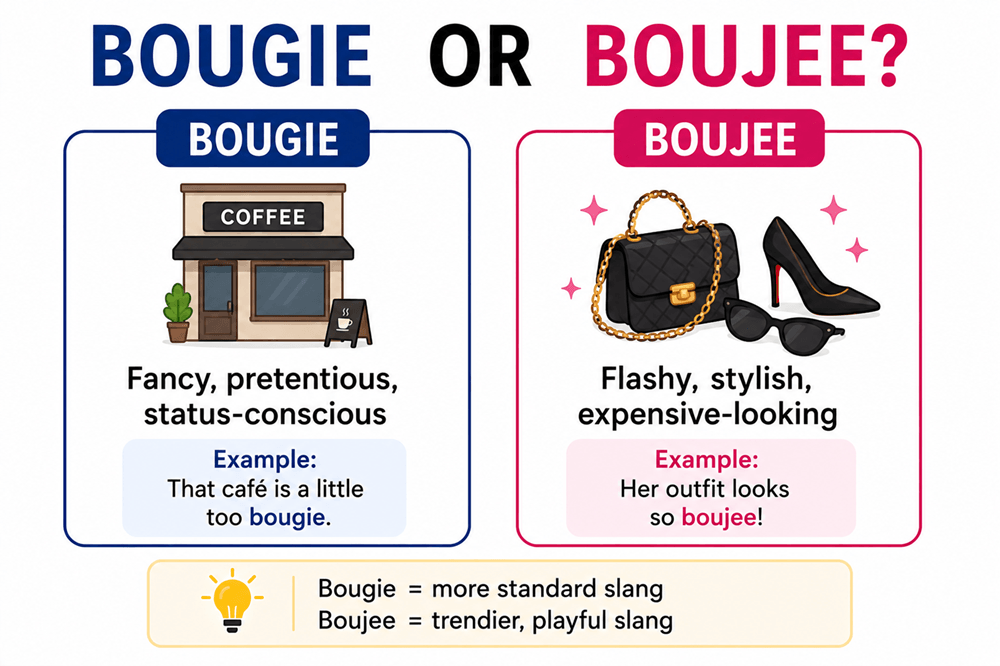
Bougie and boujee are both used in modern English, but they do not always carry the same tone. Bougie is the more established spelling and is connected to bourgeois, often meaning fancy, materialistic, pretentious, or trying to seem upper-class. Boujee is a newer slang spelling that usually suggests flashy, stylish, rich-looking, or high-maintenance in a playful way. The easiest rule is this: use bougie for the standard slang spelling and boujee when you want the modern pop-culture style.
Quick Answer
Use bougie when you mean fancy, pretentious, materialistic, or overly concerned with status.
- Correct: That restaurant is a little too bougie for me.
- Correct: She called the hotel bougie because everything was overpriced.
- Correct: He acts bougie whenever he talks about wine.
Use boujee when you want a trendier, flashier, more playful slang spelling.
- Correct: She looked boujee in that designer outfit.
- Correct: The party had a boujee rooftop vibe.
- Correct: They ordered the boujee brunch with champagne and gold flakes.
The simple rule is this: bougie is the more standard spelling. Boujee is a stylized slang version.
Bougie or Boujee: What Is the Difference?
The difference between bougie and boujee is spelling, tone, and cultural feel. Both words are informal, and both can describe someone or something that seems fancy, expensive, showy, or status-conscious. However, they are not always used in exactly the same way.
Bougie is the older and more widely recognized spelling. It comes from the word bourgeois, which historically refers to the middle class, especially people associated with comfort, property, respectability, and social status. In slang, bougie often means someone is acting fancy, snobby, materialistic, or too concerned with appearances.
Boujee is a newer slang spelling. It feels more playful, stylish, and pop-culture driven. It is often used to describe luxury, glamor, designer fashion, expensive taste, or a rich-looking lifestyle. Depending on the context, boujee can be positive, teasing, or lightly critical.
| Word | Main Use | Example |
|---|---|---|
| Bougie | Fancy, pretentious, status-conscious, or upper-middle-class | This café is cute, but it feels bougie. |
| Boujee | Flashy, stylish, expensive-looking, or glam slang | Her outfit is so boujee tonight. |
If you are writing a grammar or usage article, bougie is usually the safer main spelling. If you are writing social media copy, a caption, dialogue, or playful slang, boujee may fit better.
What Does Bougie Mean?
Bougie is an informal adjective that usually means fancy, pretentious, materialistic, or trying to seem upper-class. It can describe people, places, habits, tastes, restaurants, clothes, neighborhoods, events, or lifestyles.
Examples:
- That coffee shop is so bougie it charges extra for oat milk foam.
- He got bougie after moving to the expensive side of town.
- The wedding was beautiful, but a little bougie.
- She called the grocery store bougie because it only sold artisan snacks.
In these sentences, bougie suggests that something feels fancy or status-conscious. It may be used as a joke, a criticism, or a casual observation.
Bougie can be negative when it means snobbish or fake-fancy.
- He acted bougie and refused to eat at the diner.
- The menu felt bougie for no reason.
It can also be affectionate or playful.
- I know this candle is bougie, but it smells amazing.
- We had a bougie little picnic with sparkling water and fancy cheese.
The meaning depends heavily on tone. Someone can use bougie to criticize pretentiousness, but they can also use it jokingly to describe small luxuries.
What Does Boujee Mean?
Boujee is a slang spelling that usually means flashy, stylish, expensive-looking, glamorous, or luxuriously extra. It often sounds more playful than bougie. Instead of focusing only on pretentiousness, boujee often celebrates a certain rich-looking or high-style vibe.
Examples:
- She looked boujee in her sunglasses and fur-trimmed coat.
- The hotel lobby had a boujee marble-and-gold design.
- They served boujee cocktails with edible flowers.
- His birthday dinner was boujee but fun.
Boujee is especially common in casual writing, captions, music references, fashion commentary, lifestyle posts, and humorous descriptions of luxury. It may suggest confidence, flashiness, and expensive taste.
Examples:
- Feeling boujee after ordering dessert and espresso.
- This robe makes me feel boujee on a Tuesday morning.
- The vacation photos were giving boujee beach club energy.
While bougie can sound more judgmental, boujee often sounds more fun or self-aware. Still, both words can be teasing depending on how they are used.
Is Bougie Correct?
Yes, bougie is correct as informal slang. It is the more established spelling and the better choice when you want a recognizable, standard-looking form. It is especially useful when the meaning is connected to class, social status, pretentious behavior, or expensive taste.
Examples:
- The neighborhood has become more bougie over the years.
- That boutique is too bougie for my budget.
- He made a bougie comment about regular coffee.
Bougie is still informal. You would not normally use it in formal academic writing, legal writing, or professional reports unless you were discussing slang itself. In everyday writing, though, it is widely understood.
Is Boujee Correct?
Yes, boujee can be correct in casual slang, especially when you want a modern, stylish, pop-culture tone. It is not the traditional spelling, but it is widely recognized in informal contexts.
Examples:
- She planned a boujee girls’ night downtown.
- The restaurant looked boujee, but the food was worth it.
- He bought a boujee suitcase for one weekend trip.
Boujee is best for relaxed writing, captions, dialogue, entertainment content, and playful commentary. It may look too slangy in formal writing, but that is part of its style. It is meant to sound current and expressive.
When to Use Bougie
Use bougie when you want the more standard informal spelling. It works well when describing something that seems fancy, pretentious, upper-class, expensive, or overly concerned with appearances.
Examples:
- This restaurant is bougie, but the pasta is excellent.
- He became bougie after getting promoted.
- The apartment building has a bougie lobby with velvet chairs.
- She likes bougie skincare products in tiny glass jars.
Use bougie when your article is explaining the word, when you want the safer spelling, or when the tone is slightly critical.
Good uses of bougie include:
- bougie restaurant
- bougie neighborhood
- bougie coffee shop
- bougie lifestyle
- bougie attitude
- bougie taste
In these phrases, bougie suggests that something feels fancy, expensive, or status-oriented.
When to Use Boujee
Use boujee when you want a more playful, flashy, stylish, or modern slang tone. It often works well in captions, jokes, fashion descriptions, party descriptions, and casual lifestyle writing.
Examples:
- This outfit feels boujee in the best way.
- We had a boujee brunch with tiny pastries and champagne.
- Her apartment is small but boujee.
- The playlist gave the whole night a boujee mood.
Boujee usually sounds less formal and more expressive than bougie. It can feel proud, funny, dramatic, or self-mocking.
Good uses of boujee include:
- boujee brunch
- boujee outfit
- boujee vibes
- boujee hotel
- boujee night out
- boujee vacation
If your writing is casual and you want the word to feel trendier, boujee may be the better choice.
Bougie, Boujee, or Bourgeois?
Bougie, boujee, and bourgeois are related in meaning, but they are used differently.
| Word | Use | Example |
|---|---|---|
| Bourgeois | Formal word connected to middle-class values or social class | The essay discussed bourgeois culture. |
| Bougie | Informal slang for fancy, pretentious, or status-conscious | The café felt bougie. |
| Boujee | Stylized slang for flashy, glamorous, or rich-looking | The outfit looked boujee. |
Bourgeois is the formal root word. It is used in history, politics, sociology, economics, and literary criticism. Bougie is the casual slang form that developed from it. Boujee is a newer stylized spelling with a stronger pop-culture feel.
For most everyday writing, you probably want bougie or boujee, not bourgeois. Use bourgeois only when the formal class-related meaning is needed.
Is Bougie an Insult?
Bougie can be an insult, but it is not always one. It depends on tone, context, and relationship between speakers.
It can be critical:
- He is too bougie to eat regular pizza now.
- That place is bougie and overpriced.
It can also be teasing:
- You brought imported sparkling water? So bougie.
- This is my bougie little Sunday routine.
It can even be positive in a playful way:
- I love this bougie hotel robe.
- The dessert was bougie, but delicious.
If you are using bougie to describe a person, be careful. It can sound like you are calling them snobbish, fake, or overly concerned with status. If you are using it about an object, place, meal, or outfit, it is usually safer and more playful.
Is Boujee an Insult?
Boujee is usually less harsh than bougie, but it can still be teasing. It often sounds more stylish, playful, or glamorous. Someone might call an outfit, dinner, party, or vacation boujee as a compliment or a joke.
Examples:
- This hotel is so boujee, and I love it.
- She looked boujee without even trying.
- We had a boujee picnic with tiny sandwiches and sparkling juice.
However, it can still suggest someone is showing off or trying too hard.
- He got boujee after one designer purchase.
- That party was boujee in a slightly ridiculous way.
Like many slang words, boujee depends on delivery. In friendly contexts, it often sounds funny or admiring. In critical contexts, it can sound judgmental.
Common Mistakes With Bougie and Boujee
The most common mistake is thinking that only one spelling can exist. In reality, both spellings are used, but they have different tones.
Another mistake is using boujee in formal writing where bougie or another word would be clearer.
Too casual:
- The proposal criticized boujee consumer habits.
Clearer:
- The proposal criticized materialistic consumer habits.
A third mistake is using either word without thinking about tone. Both bougie and boujee can sound judgmental if aimed at a person.
Potentially rude:
- You are so bougie now.
More playful:
- This dessert is so bougie.
If you want to avoid sounding insulting, use the word for things, places, outfits, or experiences rather than directly labeling a person.
Examples of Bougie in Sentences
Here are examples of bougie used correctly:
- The restaurant was bougie, but the food was amazing.
- She bought a bougie candle that cost more than lunch.
- That grocery store feels bougie compared with the old one.
- He started acting bougie after moving downtown.
- The wedding had a bougie black-tie dress code.
- I like this bougie coffee, even if it is overpriced.
- The hotel lobby looked bougie with marble floors and gold lights.
- They teased him for his bougie taste in bottled water.
In these sentences, bougie suggests fancy, expensive, pretentious, or status-conscious.
Examples of Boujee in Sentences
Here are examples of boujee used correctly in casual slang:
- Her birthday dinner was boujee in the best way.
- That velvet suit looks boujee.
- We planned a boujee spa day at home.
- The rooftop bar had boujee city views.
- She made instant noodles look boujee with herbs and chili oil.
- The vacation rental was small but boujee.
- He wore sunglasses indoors and called it boujee.
- The party had a boujee champagne-wall entrance.
In these sentences, boujee sounds flashy, stylish, playful, or glam.
Better Alternatives to Bougie or Boujee
Sometimes bougie or boujee may be too informal. If you are writing in a more polished or neutral tone, you can choose another word.
Alternatives for bougie include:
- pretentious
- fancy
- expensive
- status-conscious
- materialistic
- upper-class
- luxury-focused
Alternatives for boujee include:
- glamorous
- flashy
- stylish
- luxurious
- high-end
- extra
- lavish
For example, instead of writing a bougie restaurant, you could write a high-end restaurant. Instead of a boujee outfit, you could write a glamorous outfit. The best choice depends on how casual or polished you want the sentence to sound.
How to Remember Bougie or Boujee
A simple way to remember the difference is this:
- Bougie = standard slang spelling, often fancy or pretentious
- Boujee = stylized slang spelling, often flashy or glamorous
- Bourgeois = formal root word related to class
You can also remember that bougie looks closer to bourgeois. That makes it the better spelling when discussing class, status, or pretentious taste. Boujee looks more playful and modern, which makes it better for captions, fashion, parties, and glam slang.
If you are unsure, choose bougie. It is the more established spelling and works in more contexts.
Final Answer
Bougie and boujee are both used in informal English. Bougie is the more established spelling and usually means fancy, pretentious, materialistic, or status-conscious. Boujee is a newer slang spelling that often means flashy, stylish, glamorous, rich-looking, or playfully high-end.
The easiest rule is simple: use bougie for the standard slang spelling, especially when the meaning is connected to class or pretentiousness. Use boujee when you want a trendier, more playful, pop-culture style. In formal writing, choose clearer alternatives like pretentious, fancy, luxurious, or high-end.