Alum or Alumni: Difference, Correct Usage, Singular, Plural, and Memory Tips Explained
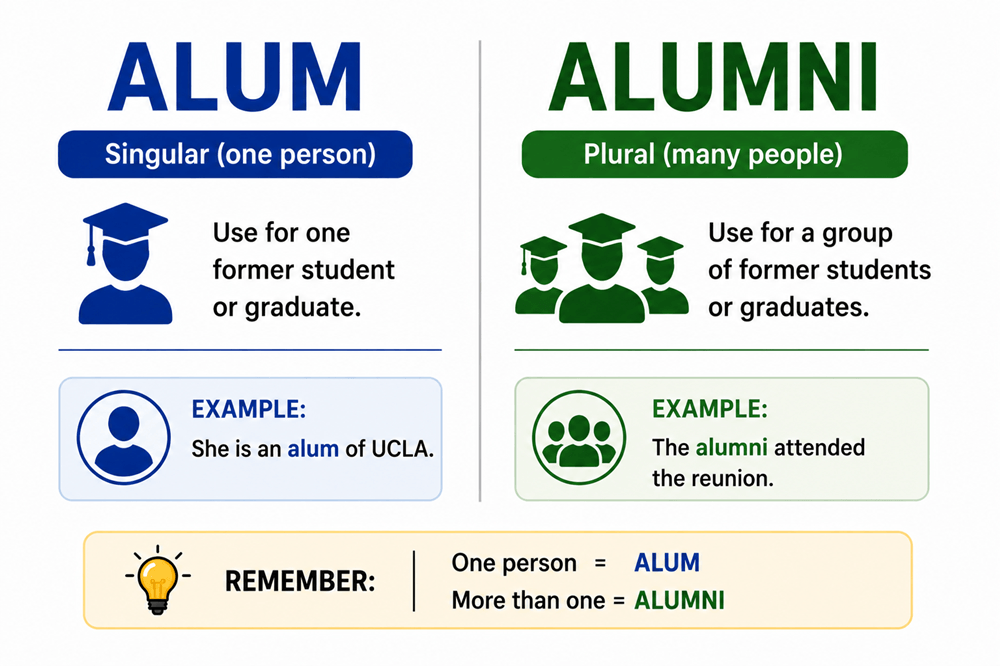
Alum and alumni are both correct, but they are not used the same way. Alum is an informal singular word for one former student or graduate. Alumni is usually plural and means a group of former students or graduates. The simplest rule is: one person is an alum; many people are alumni.
Quick Answer
Use alum when talking about one former student or graduate in a casual or gender-neutral way.
- She is an alum of the university.
- He is a proud alum of the program.
- As an alum, I still attend campus events.
Use alumni when talking about more than one former student or a graduate group.
- The alumni returned for homecoming.
- The school invited alumni to the fundraiser.
- Our alumni network is very active.
The simple rule is: alum is singular; alumni is plural.
Alum or Alumni: What Is the Difference?
The difference between alum and alumni is number and tone. Alum refers to one person and sounds modern, casual, and gender-neutral. Alumni refers to a group of graduates or former students and is common in schools, universities, professional programs, and organizations.
| Word | Meaning | Example |
|---|---|---|
| Alum | One former student or graduate | She is an alum of Yale. |
| Alumni | More than one former student or graduate | Many alumni attended the event. |
If you are talking about one person, alum is usually the easiest modern choice. If you are talking about a group, use alumni.
What Does Alum Mean?
Alum is an informal word for a former student, graduate, or former member of a school, college, university, program, organization, or company. It is often used because it avoids the older gender-specific forms alumnus and alumna.
Examples:
- She is an alum of the drama club.
- He is a Stanford alum.
- The podcast interviewed an alum from the first graduating class.
- As an alum, she mentors current students.
- The company invited a former intern alum to speak.
Alum is especially useful when you do not want to specify gender. It sounds natural in modern writing, especially in articles, bios, social media, school newsletters, and casual professional profiles.
What Does Alumni Mean?
Alumni usually means a group of former students or graduates. It is traditionally the plural of alumnus, but in modern English it is often used for groups of any gender.
Examples:
- The alumni gathered for the reunion.
- The university has successful alumni around the world.
- Alumni were invited to apply for the mentorship program.
- The alumni association raised money for scholarships.
- Several alumni spoke to the graduating class.
Alumni is common in formal school language. You will often see it in phrases such as alumni network, alumni association, alumni event, and alumni directory.
Is “I Am an Alumni” Correct?
I am an alumni is common in casual speech, but it is not the best standard form because alumni is plural. One person should not usually call themselves an alumni.
Less correct:
- I am an alumni of that college.
Better:
- I am an alum of that college.
- I am an alumnus of that college.
- I am an alumna of that college.
For modern, simple writing, I am an alum is usually the best choice. It is clear, short, and gender-neutral.
Alum, Alumnus, Alumna, Alumni, and Alumnae
The full set of forms can look confusing because the words come from Latin. Here is the easiest way to understand them.
| Word | Use | Example |
|---|---|---|
| Alum | One person, informal and gender-neutral | She is an alum. |
| Alumnus | One male graduate; sometimes one graduate generally | He is an alumnus. |
| Alumna | One female graduate | She is an alumna. |
| Alumni | Plural group, often mixed or general | The alumni attended. |
| Alumnae | Plural group of female graduates | The alumnae gathered. |
For everyday writing, you usually need only two forms: alum for one person and alumni for a group.
Spelling Structure: Why Alumni Is Plural
Alumni ends in -i because it comes from a Latin plural pattern. That is why it does not form the plural by simply adding s.
- one alumnus
- many alumni
This spelling can feel unusual because many English plurals end in s, such as students, graduates, and members. But alumni already means more than one, so you do not need to write alumnis. That form is incorrect.
Correct:
- Many alumni attended.
Incorrect:
- Many alumnis attended.
When to Use Alum
Use alum when referring to one person, especially in a modern or casual context.
- She is a Harvard alum.
- The article featured an alum from the program.
- He became an active alum after graduation.
- That alum donated books to the school library.
Alum is also helpful when you want to avoid choosing between alumnus and alumna. It keeps the sentence simple and inclusive.
When to Use Alumni
Use alumni for a group of former students, graduates, or members.
- The alumni were invited to campus.
- The college honors outstanding alumni every year.
- Our alumni help students find internships.
- The event is open to students and alumni.
You can also use alumni before another noun, as in alumni event or alumni network. In that case, alumni describes the kind of event or network.
Common Mistakes
The most common mistake is using alumni for one person.
Incorrect:
- She is an alumni of the school.
- He is a famous alumni.
Correct:
- She is an alum of the school.
- He is a famous alum.
Another mistake is using alumni as if it needs another plural ending.
Incorrect:
- The alumnis returned for reunion weekend.
Correct:
- The alumni returned for reunion weekend.
How to Remember Alum and Alumni
Use these memory tips:
- Alum is short, so use it for one person.
- Alumni is longer, so use it for a group.
- Alumni already means plural, so do not add s.
- For modern writing, use alum instead of worrying about alumnus or alumna.
A simple memory sentence is: One alum, many alumni.
You can also remember it this way: Alum is one; alumni is the community.
Final Answer
Alum means one former student, graduate, or member. It is informal, modern, and gender-neutral. Example: She is an alum of the university.
Alumni means a group of former students or graduates. Example: The alumni attended the reunion.
To remember the difference, use this rule: one alum, many alumni. Avoid saying an alumni for one person in polished writing.