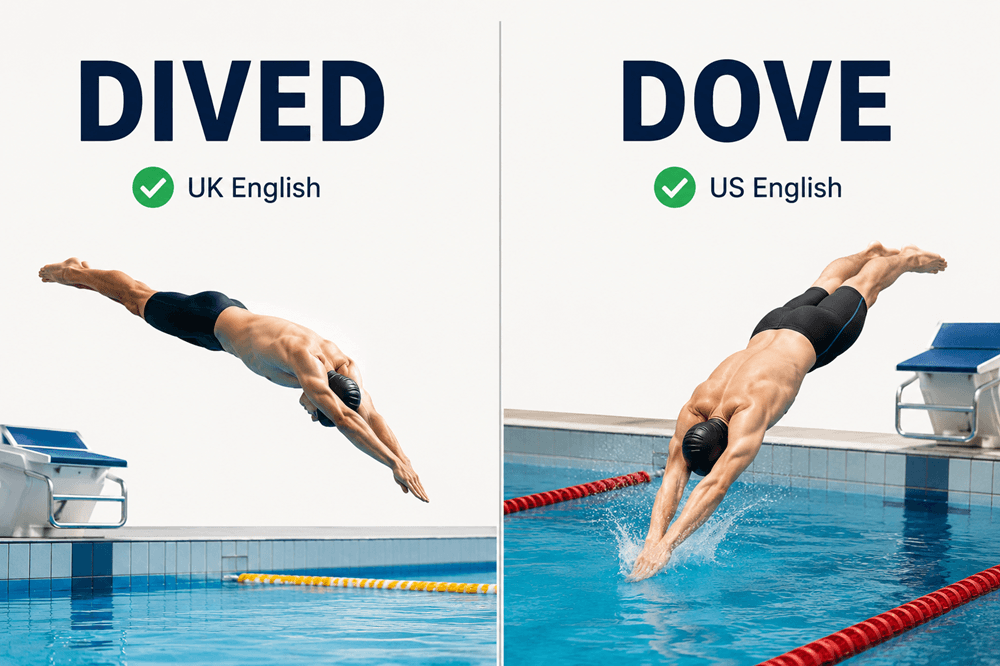
Dived or Dove: Which Word Is Correct?
Dived and dove can both be correct as the past tense of dive.
The difference is mostly regional and stylistic.
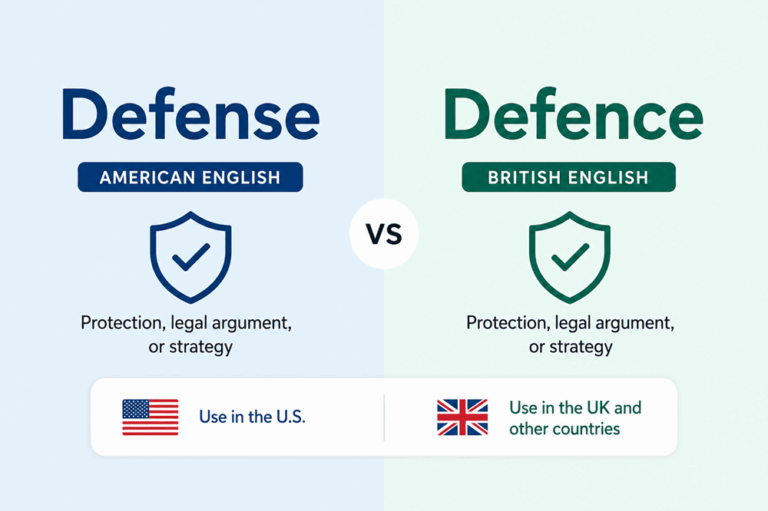
In American English, dove is very common as the past tense of dive.
In British English, dived is usually preferred.
Examples:
- American English: She dove into the pool.
- British English: She dived into the pool.
- He dived under the table to grab the phone.
- The swimmer dove into the water.
Neither word is automatically wrong. The better choice depends on your audience, your style, and sometimes the meaning of the sentence.
Quick Answer
Use dove if you are writing in American English and describing someone jumping or plunging into water.
Use dived if you are writing in British English or if you want the more regular past-tense form.
Both are acceptable:
- She dove into the lake.
- She dived into the lake.
However, be careful: dove can also mean a bird. When used as a bird, dove is pronounced differently from the past-tense verb in many accents.
What Does Dived Mean?
Dived is the regular past tense of dive.
It follows the normal English pattern:
dive + d = dived
Examples:
- He dived into the pool.
- The athlete dived for the ball.
- She dived under the desk during the drill.
- The company’s profits dived after the scandal.
Dived can describe a physical movement into water, a quick movement downward, or a sudden drop.
It can also be used figuratively.
Examples:
- He dived into the research.
- The stock price dived overnight.
- She dived into the project with energy.
Because dived is regular, it is easy to understand and widely accepted.
What Does Dove Mean?
Dove is an irregular past tense of dive. It is especially common in American English.
Examples:
- She dove into the swimming pool.
- The goalkeeper dove to block the shot.
- He dove behind the couch.
- The children dove into the waves.
In American English, dove often sounds natural when the sentence describes a quick, dramatic movement.
However, dove can also be a noun meaning a bird.
Example:
- A white dove flew across the sky.
This bird word is not the same meaning as the past tense of dive, even though the spelling is the same.
Dived vs Dove: The Main Difference
The main difference is usage:
Dived = regular past tense, common in British English and accepted everywhere
Dove = irregular past tense, common in American English
Examples:
- U.S.: She dove into the pool.
- U.K.: She dived into the pool.
Both sentences mean the same thing.
The word dived may feel more formal, traditional, or international. The word dove may feel more natural and conversational to many American readers.
Is Dove Wrong?
No. Dove is not wrong when it is used as the past tense of dive, especially in American English.
Correct:
- He dove into the lake.
- She dove for cover.
- The player dove across the line.
However, in British English, dove may look more American. British writers usually prefer dived.
So if your audience is mainly in the U.K., dived is the safer choice.
Is Dived Wrong?
No. Dived is also correct.
It is the regular past-tense form and is common in British English. It is also acceptable in American English, especially in more formal writing.
Correct:
- The diver dived from the platform.
- The stock market dived after the report.
- She dived into the details of the case.
In American English, dived may sound a little less casual than dove, but it is still correct.
Dived or Dove Into?
Both dived into and dove into can be correct.
Literal meaning:
- She dived into the pool.
- She dove into the pool.
Figurative meaning:
- He dived into the documents.
- He dove into the documents.
For figurative uses, many writers prefer dived into, especially in polished or formal writing.
Example:
- The journalist dived into the records.
This sounds slightly more controlled than:
- The journalist dove into the records.
Both are understandable, but dived into may feel more neutral in formal articles.
Dived or Dove for the Ball?
Both can work.
Examples:
- The goalkeeper dived for the ball.
- The goalkeeper dove for the ball.
In sports writing, dove is very common in American English because it gives a strong sense of sudden movement.
Example:
- The player dove across the goal line.
In British English, dived is more common:
- The player dived across the goal line.
Again, the difference is not meaning. It is style and region.
How to Remember the Difference
A simple memory trick:
Dived follows the normal past-tense rule.
Think:
dive → dived
If you want the safest, most regular spelling, choose dived.
For dove, think:
dove is the American-style past tense of dive.
You can remember it like this:
American English often says: dive, dove, dived.
British English usually says: dive, dived, dived.
Another helpful reminder:
Dove can also be a bird.
So if the word appears in a sentence about flying, peace, or feathers, it is probably the bird.
Example:
- The dove flew away.
If the word appears in a sentence about jumping, plunging, falling, or moving quickly, it may be the past tense of dive.
Example:
- He dove into the water.
Spelling Structure
The word dived is spelled:
d-i-v-e-d
It keeps the full word dive and adds d.
The word dove is spelled:
d-o-v-e
This spelling is shorter, but it can be confusing because it is also the spelling of the bird dove.
That is why context matters.
Examples:
- The swimmer dove into the pool.
- The white dove landed on the roof.
The spelling is the same, but the meaning is different.
Common Mistakes
Mistake 1: Thinking only one form is correct
Incorrect idea:
- Dove is always wrong.
Correct idea:
- Dove is common and accepted in American English.
Incorrect idea:
- Dived is wrong because people say dove.
Correct idea:
- Dived is also correct and is preferred in British English.
Mistake 2: Mixing regional styles
Inconsistent:
- The swimmer dove into the pool, then dived again.
Better:
- The swimmer dove into the pool, then dove again.
Or:
- The swimmer dived into the pool, then dived again.
Choose one style and stay consistent.
Mistake 3: Confusing dove the verb with dove the bird
- The dove flew into the tree.
- The swimmer dove into the pool.
The first sentence uses dove as a bird.
The second sentence uses dove as the past tense of dive.
Example Sentences
American English:
- She dove into the deep end.
- The goalie dove to the left.
- He dove under the table.
- The kids dove into the waves.
British English or more regular style:
- She dived into the deep end.
- The goalie dived to the left.
- He dived under the table.
- The kids dived into the waves.
Figurative use:
- The reporter dived into the story.
- The team dove into the project after lunch.
- Prices dived after the announcement.
Final Answer: Dived or Dove?
Dived and dove are both correct past-tense forms of dive.
Use dove in American English, especially for a quick physical action.
Use dived in British English or when you want the more regular, formal, or widely accepted spelling.
The easiest way to remember it is:
Dived = regular form
Dove = common American past tense
For U.S. writing, dove often sounds natural. For British or international writing, dived is usually the safer choice.