Imbedded or Embedded: Correct Spelling, Meaning, Usage, Examples, and Memory Tips Explained
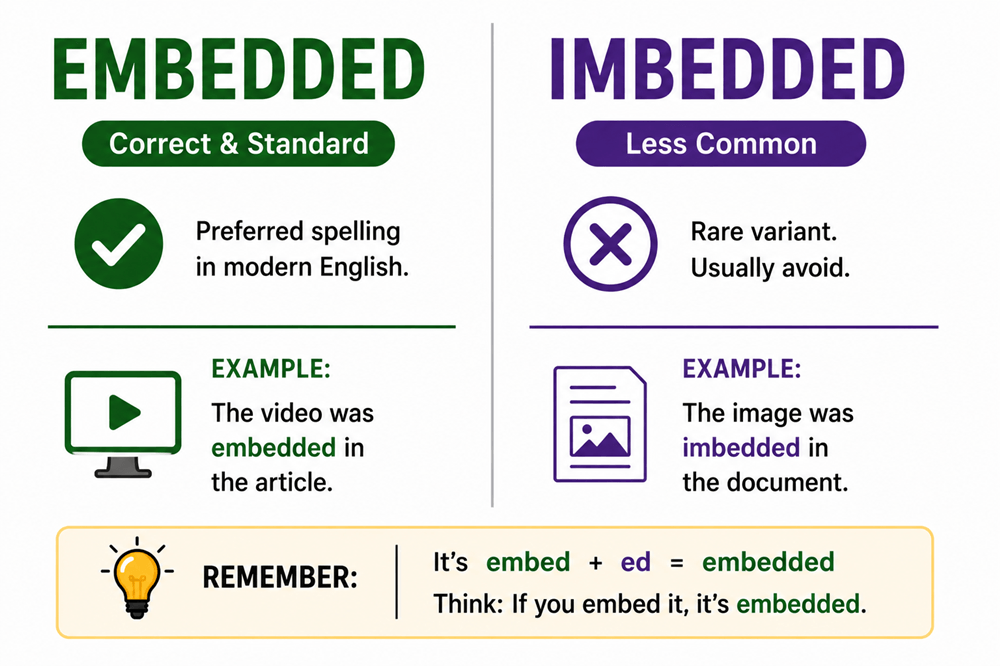
Embedded is the preferred and standard spelling in modern English. Imbedded is an older, less common variant, but most readers and editors expect embedded. Use embedded when something is fixed deeply in something else, included within a system, placed inside a file, or strongly established in a person’s mind, culture, or routine.
Quick Answer
Use embedded in almost all modern writing.
- The video was embedded in the article.
- A tiny stone was embedded in the tire.
- The habit became embedded in her daily routine.
Imbedded is a rare variant and usually not the best choice.
- Less common: The image was imbedded in the document.
- Preferred: The image was embedded in the document.
The simple rule is: embedded is the standard spelling; imbedded is uncommon and usually avoidable.
Imbedded or Embedded: What Is the Difference?
The difference between imbedded and embedded is mostly spelling and common usage. Both words can mean placed firmly inside something, but embedded is the spelling used most often today. It is the better choice for schoolwork, articles, business writing, software language, journalism, and everyday communication.
| Word | Status | Example |
|---|---|---|
| Embedded | Preferred modern spelling | The link was embedded in the page. |
| Imbedded | Rare variant | The link was imbedded in the page. |
If you are unsure which one to use, choose embedded. It will look correct to the widest audience.
What Does Embedded Mean?
Embedded is the past tense and past participle of embed. It means placed, fixed, inserted, or deeply set into something else. The word can be literal or figurative.
Literal examples:
- The nail was embedded in the wood.
- Shells were embedded in the wet sand.
- The bullet was embedded in the wall.
Digital or technical examples:
- The chart was embedded in the report.
- The website has an embedded video.
- The code was embedded in the page.
Figurative examples:
- The belief was embedded in the culture.
- Fear became embedded in his memory.
- The rule is embedded in company policy.
In all of these cases, embedded suggests that something is not just lightly attached. It is placed inside, built in, or deeply established.
What Does Imbedded Mean?
Imbedded is a less common spelling of embedded. It means the same thing, but it can look outdated or unusual to modern readers.
Examples:
- Rare: The object was imbedded in the clay.
- Preferred: The object was embedded in the clay.
- Rare: The audio file was imbedded in the presentation.
- Preferred: The audio file was embedded in the presentation.
Because imbedded is so uncommon, many readers may assume it is a typo. For clean and modern writing, embedded is almost always better.
Spelling Structure: Why Embedded Uses Em
The standard word is built from the verb embed:
- embed + ded = embedded
More simply, remember the base word:
- embed → embedded
- embed → embedding
- embed → embeds
The spelling starts with em, not im:
- Correct: embedded
- Less common: imbedded
The important memory clue is that embedded belongs to the embed word family. If the base verb is embed, the past form should be embedded.
Why Is the D Doubled in Embedded?
Embedded has a double d because the base word embed ends in d, and the past tense ending also begins with d.
- embed + ed = embedded
When you add -ed, the final d of embed stays. Then the d from -ed is added. That gives you:
- embed + ed = embedded
This makes the middle of the word look heavy, but it is correct:
- em + bed + ded = embedded
Do not write embeded. The correct form has two d letters together: embedded.
Why People Write Imbedded
People may write imbedded because English has many words that begin with im-, such as impossible, improper, imperfect, and important. Because im is familiar, imbedded can look believable.
Another reason is pronunciation. In quick speech, the first syllable of embedded may sound close to im. But the spelling most readers expect is still embedded.
When to Use Embedded
Use embedded when something is physically stuck inside something else.
- A thorn was embedded in his finger.
- The roots were embedded deep in the soil.
- Glass was embedded in the pavement.
Use embedded in technology and media writing.
- The post includes an embedded image.
- The form was embedded on the website.
- The embedded file opened automatically.
Use embedded for ideas, habits, rules, and beliefs that are deeply established.
- The tradition is embedded in the community.
- The lesson became embedded in her thinking.
- Those values are embedded in the organization.
Common Mistakes
A common mistake is using imbedded when embedded would be clearer and more standard.
Less preferred:
- The video was imbedded in the blog post.
Preferred:
- The video was embedded in the blog post.
Another common mistake is spelling the word as embeded with only one d in the middle.
Incorrect:
- The file was embeded in the page.
Correct:
- The file was embedded in the page.
How to Remember Embedded
Use these memory tips:
- Embedded comes from embed.
- Embed starts with em, so embedded starts with em.
- Embedded has double d: embed + ed.
- Imbedded is rare, so use embedded for modern writing.
A simple memory sentence is: If you embed it, it becomes embedded.
You can also remember the structure visually:
- embed + ed = embedded
Final Answer
Embedded is the preferred modern spelling. It means fixed, inserted, included, or deeply established inside something. Example: The video was embedded in the article.
Imbedded is a rare variant with the same meaning, but it is not the best choice for most writing.
To remember the correct spelling, focus on the base word: embed. If you embed something, it becomes embedded.