Flyer or Flier: Correct Spelling, Meaning, Regional Usage, and Examples Explained Clearly
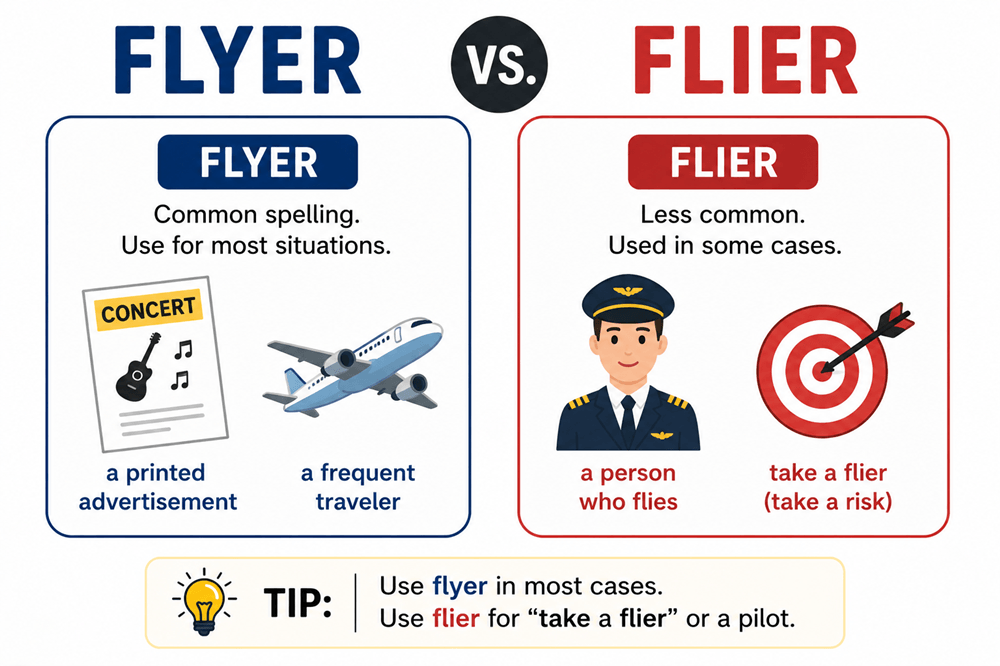
Flyer and flier can both be correct, but flyer is the more common spelling in most modern writing. Use flyer for a printed advertisement, a person who flies often, or something connected with flying. Flier is a less common variant, though it still appears in some phrases and writing styles.
Quick Answer
Use flyer in most everyday situations.
- She handed out a flyer for the concert.
- He is a frequent flyer.
- The company printed colorful flyers.
Flier can also mean a person or thing that flies, but it is less common today.
- The young pilot was a skilled flier.
- He decided to take a flier on a risky investment.
The simple rule is: flyer is the safer spelling for most uses. Flier is a valid but less common variant.
Flyer or Flier: What Is the Difference?
The difference between flyer and flier is mostly spelling and common usage. Both words can refer to a person or thing that flies. However, flyer is now the spelling most readers expect in everyday English, especially when talking about a printed advertisement or promotional sheet.
Flyer is commonly used for a paper notice, handout, advertisement, airline customer, flying person, or flying object.
Flier is a variant spelling. It may appear when referring to a pilot, someone who flies, or the phrase take a flier, which means to take a risk. Still, in many ordinary sentences, flyer will look more natural.
| Word | Main Use | Example |
|---|---|---|
| Flyer | Common modern spelling; advertisement, traveler, person who flies | She posted a flyer on the wall. |
| Flier | Less common variant; sometimes used for a person who flies or a risk | He took a flier on the new idea. |
If you are unsure which spelling to use, choose flyer. It is clear, familiar, and widely accepted.
What Does Flyer Mean?
Flyer has several common meanings. Most often, it means a printed sheet used to advertise, announce, or promote something. A flyer might advertise a concert, yard sale, missing pet, school event, business service, restaurant special, or community meeting.
Examples:
- The store handed out a flyer with coupons.
- She designed a flyer for the charity event.
- The lost dog flyer included a photo and phone number.
- They posted flyers around campus.
Flyer can also mean a person who flies, especially someone who travels by airplane.
- He is a frequent flyer.
- The airline offers rewards for loyal flyers.
- Nervous flyers may prefer aisle seats.
In these sentences, flyer is the normal spelling. It works well for both advertising and air travel.
What Does Flier Mean?
Flier is another spelling of flyer in some uses. It can mean a person or thing that flies.
Examples:
- The pilot was an experienced flier.
- The bird is a fast flier.
- The new aircraft proved to be a strong flier.
These sentences are understandable, and flier is not automatically wrong. However, many modern readers are more used to seeing flyer. That means flier can sometimes look unusual, especially in casual writing.
Flier is also common in the phrase take a flier. This means to take a chance, make a risky choice, or try something uncertain.
- She took a flier on a small startup.
- He took a flier and invested in the idea.
In that phrase, flier is often the spelling people expect.
Flyer for a Printed Advertisement
When you mean a small printed advertisement or notice, flyer is the best spelling.
Examples:
- The restaurant printed a flyer for its lunch specials.
- She made a flyer for the school play.
- The gym mailed a flyer to nearby homes.
- He taped a flyer to the window.
This is one of the clearest uses of flyer. If your sentence is about a handout, poster, notice, ad, mailer, or event sheet, use flyer, not flier.
Flyer for a Person Who Travels by Air
Flyer is also common for someone who travels by airplane.
Examples:
- She is a nervous flyer.
- He became a frequent flyer after changing jobs.
- The airline rewards regular flyers.
- First-time flyers may need extra help at the airport.
The phrase frequent flyer is especially common. It refers to a person who flies often, usually with an airline rewards account or loyalty program.
Correct:
- She joined the airline’s frequent flyer program.
Less common:
- She joined the airline’s frequent flier program.
Both may be understood, but frequent flyer is the more familiar spelling for many readers.
Flier in “Take a Flier”
The phrase take a flier means to take a risk or try something uncertain. It is often used in business, investing, gambling, sports, and casual decision-making.
Examples:
- He took a flier on the new company.
- The coach took a flier on an unknown player.
- She took a flier and bought the old house.
This phrase is different from a printed flyer. If you are talking about a risk, chance, or gamble, flier is often the better spelling.
Flyer vs Flier as a Person Who Flies
Both flyer and flier can describe a person who flies, but flyer is usually more common in everyday language.
Common:
- He is a frequent flyer.
- She is a confident flyer.
Also possible:
- He is an experienced flier.
- She is a skilled flier.
If the sentence is about an airline passenger or travel habit, flyer will usually look best. If the sentence has a more formal, aviation-focused, or older style, flier may also work.
Flyers or Fliers?
The plural forms are flyers and fliers. Just like the singular forms, flyers is more common in most everyday uses.
Use flyers for printed ads or notices:
- The volunteers handed out flyers.
- The business printed 500 flyers.
- They posted flyers around town.
Use flyers for airline passengers or people who fly often:
- The airport was full of tired flyers.
- Frequent flyers know how to pack quickly.
Fliers can still appear as a plural variant, especially for people or things that fly, but it is less common.
- The birds are graceful fliers.
- The pilots were experienced fliers.
Examples of Flyer in Sentences
Here are natural examples of flyer used correctly:
- The band made a flyer for its next show.
- She handed me a flyer outside the store.
- The school sent home a flyer about the fundraiser.
- He is a frequent flyer with the airline.
- The airline gave loyal flyers early boarding.
- The missing-cat flyer was posted near the mailboxes.
- Designing a good flyer takes clear wording and strong visuals.
- The company distributed flyers downtown.
In these examples, flyer is the natural modern spelling.
Examples of Flier in Sentences
Here are examples of flier used correctly:
- The pilot was a fearless flier.
- The hawk is a powerful flier.
- He took a flier on a risky stock.
- The team took a flier on a rookie player.
- She was known as a careful flier.
These uses are valid, but they are more specific. For most general writing, flyer will be the clearer choice.
Common Mistakes to Avoid
The biggest mistake is using flier for a printed advertisement when flyer would be more standard.
Less common:
- We designed a flier for the sale.
Better:
- We designed a flyer for the sale.
Another mistake is assuming flier is always wrong. It is not. It can work for a person or thing that flies, and it is common in the phrase take a flier.
Correct:
- The investor took a flier on the new business.
The safest approach is simple: use flyer for ads, handouts, airline passengers, and most everyday uses. Use flier mainly when a phrase or style guide calls for it.
How to Remember Flyer or Flier
Here is an easy way to remember the difference:
Flyer has fly in it, and it is the common spelling for most things related to flying or printed flyers.
- Flyer = printed ad, handout, passenger, common spelling
- Flier = less common variant, sometimes a pilot or risk phrase
You can also remember this sentence:
Hand out a flyer; take a flier on a risk.
If your sentence is about a paper advertisement, use flyer. If your sentence is about taking a risky chance, flier may be the better fit.
Final Answer
Flyer and flier can both be correct, but flyer is the more common modern spelling. Use flyer for a printed advertisement, handout, airline passenger, frequent flyer, or most everyday references to flying. Use flier when following a specific style preference or in the phrase take a flier, meaning to take a risk. When in doubt, choose flyer.