Tumeric or Turmeric: Correct Spelling, Meaning, Uses, and Everyday Examples for Writers
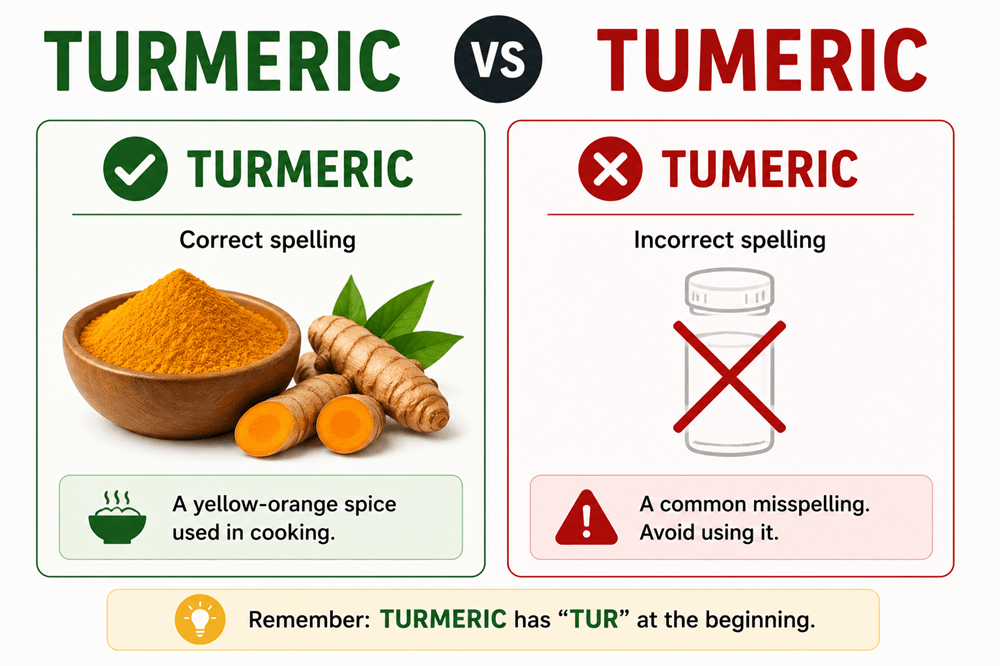
The correct spelling is turmeric. Tumeric is a common misspelling and should be avoided in standard English. The word turmeric refers to a yellow-orange spice often used in cooking, especially in curry powders, soups, rice dishes, teas, and seasoning blends. The spelling can be confusing because many people pronounce it as if the first r is missing, but the correct written form includes that r: turmeric.
Quick Answer
Use turmeric, not tumeric.
- Correct: Add a teaspoon of turmeric to the soup.
- Incorrect: Add a teaspoon of tumeric to the soup.
Turmeric is the standard spelling of the spice. Tumeric is a misspelling.
Tumeric or Turmeric: Which One Is Correct?
Turmeric is correct. Tumeric is not the standard spelling.
This mistake is very common because the word is not always pronounced exactly the way it is spelled. Some speakers say it closer to too-mer-ik, which can make the spelling tumeric seem natural. However, the correct word has an r after tu.
| Word | Correct? | Meaning |
|---|---|---|
| Turmeric | Yes | A yellow-orange spice used in cooking and seasoning |
| Tumeric | No | A common misspelling of turmeric |
If you are writing a recipe, grocery list, article, restaurant menu, food label, or product description, use turmeric.
What Does Turmeric Mean?
Turmeric is a spice made from the root of the turmeric plant. It is usually bright yellow or orange when ground into powder. It has an earthy, warm, slightly bitter flavor and is commonly used in South Asian, Middle Eastern, Southeast Asian, and global cooking.
You may see turmeric in:
- curry powder
- rice dishes
- soups
- stews
- marinades
- tea blends
- golden milk
- seasoning mixes
- smoothies
The word can refer to the fresh root or the dried ground spice.
Examples:
- The recipe calls for ground turmeric.
- Fresh turmeric can stain your fingers yellow.
- She added turmeric to the rice for color and flavor.
- The spice blend contains cumin, coriander, ginger, and turmeric.
Why Tumeric Is Incorrect
Tumeric is incorrect because it leaves out the first r in turmeric. The correct spelling has two rs:
- t-u-r-m-e-r-i-c
The spelling mistake usually happens because the first r can be hard to hear. When people say the word quickly, turmeric may sound like tumeric. But pronunciation does not change the spelling.
Think of the correct spelling this way:
- tur + meric = turmeric
The word is not spelled tu + meric. It needs the r after tu.
How to Pronounce Turmeric
Turmeric is commonly pronounced in more than one way. Some people clearly pronounce the first r, while others say it in a way that sounds closer to too-mer-ik.
That difference in pronunciation is one reason the misspelling tumeric is so common. Even if you hear someone say it without a strong r sound, the correct spelling is still turmeric.
For writing, the rule is simple:
- Say it however is natural in your accent.
- Spell it turmeric.
Examples of Turmeric in Sentences
Here are natural examples of turmeric used correctly:
- Add turmeric to the rice for a golden color.
- The soup has ginger, garlic, and turmeric.
- She bought fresh turmeric at the market.
- Ground turmeric is often used in curry powder.
- The sauce gets its yellow color from turmeric.
- He sprinkled turmeric over the roasted vegetables.
- The tea blend includes cinnamon, black pepper, and turmeric.
- Be careful because turmeric can stain cutting boards and clothing.
In each sentence, turmeric refers to the spice or root. The spelling stays the same whether you are talking about cooking, color, flavor, tea, or seasoning.
Common Phrases With Turmeric
The word turmeric often appears in food, cooking, and wellness-related phrases. These phrases should always use the correct spelling.
- turmeric powder
- ground turmeric
- fresh turmeric
- turmeric root
- turmeric tea
- turmeric latte
- turmeric rice
- turmeric seasoning
- turmeric paste
Examples:
- She made turmeric tea with ginger and lemon.
- The recipe uses turmeric powder, not fresh turmeric root.
- A little turmeric paste gives the dish a rich yellow color.
Turmeric as a Color Word
Turmeric can also describe a color. Since the spice has a strong golden-yellow shade, people sometimes use turmeric to describe clothing, paint, decor, or fabric.
Examples:
- She wore a turmeric-colored scarf.
- The room had warm turmeric and clay tones.
- The artist used a bold turmeric yellow in the painting.
When the word is used before another noun as a color description, it is often hyphenated if it forms a compound adjective, as in turmeric-colored scarf.
Turmeric in Recipes and Food Writing
In recipes, spelling matters because readers may be searching for the ingredient or trying to follow instructions clearly. If you write tumeric, readers will probably understand what you mean, but the mistake can make a recipe look less polished.
Correct recipe-style examples:
- Add turmeric, cumin, and paprika to the pan.
- Stir in the turmeric until the rice turns golden.
- Use half a teaspoon of turmeric for a mild flavor.
- Fresh turmeric should be peeled before grating.
If you are writing food content, menus, ingredient lists, or cooking instructions, always use turmeric.
Common Mistakes to Avoid
The most common mistake is writing tumeric instead of turmeric.
Incorrect:
- The curry needs more tumeric.
- She drinks tumeric tea in the morning.
- The rice turned yellow because of the tumeric.
Correct:
- The curry needs more turmeric.
- She drinks turmeric tea in the morning.
- The rice turned yellow because of the turmeric.
Another mistake is assuming the spelling should match the simplified pronunciation. Many English words are spelled differently from the way some people pronounce them. For this word, the correct spelling keeps the first r.
How to Remember Turmeric
Here is an easy way to remember the correct spelling:
Turmeric has “tur” at the beginning.
Think of the word as:
- tur + meric = turmeric
You can also remember this sentence:
Turn to turmeric for the correct spelling.
The word turn starts with tur, just like turmeric. That can help you remember the missing r.
Final Answer
Turmeric is the correct spelling. Tumeric is a common misspelling and should be avoided. Use turmeric when writing about the yellow-orange spice, fresh turmeric root, turmeric powder, turmeric tea, turmeric rice, or any recipe that includes the ingredient. Remember: the correct word starts with tur, not tu.