Then or Than: Correct Meaning, Grammar Difference, Usage, and Simple Examples Explained
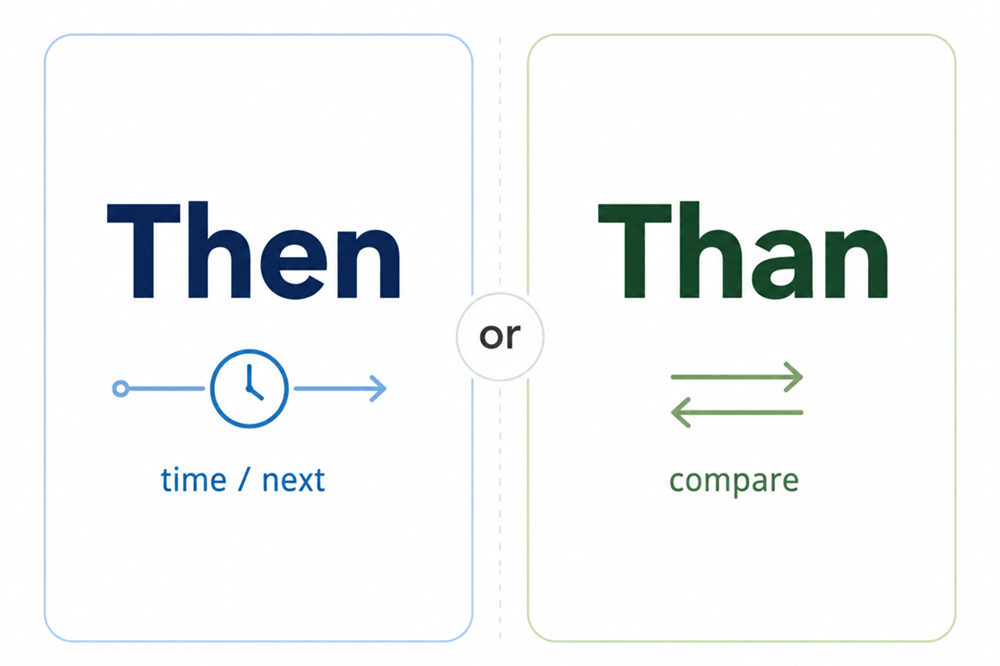
Then and than are both correct words, but they are used differently. Use then when you are talking about time, sequence, or what happens next. Use than when you are making a comparison. The easiest rule is: then is about time, and than is about comparison.
Quick Answer
Use then when something happens next, after that, or at that time.
- Finish your homework, then watch TV.
- She lived in Chicago back then.
- First we ate dinner, then we went for a walk.
Use than when comparing two people, things, actions, or ideas.
- She is taller than her brother.
- This book is better than the movie.
- I would rather stay home than go out.
The simple rule is: then = time or sequence. Than = comparison.
Then or Than: What Is the Difference?
The difference between then and than is meaning and grammar. They sound very similar, especially in fast speech, but they do not do the same job in a sentence.
Then usually refers to time. It can mean at that time, after that, or next. It helps show when something happened or what happened in order.
Than is used in comparisons. It usually appears after words like better, worse, more, less, older, younger, faster, slower, and rather.
| Word | Main Use | Example |
|---|---|---|
| Then | Time, order, or next step | We ate lunch, then left. |
| Than | Comparison | She is faster than me. |
If your sentence is about what happens next, use then. If your sentence is comparing one thing with another, use than.
What Does Then Mean?
Then is mostly used for time and order. It can show that something happened after something else, that something was true at a past time, or that something follows from another idea.
Examples:
- Turn left, then drive two more blocks.
- She was in college then.
- We cleaned the kitchen, then started dinner.
- If you are ready, then we can begin.
- He opened the letter and then smiled.
In each example, then connects to time, order, or a next step. It does not compare two things.
What Does Than Mean?
Than is used for comparison. It shows a difference between two things, people, places, choices, qualities, or actions.
Examples:
- This chair is heavier than that one.
- She arrived earlier than expected.
- He is more patient than I am.
- The second question was harder than the first.
- I would rather walk than wait for the bus.
In each example, than compares one thing with another. It does not show what happens next in time.
Examples of Then in Sentences
Here are natural examples of then used correctly:
- Brush your teeth, then go to bed.
- She finished the report and then emailed it to her manager.
- Back then, the town was much smaller.
- First add the flour, then stir in the milk.
- We were younger then.
- Press the button, then wait for the screen to load.
- If the weather improves, then we can leave early.
- He looked around, then closed the door quietly.
These examples all involve time, sequence, or what happens next. That is why then is correct.
Examples of Than in Sentences
Here are natural examples of than used correctly:
- This test is easier than the last one.
- She is more confident than before.
- The blue jacket costs less than the black one.
- He runs faster than most of his classmates.
- Today feels colder than yesterday.
- I like tea more than coffee.
- The movie was shorter than I expected.
- It is better to ask than to guess.
These examples compare people, things, times, preferences, or actions. That is why than is correct.
Then for Time and Order
The most common use of then is showing order. It tells readers that one thing happens after another.
Examples:
- Wake up, then make breakfast.
- Read the instructions, then start the test.
- She packed her suitcase, then called a taxi.
Then can also mean at that time.
- I lived in Boston then.
- Things were different back then.
- He was only ten years old then.
When your sentence answers when? or what happened next?, the word is usually then.
Than for Comparisons
The word than almost always appears in comparison sentences. You often see it after comparative words.
Common comparison words before than include:
- better than
- worse than
- more than
- less than
- older than
- younger than
- faster than
- slower than
- rather than
Examples:
- This option is better than the first one.
- She is older than her cousin.
- He would rather call than text.
- The new plan is less expensive than the old plan.
If your sentence compares two things, use than.
Then or Than After Better?
Use than after better when making a comparison.
Correct:
- This answer is better than that one.
- Walking is better than waiting.
- She feels better than she did yesterday.
Incorrect:
- This answer is better then that one.
- Walking is better then waiting.
The word better compares two things, so the correct word is than.
Then or Than After More?
Use than after more when comparing amounts, numbers, or degrees.
Correct:
- She has more experience than I do.
- The ticket costs more than I expected.
- There were more people than chairs.
Incorrect:
- She has more experience then I do.
- The ticket costs more then I expected.
More than is a comparison phrase, so it needs than, not then.
Then or Than in “Rather Than”?
The correct phrase is rather than, not rather then.
Correct:
- I would rather stay home than go out.
- She chose tea rather than coffee.
- They fixed the problem rather than ignoring it.
Incorrect:
- I would rather stay home then go out.
- She chose tea rather then coffee.
Rather than compares choices, so it uses than.
Common Mistakes to Avoid
The most common mistake is using then when the sentence needs than.
Incorrect:
- She is taller then me.
- This one is cheaper then that one.
- I like this version better then the old version.
Correct:
- She is taller than me.
- This one is cheaper than that one.
- I like this version better than the old version.
Another mistake is using than when showing sequence.
Incorrect:
- Wash your hands, than eat dinner.
Correct:
- Wash your hands, then eat dinner.
The sentence tells what happens next, so then is correct.
How to Remember Then or Than
Here is an easy way to remember the difference:
Then has an e, and time has an e.
Than has an a, and compare has an a.
- Then = time or next step
- Than = comparison
You can also remember this sentence:
First comes then; better uses than.
Final Answer
Then and than are both correct, but they have different meanings. Use then for time, sequence, or what happens next. Use than for comparisons. Write first this, then that, but write better than, more than, and rather than.