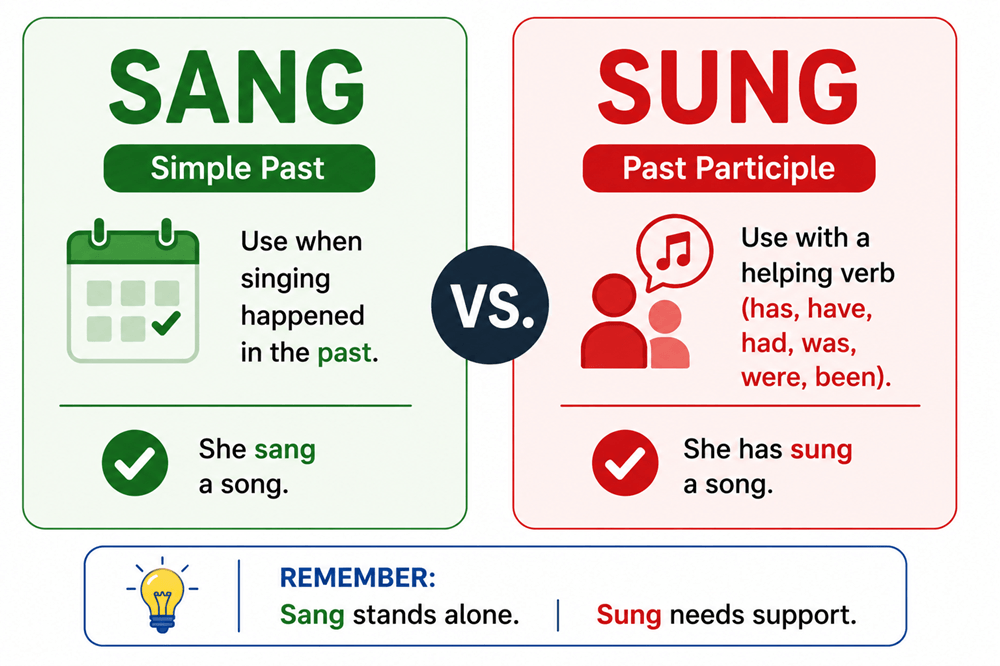
Sang or Sung: Correct Past Tense Usage and Simple Memory Tricks Explained
If you are choosing between sang or sung, the difference depends on grammar. Sang is the simple past tense of sing. Sung is the past participle, which means it usually needs a helping verb like has, have, or had. The easiest shortcut is this: you sang yesterday, but you have sung before.
Sang or Sung: What Is the Difference?
Sang and sung both come from the verb sing, but they are used in different sentence structures.
Sang is the simple past tense. Use it when the singing happened in the past and the sentence does not need a helping verb.
Sung is the past participle. Use it with helping verbs such as has, have, had, was, were, or been.
You should write:
Correct: She sang beautifully last night.
Incorrect: She sung beautifully last night.
You should also write:
Correct: She has sung that song many times.
Incorrect: She has sang that song many times.
The main rule is simple: sang stands alone in the past, but sung usually needs help.
What Does Sang Mean?
Sang is the simple past tense of sing. It describes a singing action that happened at a specific time in the past.
For example:
You sang at the school concert.
This means the singing happened in the past. There is no helping verb before sang. The sentence is complete and natural.
Here are more examples:
He sang in the choir when he was younger.
They sang around the campfire after dinner.
The child sang a soft song before bed.
You sang louder than everyone else.
In each sentence, sang is used by itself to show a completed past action. You are not saying has sang or had sang. You are simply saying that someone sang.
What Does Sung Mean?
Sung is the past participle of sing. A past participle often works with a helping verb to form perfect tenses or passive constructions.
For example:
You have sung this song before.
Here, have is the helping verb, and sung is the past participle.
More examples include:
She has sung in three different bands.
They had sung together before the show began.
The song was sung by a children’s choir.
That melody has been sung for generations.
In these sentences, sung does not stand alone as the main past-tense verb. It works with another verb. That is the biggest clue.
The Simple Rule for Sang and Sung
The easiest rule is:
Use sang without a helping verb.
Use sung with a helping verb.
Think of the three main forms this way:
Sing = present tense
Sang = simple past tense
Sung = past participle
You can remember the pattern with this line:
Today you sing, yesterday you sang, and before now you have sung.
This sentence gives you the whole structure in order. Sing is for the present. Sang is for a simple past action. Sung appears after a helping verb like have.
Why People Confuse Sang and Sung
Sang and sung are easy to confuse because they both sound like past forms. Unlike regular verbs, sing does not become singed when you talk about the past. It changes its vowel instead:
sing → sang → sung
This is called an irregular verb pattern. You see similar patterns in other English verbs:
drink → drank → drunk
ring → rang → rung
sink → sank → sunk
These patterns can feel confusing because the middle form and final form are close in sound. Since sang and sung both refer to past time in some way, you may accidentally use one where the other belongs.
The best fix is not to memorize only the words. Memorize the sentence structure. Ask whether the word has a helper. If it does, sung is probably right. If it does not, sang is probably right.
A Simple Way to Remember Sang
To remember sang, connect it with a finished event in the past.
Yesterday, you sang.
That short sentence is one of the easiest memory tricks. Sang works alone after the subject. You do not need has, have, or had.
You can also remember:
Sang stands alone.
Both words begin with sa: sang and stands. That makes the phrase easier to remember. If the verb is standing alone in the sentence, choose sang.
For example:
You sang the anthem.
She sang at the wedding.
They sang until midnight.
No helper appears before the verb, so sang is correct.
A Simple Way to Remember Sung
To remember sung, look for a helping verb.
Have sung
Has sung
Had sung
Was sung
Were sung
Been sung
If one of these helpers appears before the word, you usually need sung.
You can remember this phrase:
Sung needs support.
The word support can remind you that sung usually needs another verb to support it.
For example:
You have sung that song well.
The hymn was sung softly.
They had sung together before.
In each case, sung has a helping verb before it.
Sang vs Sung in Side-by-Side Examples
Side-by-side examples can make the difference clear:
Correct: She sang at the concert.
Incorrect: She sung at the concert.
Correct: She has sung at many concerts.
Incorrect: She has sang at many concerts.
Correct: They sang the final song together.
Incorrect: They sung the final song together.
Correct: The final song was sung by the whole class.
Incorrect: The final song was sang by the whole class.
Correct: You sang beautifully yesterday.
Incorrect: You sung beautifully yesterday.
Correct: You have sung beautifully all season.
Incorrect: You have sang beautifully all season.
The pattern stays the same. Sang works for simple past. Sung works with helping verbs.
Common Phrases With Sang
Use sang when describing a completed singing action in the past.
She sang a lullaby.
You sang in the car.
The choir sang during the ceremony.
He sang the wrong verse.
They sang with confidence.
These sentences do not use helping verbs. The action happened in the past, so sang is the right choice.
Common Phrases With Sung
Use sung when the sentence includes a helping verb.
Has sung means someone has performed songs before now.
She has sung professionally for years.
Have sung works with I, you, we, or they.
You have sung this part before.
Had sung shows that one past action happened before another past action.
They had sung the opening song before the lights went out.
Was sung or were sung is often used in passive sentences.
The song was sung in French.
In these phrases, sung is correct because it works with a helper.
How to Check Which Word You Need
Before choosing between sang and sung, look at the words before the verb.
If there is no helping verb, use sang.
You sang loudly.
She sang first.
The students sang together.
If there is a helping verb, use sung.
You have sung loudly.
She had sung first.
The song was sung together.
This quick check is more reliable than guessing by sound. The sentence structure tells you which word belongs.
The Final Answer on Sang or Sung
Sang is the simple past tense of sing. Use it when someone sang in the past and there is no helping verb.
Sung is the past participle of sing. Use it with helping verbs like has, have, had, was, were, or been.
To remember the difference, use these two phrases: sang stands alone and sung needs support. If the verb stands by itself, choose sang. If another verb helps it, choose sung.
So you should write she sang yesterday, but she has sung before. Once you learn that simple pattern, choosing between sang and sung becomes much easier.