Dryer or Drier: Correct Meanings, Grammar Difference, and Easy Ways to Remember
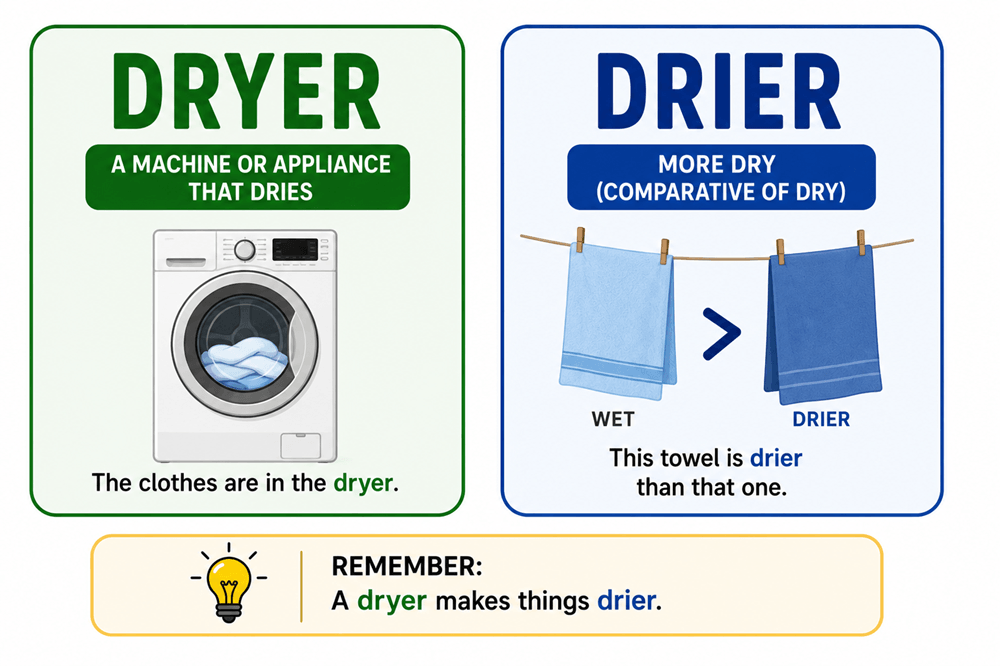
If you are choosing between dryer or drier, the right word depends on meaning. Dryer is usually a noun, meaning a machine or tool that dries something, such as a clothes dryer or hair dryer. Drier is usually the comparative adjective of dry, meaning “more dry.” You use a dryer to make clothes drier.
Dryer or Drier: What Is the Difference?
Dryer usually names a thing. It is a machine, device, or tool that removes moisture.
Drier usually describes a condition. It means something has less moisture than something else.
For example:
Correct: You put the towels in the dryer.
Incorrect: You put the towels in the drier.
In that sentence, you mean the machine, so dryer is correct.
Now look at this sentence:
Correct: The towels are drier now than they were an hour ago.
Less common: The towels are dryer now than they were an hour ago.
Here, you mean “more dry,” so drier is the better spelling.
The easiest shortcut is this: a dryer makes things drier.
What Does Dryer Mean?
Dryer is a noun. It refers to something that dries. Most often, it means a household appliance used to dry clothes, sheets, towels, and laundry.
For example:
The dryer stopped before the clothes were fully dry.
This means the machine stopped working or finished its cycle too early.
You might also write:
You cleaned the lint filter before starting the dryer.
Here, dryer clearly means the laundry appliance.
Dryer can also appear in phrases like hair dryer, clothes dryer, hand dryer, and blow dryer. In all of these phrases, the word names a tool or machine that dries something.
Common Examples With Dryer
Here are common sentences where dryer is correct:
You moved the wet clothes from the washer to the dryer.
The hair dryer was too loud in the small bathroom.
The hand dryer in the restroom did not work.
She bought a new dryer after the old one broke.
You should not overload the dryer with heavy blankets.
The dryer left the sheets warm and soft.
In every sentence, dryer names an object. If you can point to the thing, plug it in, turn it on, clean it, buy it, or repair it, the spelling is probably dryer.
What Does Drier Mean?
Drier is usually an adjective. It is the comparative form of dry. That means it compares two things and says one has less moisture than the other.
For example:
This towel is drier than that one.
This means this towel has less moisture.
You might also write:
The air feels drier in winter.
Here, drier means the air has less humidity.
Drier is useful when comparing weather, skin, clothes, soil, hair, food, air, paint, towels, and surfaces. If the idea is “more dry,” drier is usually the better spelling.
Common Examples With Drier
Here are common sentences where drier is correct:
Your hair is drier after using too much heat.
The desert climate is much drier than the coast.
The soil becomes drier during the summer.
The second towel felt drier than the first.
This paint needs a drier surface before the next coat.
The bread tasted drier than usual.
In these examples, drier describes a state or quality. It does not name a machine. It compares dryness.
Why Dryer and Drier Are Easy to Confuse
Dryer and drier are confusing because they sound the same. When you hear the word in a sentence, your ear may not tell you which spelling is meant. You need the meaning to decide.
The spelling also feels tricky because both forms seem possible. The word dryer follows the pattern of adding -er to a verb to name a thing that does an action. A washer washes. A heater heats. A dryer dries.
But drier follows the adjective pattern. When a word ends in consonant + y, the y often changes to i before adding -er.
That gives you:
dry → drier
You see the same pattern in:
happy → happier
easy → easier
heavy → heavier
So both spellings have logic behind them. The difference is grammar.
A Simple Way to Remember Dryer
The easiest memory trick is:
A dryer is a thing that dries.
The ending -er often names a person or thing that performs an action. A runner runs. A reader reads. A dryer dries.
You can also remember:
Dryer has Y because it is the drying machine.
This works because dryer keeps the y from dry. When you are naming the machine, keep the y.
Picture a laundry room. The machine sitting beside the washer is the dryer. That visual can help you choose the spelling with y.
A Simple Way to Remember Drier
The easiest memory trick for drier is:
Drier means more dry.
Since drier compares dryness, it follows the same pattern as other comparative adjectives:
dry → drier
happy → happier
easy → easier
You can also remember:
Drier changes Y to I.
That is the key spelling move. When you are comparing how dry something is, change the y in dry to i and add -er.
A useful sentence is:
The dryer made the towels drier.
This sentence uses both words correctly and shows the difference clearly.
Dryer vs Drier in Side-by-Side Examples
Side-by-side examples make the difference easier to see:
Correct: The dryer is making a strange noise.
Incorrect: The drier is making a strange noise.
Correct: The clothes are drier after another cycle.
Less common: The clothes are dryer after another cycle.
Correct: You need a new hair dryer.
Incorrect: You need a new hair drier.
Correct: Your skin feels drier in cold weather.
Less common: Your skin feels dryer in cold weather.
Correct: The hand dryer turned on automatically.
Incorrect: The hand drier turned on automatically.
Correct: The second coat of paint needs a drier wall.
Less common: The second coat of paint needs a dryer wall.
The rule is simple: if it is a machine or tool, use dryer. If it means “more dry,” use drier.
Is Dryer Ever Used as an Adjective?
You may sometimes see dryer used as an adjective meaning “more dry.” Some readers may understand it, and it may appear in casual writing. However, drier is the more standard spelling for the comparative adjective.
For careful writing, it is better to keep the distinction clear:
Dryer = machine or tool
Drier = more dry
This avoids confusion, especially in sentences about laundry.
For example:
The dryer made the shirt drier.
If you wrote the dryer made the shirt dryer, readers would probably understand you, but the sentence looks less polished. Drier is cleaner when comparing dryness.
What About Driest?
The superlative form of dry is driest. It means “the most dry.” Just like drier, it changes the y to i.
For example:
This is the driest towel in the stack.
July is often the driest month of the year.
The driest corner of the garden needs extra water.
The spelling family is:
dry
drier
driest
But the machine remains:
dryer
That contrast can help you remember the difference.
Common Phrases With Dryer
Use dryer in phrases that name tools, machines, or appliances.
Clothes dryer
Hair dryer
Blow dryer
Hand dryer
Dryer vent
Dryer sheet
Dryer lint
These are all connected to a device or laundry item, so the spelling is dryer.
Common Phrases With Drier
Use drier in phrases that compare dryness.
Drier weather
Drier skin
Drier climate
Drier soil
Drier clothes
Drier air
Drier texture
These phrases describe something with less moisture than before or less moisture than something else. That is why drier fits.
How to Check Which Word You Need
Before choosing between dryer and drier, ask what the word is doing in the sentence.
If it names a machine, appliance, or tool, use dryer.
The dryer is full.
You used a hair dryer.
The hand dryer was broken.
If it means more dry, use drier.
The clothes are drier now.
The air is drier upstairs.
The cake tasted drier than expected.
This quick check works in nearly every everyday sentence.
The Final Answer on Dryer or Drier
Dryer is usually a noun. It means a machine, appliance, or tool that dries something, such as a clothes dryer, hair dryer, hand dryer, or blow dryer.
Drier is usually the comparative adjective of dry. It means more dry, as in drier clothes, drier weather, drier skin, or drier soil.
To remember the difference, use this simple sentence: a dryer makes things drier. If you mean the machine, keep the y and write dryer. If you mean “more dry,” change the y to i and write drier.