Omelet or Omelette: Which Spelling Is Correct?
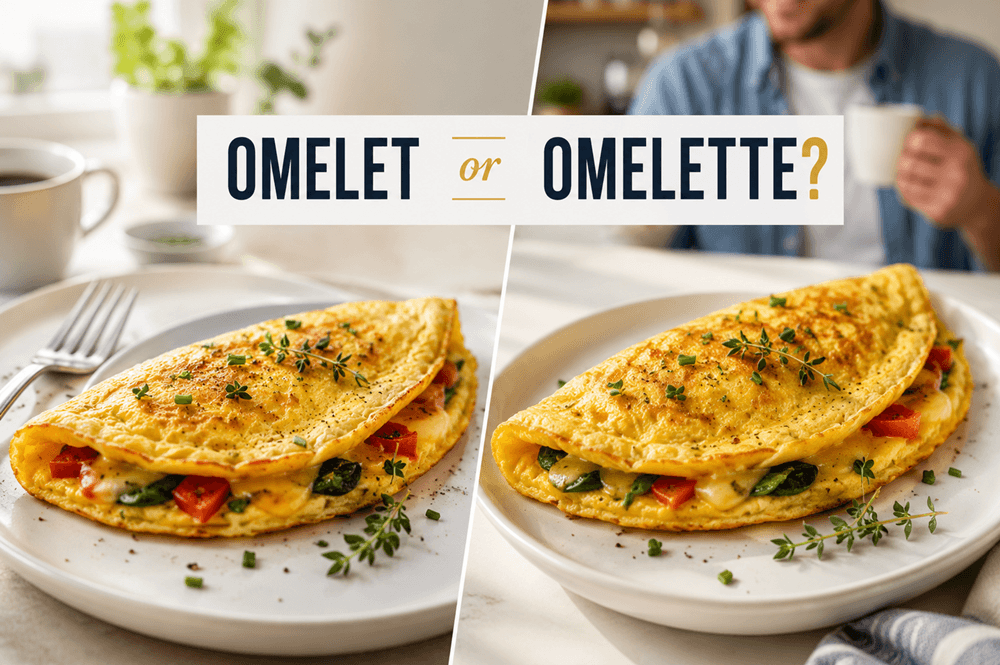
Omelet and omelette are both correct spellings. The difference is mainly regional.
In American English, the more common spelling is omelet.
In British English, and often in more French-influenced or restaurant-style writing, the preferred spelling is omelette.
So if you are writing for a U.S. audience, use omelet. If you are writing for a U.K. audience, or you want a slightly more traditional or elegant spelling, use omelette.
Quick Answer
Use omelet in American English.
Use omelette in British English.
Examples:
- I made a cheese omelet for breakfast.
- She ordered a mushroom omelette at the café.
- The hotel breakfast included toast, fruit, and made-to-order omelets.
- The menu offered a spinach and goat cheese omelette.
Neither spelling is wrong. The better choice depends on your audience and the style of writing.
What Does Omelet or Omelette Mean?
An omelet or omelette is a dish made by beating eggs and cooking them in a pan. It is often folded around fillings such as cheese, vegetables, ham, mushrooms, herbs, or meat.
For example:
- a cheese omelet
- a vegetable omelet
- a French omelette
- a spinach and mushroom omelette
The word refers to the same food no matter which spelling you use. There is no major difference in meaning between omelet and omelette.
The difference is spelling style, not the dish itself.
Why Are There Two Spellings?
The spelling omelette comes from French. Because French words often keep extra letters that are not strongly pronounced in English, omelette has a more traditional and French-looking form.
The spelling omelet is a simplified English version. American English often prefers shorter spellings, especially for words borrowed from other languages.
This is similar to other spelling differences between American and British English:
- color / colour
- center / centre
- traveler / traveller
- omelet / omelette
In many cases, American English removes or simplifies letters, while British English keeps a spelling closer to the older or original form.
That is why omelet feels simpler and more American, while omelette feels more British, French, or restaurant-like.
Is Omelette Wrong in American English?
No. Omelette is not wrong in American English.
Many American restaurants, cookbooks, and food writers still use omelette, especially when they want the word to feel more classic, fancy, or French.
For example, a restaurant menu might say:
- French omelette
- smoked salmon omelette
- herb and goat cheese omelette
Even in the United States, omelette may appear in food writing because it looks elegant and traditional.
However, in ordinary American writing, omelet is usually the simpler and more standard choice.
So for school writing, everyday writing, recipes for a U.S. audience, or plain modern American English, omelet is usually the safer spelling.
Is Omelet Wrong in British English?
Omelet is understandable in British English, but omelette is the usual British spelling.
If your audience is mostly in the U.K., Ireland, Australia, or other places that follow British spelling conventions, omelette will usually look more natural.
For example:
- She made an omelette with tomatoes and herbs.
- The café serves a Spanish omelette with potatoes.
- I had a cheese omelette for lunch.
British readers will understand omelet, but some may see it as an American spelling.
Omelet vs. Omelette: The Main Difference
The main difference is simple:
Omelet = American English spelling
Omelette = British English and French-influenced spelling
They mean the same thing.
You do not need to choose based on the ingredients, cooking method, or type of dish. A cheese omelet and a cheese omelette can be the exact same food.
The spelling only changes the style.
Which Spelling Should You Use?
Use omelet when writing for an American audience.
Example:
- I usually make an omelet with peppers, onions, and cheese.
Use omelette when writing for a British audience or when using a more traditional food-writing style.
Example:
- The restaurant served a soft French omelette with herbs.
Use one spelling consistently in the same article, recipe, or menu. Do not switch back and forth unless you are explaining the spelling difference.
For example, this would look inconsistent:
- I made an omelet for breakfast, then ordered an omelette for lunch.
That is not grammatically wrong, but it may look careless unless you have a reason for the switch.
How to Remember the Difference
A simple way to remember it:
Omelet is the shorter spelling, and American English often likes shorter spellings.
Omelette has extra letters, and it looks more French.
You can also remember it this way:
Omelet = American and simple
Omelette = British or French-style
The spelling omelette ends with -ette, a common French-looking ending. Words like baguette, cigarette, and silhouette also have that elegant French feel.
So when you see omelette, think: “French-looking spelling.”
When you see omelet, think: “simplified American spelling.”
Spelling Structure
The word omelet has six letters:
o-m-e-l-e-t
The word omelette has eight letters:
o-m-e-l-e-t-t-e
The longer spelling adds an extra t and an extra e at the end.
That final -tte ending is the part people often forget. If you are using the British or French-style spelling, remember that omelette has:
- one m
- one l
- double t
- final e
The spelling is:
omelette
Not:
- omlette
- ommelette
- omelete
- omlet
The shortest common mistake is omlet, but that is not standard English. The correct short form is omelet, with an e before the final t.
Common Mistakes
Mistake 1: Writing “omlet”
Incorrect:
- I made an omlet for breakfast.
Correct:
- I made an omelet for breakfast.
Even the short American spelling needs the middle e: omelet, not omlet.
Mistake 2: Mixing both spellings in one recipe
Inconsistent:
- Cook the omelet for two minutes, then fold the omelette in half.
Better:
- Cook the omelet for two minutes, then fold the omelet in half.
Or, in British style:
- Cook the omelette for two minutes, then fold the omelette in half.
Mistake 3: Thinking one spelling means a different dish
There is no strict food difference between an omelet and an omelette. The spelling does not tell you whether the dish is French, American, folded, fluffy, or filled.
Context may suggest style, but the word itself has the same basic meaning.
Example Sentences
American English:
- I had a ham and cheese omelet for breakfast.
- This diner makes the best western omelet in town.
- Add the vegetables before folding the omelet.
- She cooked a quick egg-white omelet after her workout.
British English or restaurant-style:
- He ordered a mushroom omelette with toast.
- A French omelette should be soft and pale.
- The café serves a tomato and basil omelette.
- She learned how to make a perfect folded omelette.
Both are correct, but the tone is slightly different.
Final Answer: Omelet or Omelette?
Omelet and omelette are both correct.
Use omelet for American English.
Use omelette for British English, French-influenced writing, or a more traditional restaurant style.
The easiest way to remember the difference is that omelet is shorter and more American, while omelette is longer and looks more French.
For most U.S. writing, choose omelet. For British or elegant food writing, choose omelette.