Skip to content
Word Briefs
  • About
  • Contact
Word Briefs
  • Useable or usable
    Spelling

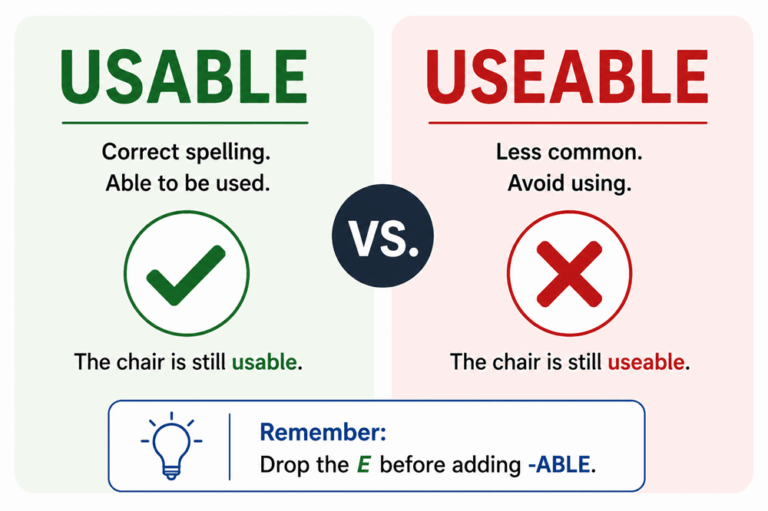
    Useable or Usable: Correct Spelling, Meaning, and Easy Ways to Remember It

    ByJeremy Howard June 24, 2026

    If you are choosing between useable or usable, the standard spelling is usable. It means something can be used, is practical, or works well enough for its purpose. Useable is sometimes seen as a variant, but usable is the spelling most readers, editors, teachers, and style guides expect. Useable or Usable: Which Spelling Is Correct?…
    Read More Useable or Usable: Correct Spelling, Meaning, and Easy Ways to Remember ItContinue

  • Tying or tieing
    Spelling

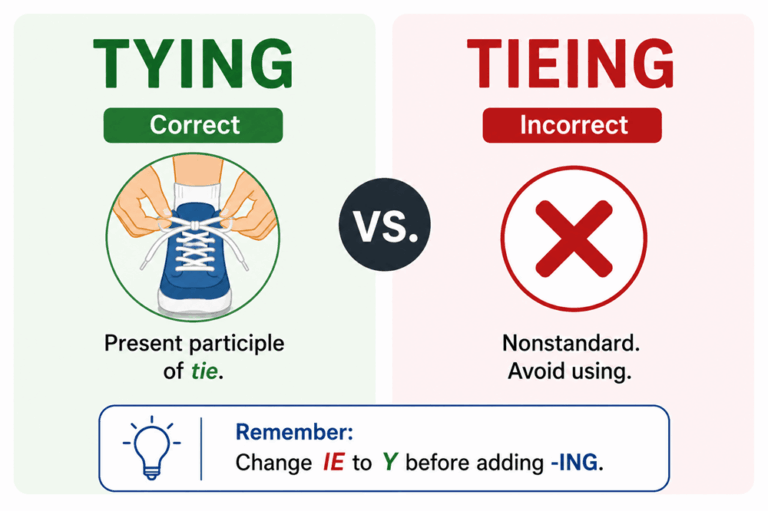
    Tying or Tieing: Correct Spelling, Meaning, and Easy Ways to Remember It

    ByJeremy Howard June 24, 2026

    If you are choosing between tying or tieing, the standard spelling is tying. It is the present participle of tie, which means to fasten, connect, bind, or finish with the same score. Tieing may look logical because it keeps the full word tie, but in modern English, tying is the spelling you should use almost…

    Read More Tying or Tieing: Correct Spelling, Meaning, and Easy Ways to Remember ItContinue

  • Smokey or smoky
    Confusing Words

    Smokey or Smoky: Which Spelling Is Correct and When to Use It

    ByJeremy Howard June 24, 2026

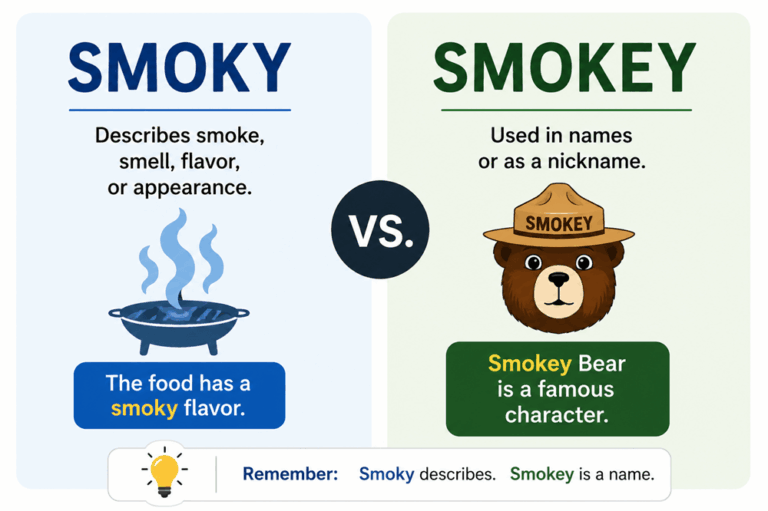
    If you are choosing between smokey or smoky, the usual correct spelling is smoky. You use smoky to describe something filled with smoke, smelling like smoke, tasting like smoke, or looking hazy. Smokey is mostly used as a proper name, nickname, or brand-style spelling, not as the standard adjective. Smokey or Smoky: What Is the…

    Read More Smokey or Smoky: Which Spelling Is Correct and When to Use ItContinue

  • Flutist or flautist
    Confusing Words

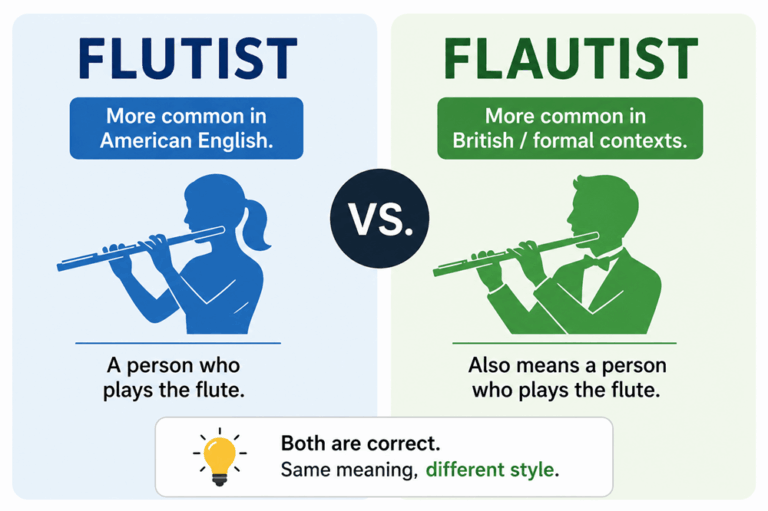
    Flutist or Flautist: Which Word Should You Use for a Flute Player?

    ByJeremy Howard June 24, 2026

    If you are choosing between flutist or flautist, the good news is that both words are correct. A flutist and a flautist both mean a person who plays the flute. The difference is mostly about style, region, and preference. In American English, flutist is more common. In British English and some formal music contexts, flautist…

    Read More Flutist or Flautist: Which Word Should You Use for a Flute Player?Continue

  • Signer or signor
    Confusing Words

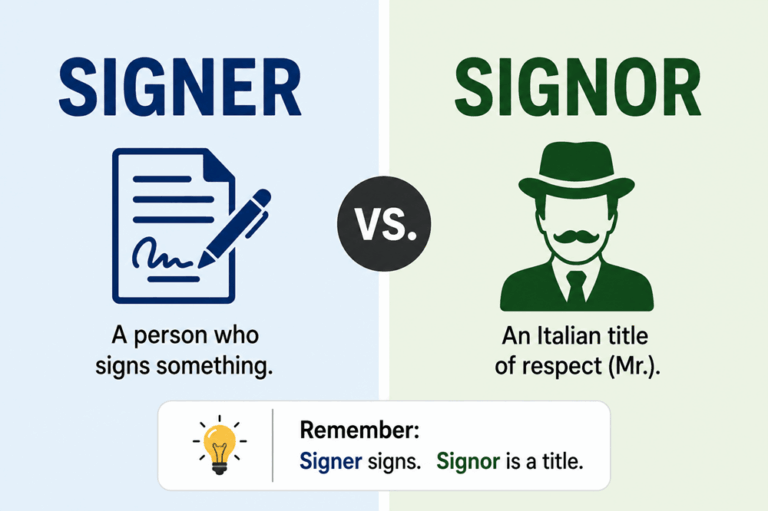
    Signer or Signor: Meanings, Differences, and Simple Ways to Remember Each Word

    ByJeremy Howard June 24, 2026

    If you are choosing between signer or signor, the correct word depends on what you mean. A signer is a person who signs something, such as a document, contract, letter, petition, or form. Signor is an Italian title of respect, similar to Mr. or sir. The two words look close, but they are not interchangeable….

    Read More Signer or Signor: Meanings, Differences, and Simple Ways to Remember Each WordContinue

  • Cudos or kudos
    Spelling

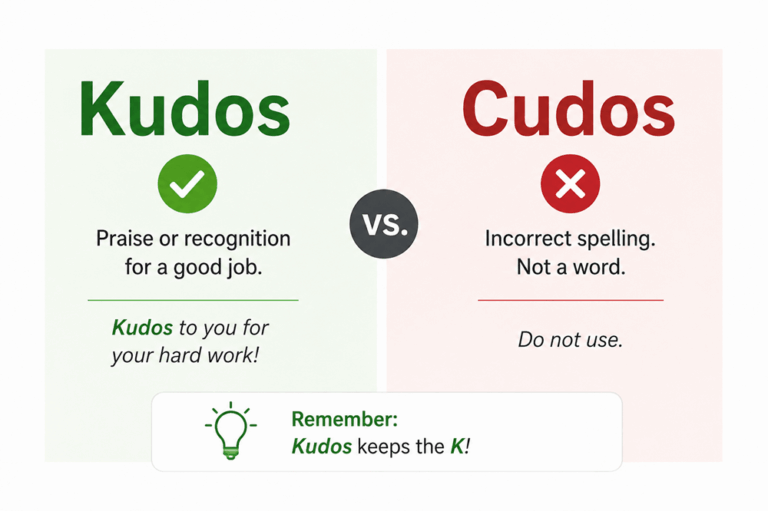
    Cudos or Kudos: Correct Spelling, Meaning, and Easy Ways to Remember It

    ByJeremy Howard June 24, 2026

    If you are choosing between cudos or kudos, the correct spelling is kudos. The word cudos is a common misspelling, but it is not accepted in standard English. You use kudos when giving praise, credit, or recognition for something done well. Cudos or Kudos: Which One Is Correct? The correct spelling is kudos. Cudos is…

    Read More Cudos or Kudos: Correct Spelling, Meaning, and Easy Ways to Remember ItContinue

  • Sence or sense
    Spelling

    Sence or Sense: How to Spell the Word and Remember It Clearly

    ByJeremy Howard June 24, 2026

    If you are choosing between sence or sense, the correct spelling is sense. The word sence is a common misspelling, but it is not accepted in standard English. Once you notice the ending pattern and connect the word to related terms like sensible, sensation, and nonsense, it becomes much easier to remember. Sence or Sense:…

    Read More Sence or Sense: How to Spell the Word and Remember It ClearlyContinue

  • Cc'd or cc'ed
    Confusing Words

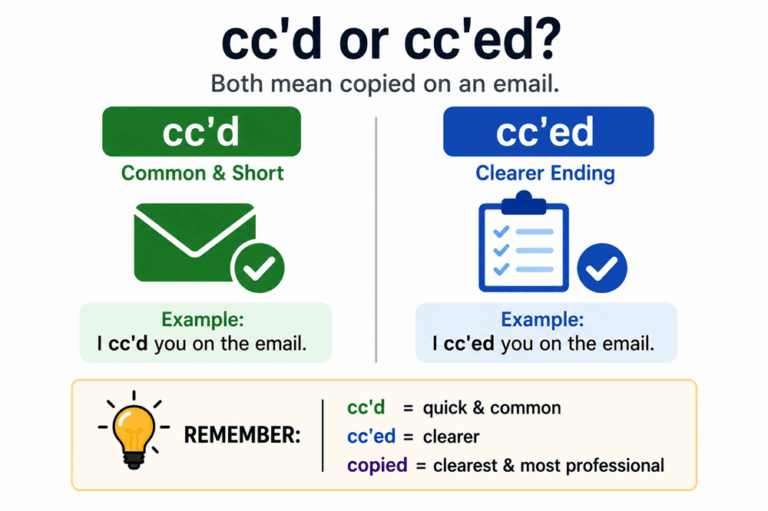
    Cc’d or Cc’ed: Correct Email Spelling, Usage, Examples, and Memory Tips Explained

    ByJeremy Howard June 23, 2026

    Cc’d, cc’ed, and CCed are all used when talking about adding someone to the carbon copy line of an email. However, cc’d is the shortest and most common informal style, while cc’ed is often clearer because it shows the spoken ending more directly. For polished writing, copied or included on the email is usually the…

    Read More Cc’d or Cc’ed: Correct Email Spelling, Usage, Examples, and Memory Tips ExplainedContinue

  • Ingrained or engrained
    Confusing Words

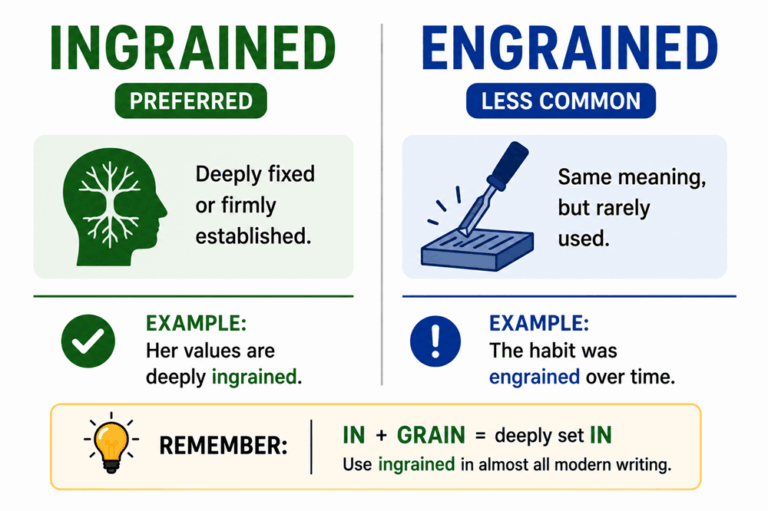
    Ingrained or Engrained: Difference, Correct Usage, Meaning, and Memory Tips Explained

    ByJeremy Howard June 23, 2026

    Ingrained is the preferred modern spelling. Engrained is a less common variant, but most readers and editors expect ingrained. Use ingrained when something is deeply fixed, firmly established, or hard to change, such as a habit, belief, attitude, pattern, or memory. The easiest rule is: use ingrained in almost all modern writing. Quick Answer Use…

    Read More Ingrained or Engrained: Difference, Correct Usage, Meaning, and Memory Tips ExplainedContinue

  • Like or as
    Confusing Words

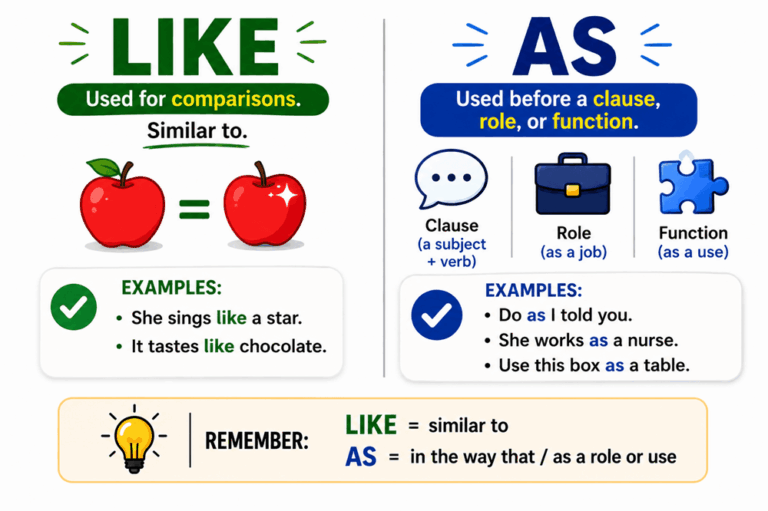
    Like or As: Difference, Correct Usage, Grammar Rules, Examples, and Memory Tips Explained

    ByJeremy Howard June 23, 2026

    Like and as are both correct words, but they are used differently. Like is usually used to compare nouns or noun phrases. As is usually used before a clause with a subject and verb, or when describing a role, job, function, or identity. The easiest rule is: like compares things; as introduces actions, roles, or…

    Read More Like or As: Difference, Correct Usage, Grammar Rules, Examples, and Memory Tips ExplainedContinue

Page navigation

Previous PagePrevious 1 … 20 21 22 23 24 … 44 Next PageNext
  • Disclaimer
  • Terms of Use
  • Privacy Policy

© 2026 Word Briefs

  • About
  • Contact
Search